
|
TEN YEARS IN IRAN – SOME HIGH LIGHTS (3)

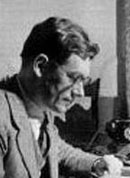 |
Lecture delivered at the Society’s Anniversary Meeting on 13 June 1991. Sir Denis Wright GCMG first went to Iran in December 1953 as charge d’affaires to reopen the British Embassy after the break in diplomatic relations following Dr. Moussadeq‘s nationalisation of oil, remaining there under Sir Roger Stevens as counsellor until October 1955 when he was appointed an under-secretary in the Foreign Office. He returned to Tehran as ambassador in April 1963 and served there for the record period of eight years before retiring in 1971. He was President of the British Institute of Persian Studies 1978-87 and is currently President of the Iran Society. He is an Honorary Fellow of two Oxford colleges, St. Edmund Hall and St. Antony’s. Translations of his two books, The English amongst the Persians and The Persians amongst the English have both been pirated in Tehran -the former by four different publishers under four different titles! Sir Denis joined the Society in 1945 and has lectured to it on three previous occasions.
***
Last week we read the parts (I, II) of this article and here is the third part:
Although I had good reason in the years ahead to be critical of the Shah and his paranoia about the British, which he shared with most of his subjects, I continued to believe that he provided the Strong leadership the country so badly needed. When l left Tehran on retirement in April 1971 I noted — and reported — signs of trouble ahead — student unrest, inflation, urban guerrilla activity, a Shah unwilling to listen to others or accept criticism — but never for one moment thought he might be toppled from his throne as happened seven years later. The Ayatollah Khomeini’s broadcasts from Iraq were not, at that time, considered any more important than reports of religious fundamentalist activity among some of the young. The religious classes who had opposed the Shah’s reforms had, most of us believed, been effectively silenced following the riots of June 1963.
As a matter of policy, laid down by the Foreign Office and with which I was in full agreement, we in the Embassy made no attempt to establish contact with opposition groups. To have done so would surely have become known to the Shah: because of his character and paranoia about the British this would have destroyed my credibility as ambassador. An ambassador’s prime duty is to develop good relations with the government to which he is accredited as a means of promoting and protecting his own country’s interests. In Iran our interests were considerable - strategic, commercial, a source of oil. To protect them the Shah’s goodwill was vital: without it we would have suffered as did both the French and Germans for a time after incurring the Shah’s wrath.
There was no end to the Shah’s suspicions about us. He once told the Americans that we had thrown out the old Qajar dynasty, had installed his father in their place, had then thrown out his father and could now keep him in power or depose him as we thought fit. This fear and distrust was to some extent tempered by a certain awe. For example, more than anything he wanted our Queen to attend his long delayed Coronation in 1967; when he heard that she was unable, because of the short notice, to attend he decided not to invite any other heads of State.
Let me give you one example of the Shah’s suspicions of the British. In October 1964 he was greatly angered and surprised by opposition in the Majles to an immunities bill for American forces stationed in Iran which he had assured the American ambassador would be passed without trouble. After first blaming his new and inexperienced Prime Minister, Ali Mansour, he became convinced that we British were responsible. In consequence he not only wanted my counsellor, Horace Phillips, declared persona non gram but instituted enquiries to discover whether the Foreign Office or just myself and my staff were behind the trouble! In fact it was the Ayatollah Khomeini and others, playing on the then current strong anti-American feeling. To clear the matter up I sought an immediate audience and challenged the Shah to tell me why we would wish to cause trouble in this way: he had no answer (and accepted my word).
I now turn to the riots of June 1963.
These occurred at the end of the lunar month of Muharram when Shia mourning for the martyrdom of the Prophet’s grandson reaches its height during days known as Tassu’a and Ashura. These fell on the 2 and 3 June and passed off quietly but were followed two days later by serious rioting and shooting in Tehran and some provincial towns.
The trouble started with the arrest on the night of 4 June of Khomeini and Falsali, the leading ulema, who had during the mourning period attacked the Shah’s reform programme from their pulpits. There were peaceful demonstrations in Tehran on 4 June but the following day, when news of the arrests became known, the demonstrations got out of hand. Buildings associated with the Shah and the West in south Tehran were set on fire, cars overturned. The Army was called out and the shooting began. From the Embassy I could see the smoke of buildings on tire not far away, well before the shooting that followed. By the following evening, after some sporadic tiring in the morning, the situation was well under control with troops and tanks much in evidence south of the Embassy.
How many people were killed? The truth will probably never be known but I have never accepted the figure of thousands quoted by the Shah‘s opponents and papers such as The Guardian. When I questioned the Prime Minister, Assadullah Alam, the following week he told me between 90 and 100. In my report to the Foreign Office I stated “at least a hundred killed and several hundred injured". The English language paper Tehran Journal of 8 June reported 79 deaths in Tehran and "a large number of people injured and some killed" in Qom, Mashad and Shiraz.We also heard of trouble in Rey and Kashan. When I saw the Shah in exile in 1979 he told me, in answer to my question, that 110 people had been killed. I commented that this was more or less in line with Mr. Alam’s figure; he paused for a moment before repeating that 110 was the correct figure. More recently a former Iranian Minister, now living in the U.K., who was a member of a commission set up after the riots to provide assistance for bereaved families, has confirmed to me that the deaths were of the magnitude I mention.
I thought then, as I do now, that the Shah — at the instigation of Assadullah Alam, his Prime Minister — was right to use force against the rioters. Certainly for the next decade the country enjoyed a measure of political stability such as it had not known since the days of Reza Shah —resulting in a remarkable leap forward in economic development and prosperity under Prime Ministers Ali Mansour and Amir Abbas Hoveyda who were supported by a young team of Ministers, for the most part foreign—educated technocrats, working enthusiastically and honestly for the good of their country.
One consequence of the June riots was the Shah’s curt dismissal of two of his wisest and most respected advisers — Husayn Ala (Minister of Court) and Abdullah Entezam (then head of the National Iranian Oil Co.). They had dared urge their monarch to go slow on his reforms. Henceforth few, if any, dared question the Shah’s policies; had he listened he might still be on the throne.
My second highlight is the settlement of the Bahrain problem following the announcement in January 1968 by Harold Wilson’s Labour Government of their decision to withdraw from the Persian Gulf by the end of 1971.
As many of you know Iran’s claim to Bahrain was a long-standing irritant in Anglo-Iranian relations — allegedly Iran’s fourteenth province for whose fictitious deputies two seats were reserved in the Majles. But so long as the Pax Britannica prevailed in the Gulf the Shah was willing to let sleeping dogs lie, though from time to time he would tease us with his claim. He knew that so long as we were in the Gulf he was getting his defence on the cheap and had no wish to see us depart. Sometimes he would raise the question of Bahrain with me. He would say that the pearls had run out and the oil was running out so the island was of no interest but he could not go down in history as the man who had surrendered his country‘s historic claim without some face—saving formula.
The Shah had taken the announcement of I-IMG’s decision to leave the Gulf by the end of l97l calmly. What incensed him was an announcement in London two months later that, in order to leave behind a viable and stable area, the British Government was encouraging the creation of a union or federation of the seven Trucial States together with Bahrain and Qatar. The Shah saw this as a dirty British trick to confront him with a fait accompli whereby he would either have to recognise a union that included Bahrain and the other disputed islands (the two Tumbs and Abu Musa which Iran also claimed as hers) or else run foul of the Arab world by refusing recognition. The Shah‘s wrath was manifest in a strong and curiously worded statement issued by the Ministry for Foreign Affairs on 1 April 1968: it ran as follows:
In the Imperial Government’s view the British Government cannot leave to others, in inheritance, territories that, as history is our witness, she severed from Iran by force and fraud. The Imperial Government will protect its rights in the Persian Gulf and will on no account tolerate this bullying and historical injustice.
The tightly—controlled Tehran press, instructed from on high, was equally hostile and offensive. Nevertheless these developments served as a catalyst and opened the door to serious discussion with the Shah on ways and means of settling our differences in the Gulf. He was realist enough to know that it was better to settle with us than wait until we had shed our responsibilities. So, in the course of the following months, I had a number of solo sessions with him during which we discussed possible solutions. He proved uncompromising over the Tumbs and Abu Musa islands, arguing that as they controlled the Straits of Hormuz they were vital for the protection of Iran‘s Gulf sealane. On Bahrain he insisted that there must be a referendum or plebiscite before he could contemplate abandoning his claim. He rejected my argument that a testing of opinion in this way among people who had never voted in their lives was impractical and, in any case, would be unacceptable to the Ruler of Bahrain.
To be continued…
DENIS WRIGHT
Source:
Wright, Denis, “Ten Years in Iran-Some Highlights”, Journal of the Royal Society for Asian Affairs, 1991 (October), Vol. 78(22), Part 3, pp: 259-271
|


