
|
TEN YEARS IN IRAN – SOME HIGH LIGHTS (2)

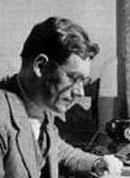 |
Lecture delivered at the Society’s Anniversary Meeting on 13 June 1991. Sir Denis Wright GCMG first went to Iran in December 1953 as charge d’affaires to reopen the British Embassy after the break in diplomatic relations following Dr. Moussadeq‘s nationalisation of oil, remaining there under Sir Roger Stevens as counsellor until October 1955 when he was appointed an under-secretary in the Foreign Office. He returned to Tehran as ambassador in April 1963 and served there for the record period of eight years before retiring in 1971. He was President of the British Institute of Persian Studies 1978-87 and is currently President of the Iran Society. He is an Honorary Fellow of two Oxford colleges, St. Edmund Hall and St. Antony’s. Translations of his two books, The English amongst the Persians and The Persians amongst the English have both been pirated in Tehran -the former by four different publishers under four different titles! Sir Denis joined the Society in 1945 and has lectured to it on three previous occasions.
***
Last week we read the first part of this article and here is the second part:
Now let me turn briefly to another highlight of my early days in Tehran — the creation of the oil Consortium and settlement of the oil dispute.
I had left London well aware of I-IMG’s views about an oil settlement. These were by this time closely in line with those of the American Government who were as anxious as we for a peaceful settlement in such a strategically important corner of the world.
Much as it was politically desirable here at home that AIOC should recover their former position in Iran, the British Government under Churchill now realised that there was no possibility of the Iranians accepting this. The idea of a consortium of the major international oil companies - British, American, Dutch and French •— was believed by both London and Washington to be the most likely solution acceptable in Tehran. Even the stubborn chairman of AIOC, Sir William Fraser, had come some way to recognising this. I might add that, far from the American oil companies wishing to muscle in on AIOC’s preserve, they only reluctantly, under pressure from their own Government, agreed to participate in the consortium that was eventually established.
Thus I knew what was in everybody’s mind before I left London. But before Cabinet decisions affecting the future of AIOC could be taken HMG needed my first-hand appreciation of the situation and possibilities. During my first two weeks in Tehran I therefore sought as many opinions as possible during a busy round of calls on Iranian ministers and officials and foreign diplomats. My conclusions, telegraphed to London on 7 January 1954, were that any attempt to restore AIOC to its old position was doomed to failure; instead I recommended that I should tell the Iranians that HMG would settle for a production and marketing consortium of the major oil companies provided AIOC had a major share in it.
HMG agreed, and AIOC had little choice but to do so too. I then had a number of meetings with the Iranian Foreign Minister to explain the consortium idea. Meanwhile the top brass of the international oil companies assembled in London and after some hard bargaining established a Consortium in which AIOC was allocated 40%, the live American companies 40%, Shell 14% and CFP of France 6%.
Negotiations between the Consortium and Iranian Government began in Tehran in April and lasted three months. Ali Amini, the Minister of Finance, led the Iranian team while the American chairman of Standard Oil of New Jersey, supported by the Dutch chairman of Shell and an English director of AIOC, represented the Consortium.
Parallel, but entirely separate, negotiations took place between us, the British, and the Iranians over the difficult question of compensation for AIOC’s loss of their oil concession which still had many years to run. Agreement on this was for HMG a sine qua non of an oil settlement. Sir Roger Stevens, our ambassador who had arrived in mid-February, led the British team and the indefatigable Ali Amini the Iranian team. There were some difficult moments and exhausting afternoon and evening sessions in a stiflingly hot, un-airconditioned room before agreement was reached in time for both the Oil and Compensation Agreements to be signed on 5 August 1954. For the next 20 years the Consortium under a succession of expatriate managers — first Dutch, then American and finally British — was primarily responsible for most of Iran’s oil production and marketing.
I might add that the Shah, smarting I suspect from my refusal to deal with him through his two emissaries, kept in the background — sitting on the fence — until a late stage before backing the consortium idea. In the words of Daniel Yergin, whose monumental book The Prize on the oil business was published earlier this year, “the establishment of the Consortium marked one of the great turning points for the oil industry” (p. 476). Now, in place of an oil concession owned by foreigners, members of the Consortium recognised for the first time that the oil assets belonged to Iran. An important precedent had been established.
Another highlight during this time was Iran’s decision to join the Baghdad Pact in October 1955.
Even before the oil settlement the Shah was pressing for our help in building up his military strength. He became more persistent the following year when Iraq joined Turkey and Pakistan in what was now called the Baghdad Pact: he saw membership of the Pact as a means of securing military hardware.
We for our part, both in Tehran and London, believed that political stability and economic progress were a much more important priority than a military build-up. We also thought that membership of the Baghdad Pact would be unpopular and only serve to aggravate the unstable domestic scene. We therefore told the Shah that while we would welcome Iran’s eventual membership of the Pact we must leave the timing to him; nor could we promise — as he wished — in advance of membership of the Pact military supplies or a guarantee of Iran’s territorial integrity. The Americans, who had originally urged the Shah to join the regional Pact, came to share our views and by August 1955, when the Shah had the bit between his teeth, we both spoke with one voice.
When, two months later, Iran did join the Baghdad Pact it was entirely the Shah’s decision, egged on by the Turks during the State Visit in mid-September of President Bayar, accompanied by his hawkish Foreign Minister, Zorlu.
I mentioned earlier that my instructions were to maintain a united front with the American Embassy. This was not difficult since the Americans, under their admirable ambassador Loy Henderson, were as keen as we to see the oil dispute settled along the lines I have described. This puzzled the Iranians, from the Shah downwards, who found it difficult to believe that both countries could be working together and not against each other. I received a number of anonymous letters and warnings from so-called anglophiles about alleged American machinations — they were planning to rig the Majles elections against us, the Prime Minister was an American tool etc., while the Americans were being told that he was in our pockets! We and the American Embassy compared notes and spent a lot of effort in trying to convince the Tehran press and public, also the Shah and his ministers, that we were in step.
I now turn to my second stint in Tehran - from 1963-71, this time as Ambassador. For me the three highlights were:
1. The riots of June 1963
2. The announcement of Britain’s decision to withdraw from the Persian Gulf by the end of 1971, and
3. The confrontation in January and February 1971 between the Oil Consortium and the Gulf members of OPEC led by Iran.
First, though, a few words about the changes I found in Tehran on my arrival there in April 1963 after an absence of nearly eight years.
The Shah had re-married and his third wife, Farah Diba, had given him the longed-for son and heir. He seemed more settled and self-confident. His ego had been boosted by the State Visit of the Queen and Duke of Edinburgh in 1961: also by the nation-wide referendum in January 1963 in support of his Six-Point reform programme that included the controversial issues of land reform and votes for women.
Since May 1961, when he had dissolved both Majles and Senate, the Shah had ruled by farman or royal decree. His Prime Minister, Assadullah Alam, and other ministers were little more than imperial lackeys obeying their master’s voice. On the other hand the country’s annual income from oil had risen dramatically since 1954 and there were signs in Tehran and the provinces that some of it was being put to good use - new buildings, schools, factories: dams and new roads; regular internal air services between Tehran and the provincial capitals: a piped water supply in Tehran — and so on. Traffic jams, super-markets, flashing neon signs in Tehran together with a change of dress and manners were signs of increased prosperity and accelerated westernisation, which saddened me in some ways but did indicate that Iran was on the move after years of stagnation.
My opinion of the Shah was no higher than when I left Tehran in 1955. He had, I knew, been largely to blame for the anti-Bahai disturbances of that year: he had intrigued against and exiled Zahedi, the Prime Minister who had saved him his throne in 1953: he had deceived his Baghdad Pact allies by entering into secret negotiations with the USSR in 1959. Few of my Iranian friends had a good word to say for him. They were cynical about his promised reforms and deplored his one-man rule. I summarized my own view in my “First Impressions" despatch written some two months after my arrival -— I saw no sign that “ the weakness of character and judgement" shown by the Shah in the past had changed and could not see him providing the leadership for which the country was waiting.
However, by the end of the year, I had changed my opinion. By then there had been elections and a carefully vetted Majles and Senate installed to rubber-stamp the Shah’s reform programme. He was still widely criticised, especially by those hit by land reform or otherwise affected by his Six Points. For my part I saw his firm handling of the June riots -5 of which I will speak in a moment- as a turning point. At the end of the year, in my annual report to the Foreign Office, I wrote of 1963 being "the Shah’s year", of his “strong personal leadership" and of his being “the one dominant figure in Iran holding the country together in the present testing time of reform”.
To be continued…
DENIS WRIGHT
Source:
Wright, Denis, “Ten Years in Iran-Some Highlights”, Journal of the Royal Society for Asian Affairs, 1991 (October), Vol. 78(22), Part 3, pp: 259-271
|


