
|
TEN YEARS IN IRAN – SOME HIGH LIGHTS (I)

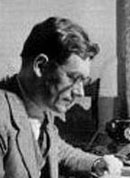 |
Lecture delivered at the Society’s Anniversary Meeting on 13 June 1991. Sir Denis Wright GCMG first went to Iran in December 1953 as charge d’affaires to reopen the British Embassy after the break in diplomatic relations following Dr. Moussadeq‘s nationalisation of oil, remaining there under Sir Roger Stevens as counsellor until October 1955 when he was appointed an under-secretary in the Foreign Office. He returned to Tehran as ambassador in April 1963 and served there for the record period of eight years before retiring in 1971. He was President of the British Institute of Persian Studies 1978-87 and is currently President of the Iran Society. He is an Honorary Fellow of two Oxford colleges, St. Edmund Hall and St. Antony’s. Translations of his two books, The English amongst the Persians and The Persians amongst the English have both been pirated in Tehran -the former by four different publishers under four different titles! Sir Denis joined the Society in 1945 and has lectured to it on three previous occasions.
***
It is a singular honour, if that is the right word, to have had my arm twisted once again and been asked to deliver a second Anniversary Lecture. On the first occasion, 18 years ago, I spoke about The Changed Balance of Power in the Persian Gulf. Today, inspired by my fellow-octogenarian Wilfed Thesiger’s Anniversary Lecture last year, I am allowing myself to reminisce and say something about the more interesting events of my 10 happy years in Iran - first in 1953-55 as charge d’affaires and counsellor at the British Embassy, and then from 1963-71 as ambassador there.
All this is ancient history so, for the benefit of the younger generation here this evening, let me recall the background.
Forty years ago, in 1951, Dr. Moussadeq, the Iranian Prime Minister, did the unthinkable and nationalised the Iranian oil industry, then almost %100 owned by the Anglo-Iranian Oil Co. (AIOC, now BP). This was Britain’s most valuable and prestigious overseas asset, 51% of it owned by the British Government. Various efforts by ourselves, the American Government and the World Bank to solve the bitter dispute between the British and Iranian Governments failed. In October 1952 Moussadeq, who had already closed our consulates, broke off diplomatic relations and expelled all our diplomats. The Swiss assumed responsibility for British interests. In August 1953 Moussadeq was toppled in a coup conceived by M16 and delivered by CIA: General Fazlullah Zahedi became Prime Minister.
I was then head of Economic Relations Department in the Foreign Office. I had one desk officer, Peter Ramsbotham (who was to succeed me in 1971 as ambassador in Tehran) handling oil matters: nowadays there is a whole department in the FCO dealing with oil and energy. It was, I suppose, because I was thought to know something about oil that I was now chosen to go to Tehran as charge d’affaires and re-open the Embassy for I had never before served in Iran. The nearest I had been was during the last War when for two years I was Vice-Consul at Trebizond, the Black Sea terminus of the ancient caravan route from Tabriz in Azerbaijan. While there, to while away the lonely winter evenings (my wife and I were the only two British in the place) I wrote an article entitled Trebizond and the Persian Transit Trade which was published in the October 1944 Journal of this Society — my very first link with what was then the Royal Central Asian Society.
However our hopes of an immediate resumption of diplomatic relations after Moussadeq’s fall foundered on unforeseen difficulties. Many Iranians, including the Shah, had — and still have — a deep distrust of the British because of past history. Moussadeq, now under arrest, had become something of a national hero for his action against the British oil company. The Shah and his advisers feared that a resumption of relations before an oil settlement would lead to internal trouble. The British Government, for their part, insisted that diplomatic relations must precede oil negotiations. It took 3} months before the Iranians agreed that diplomatic relations should come first. Eventually on Saturday 5 December 1953 a painstakingly drafted joint communique was issued in London and Tehran announcing the resumption of diplomatic relations to be followed by oil negotiations “at the earliest mutually agreed moment". The unusual procedure of issuing this important announcement on a Saturday afternoon ahead of a statement in Parliament was for fear the Iranians might change their minds!
I was now all set to fly to Tehran. But once again there was delay. When the Swiss Minister handed to the Iranian Foreign Minister the names of the staff — men and women but no wives — who were to accompany me he was reminded that Moussadeq had decreed that no British diplomat who had previously served in Iran should be allowed to return. The four senior members of my carefully chosen team had all served in Iran.
This was a bombshell. Would HMG bow to Tehran’s diktat or not? A decision on so politically sensitive a matter could only be taken by Ministers. Both Eden, the Foreign Secretary, and Churchill the Prime Minister, were in Bermuda seeing President Eisenhower. I was instructed to see Eden the moment he returned — this I did on Saturday 12 December (in those days Whitehall worked on Saturdays) when he told me that, provided I had one old hand with me, who knew his way around, we could drop the others. He left the choice to me. I opted for John Fearnley who had been in the Embassy’s Commercial Department at the time of the break. In place of the others replacements were hurriedly recruited and, notwithstanding the proximity of Christmas, we set off on 19 December — a dozen of us — in a small chartered Viking plane from Bovingdon in Hertfordshire. After spending successive nights in Athens and Baghdad and a very bumpy flight over the Zagros Mountains we landed in Tehran in the afternoon of 21 December at about the same time as Dr. Moussadeq was being sentenced by the Military Tribunal trying him — a coincidence that did not pass unnoticed in the Tehran press.
In his volume of memoirs Full Circle Eden states that I was armed with “formidable instructions”. They were certainly lengthy but in essence were quite simple —- namely, to establish friendly relations with the Iranian authorities, assess the possibilities of an oil settlement, prepare the way for an ambassador and maintain a united front with the American Embassy.
However, before I could get on with the job I found myself in an embarrassing situation with the Shah. He knew little about oil in those days and clearly wished to get the credit for the oil settlement he seemed to think I carried in my pocket. On the evening after my arrival in Tehran the Swiss Minister had arranged, at the Shah’s behest, for me to meet two royal emissaries. That was on 22 December: they came to see me again twice on Christmas Day. On each occasion they requested that I should submit direct to the Shah, through them and not the Foreign Minister, my proposals for an oil settlement. They also rather took my breath away by asking whether HMG had any objection to the Shah dismissing the Minister of Court, Husayn Ala, and by criticising General Zahedi, the newly installed Prime Minister- I explained to them that my task was to explore the possibilities of an oil settlement, not to negotiate. All I could say was that any settlement must provide fair compensation for AIOC and not leave Iran better off than other oil producing countries. I also told them that, while I would gladly keep the Shah informed, I would not wish to do anything without the knowledge of the Iranian Foreign Minister. What the Shah did with his Minister of Court was his business, not HMG’s.
In those days none of us in the Foreign Office had much of an opinion of the Shah who had shown considerable weakness in dealing with Moussadeq. I had little hesitation in recommending to London that I should expose the Shah’s game to his Foreign Minister, Abdullah Entezam, who had much impressed me at our first meeting. My telegram was submitted to Eden, who took a keen personal interest in all this: he agreed with my recommendation and I duly told Entezam the story and assured him that I would not deal with the Shah behind his back.
I doubt whether the Shahanshah — the King of Kings — had ever had a brush off like this before. Soon Tehran was buzzing with rumours that the Shah was furious with me and refusing to see me. In due course he got over his anger and I developed an easy, friendly but always brittle relationship with him — which continued throughout my years as ambassador.
I have often wondered whether I would have acted differently had I known more about the Shah’s two emissaries since, unknown to me then, they both had past links with the British Embassy. I might add that I did my best throughout my two stints in Iran to cut out self-appointed intermediaries such as these — the so-called “ professional angIophiles" — who traded on their links with the British Embassy mysteriously hidden by high walls in the very heart of Tehran and credited with powers and influence we did not possess.
To be continued…
DENIS WRIGHT
Source:
Wright, Denis, “Ten Years in Iran-Some Highlights”, Journal of the Royal Society for Asian Affairs, 1991 (October), Vol. 78(22), Part 3, pp: 259-271
|


