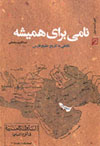
A book has recently book published in Iran reflecting on history of the Persian Gulf from old Persia until the present. Abdolkarim Mashayekhi has garnered various documents for supporting his historical claims in the book.
IBNA: Addressing the rising population, the book is aimed at exhibiting the glittering history of Iran's culture and civilization especially in the Persian Gulf region. Use of pictures, maps and documents in the book is one of the most prominent features of the work with regard to its goal.
The region's relief and stretch is the beginning topic of the book. All the topics are gathered from definite references. The articles presented at different Persian Gulf conferences make up a large portion of the book contents.
The Persian Gulf during ancient era is what follows. Introduction of the Illamite kings and the golden period of the region is another part of the book.
The book shows that all through different dynasties ruling on the region, it was referred to as the Persian Sea by historians like Estakhri, Ibn Hoghal, Masoudi, Ramhormozi and Sibouye.
In that era, the Hurmuz port was considered as the main marine trade center for Iran, India and Saudi Arabia.
The author has tried to delve into the being of the region since old times and expound on the political treacheries cast on the Gulf to change its origin.
The contest over the region by English and French forces and Nader Shah's death are other topics reviewed in the book.
The author has tried to cast an impartial look at the facts he has presented for readers.
Entrance of Ottomans in the Persian Gulf region and the prevalence of Russian colonial thinking there are other issued considered in the book.
The final chapters of the work deal with the period beginning after the victory of the Islamic Revolution.
During eight years of the Sacred Defense, the region turned into one of the most dangerous parts of the world where Iraqi forces attacked civilians.
The war made the region a hell for all oil carriers, passenger planes and ships and trade vessels. The Islamic Republic of Iran took the policy of security of all or for none and reciprocated Iraqis' actions in the region regarding trade ships and marine transportation in the region.
The events are reported only until the signing of the UN Security Council Resolution 598.
The book has been published and marketed in Iran by Andisheh Javan Institute.
Source: Iran Book News Agency (IBNA)