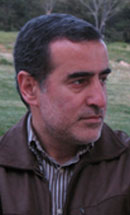
In Iran, writing memoirs by political figures, travelogues of pilgrimages, memories and autobiographies by personages have a long history. Writing memoirs is a new form of historiography in the contemporary era which came into vogue under the kingship of Nasser-e Din Shah Qajar when the king and his house tended to pen memories of their timely visits. However, a book entirely devoted to memories has never been published since the victory of the Islamic Revolution in 1979 except for a few royal travelogues and personal accounts.
With the fall of the Qajar dynasty and rise of the Pahlavi regime in Iran, writing memoirs and relating memories of foreign visits gained momentum especially at a time Iran and the region underwent monumental political and geographical changes.
Throughout the past several decades, Iranians have displayed a marked tendency to accumulate personal experiences; maybe because such experiences have never been addressed properly in these decades given the country's tumultuous conditions.
Today, one of the major losses in memoir writing is that we [Iranians] have been in need of such experiences to lead the country in the correct path. On the other hand, the world has shown a strong eagerness to learn about Iran's developments and the fact that they [foreigners] record every detail about Iran's events is proof that today's Iranian society is highly focused upon by the world community. Writing memories by political figures in Iran is a dire need given the current circumstances in the country.
Writing diaries and memories is not limited to globetrotters, politicians or diplomats, and its use is far more than being merely referred to by historians in their pursuit and analysis of historical events. Taking notes of different walks of life in social studies, especially in sociology, has been widely focused in recent years.
Aside from conventional data collection means like observations, interviews, questionnaires, and content analysis of texts, social researchers have gained interest in novel tools for collection of data like perusing personal diaries of common individuals and taking them as valid research references.
Rather than analyzing past occurrences, the new approach in writing memories and recording events is more likely to be focused on the order things happen to speculate future events. Yielding to such an approach, some politicians reach out for their desired goals by releasing certain memoirs much sooner that it is desired or, at times, put together and categorize their diaries to be released at a certain time in future.
Fascinating topics need to be developed; writers must seek them and this never works the other way round. Most fascinations cannot be pursued in past events and the present is all fascination if we look correctly. When dealing with historical figures, publishers, whether state-run or private, adopt certain considerations. Indeed there have been figures in Iran's history of the past 100 years with some services despite mistakes, but most of the publications since the 1979 Revolution are tarnished with extremes; Writers should write the truth regardless of domestic sensitivities and leave judgment to readers. The resultant writings must never been deemed as being in favor of certain figures.
The history of the contemporary era is definitely studied and criticized in the future. Re-writing some works and doing things several times is another fault issue in our time that should be addressed as well.
Memoirs about contemporary history developments should be released in the market so that readers become informed about the realities of their time through new approaches and insights. When undocumented pieces of data are released, one shall not seek to decline or approve them, but should take them as a call for getting minds to think and research the related subjects. Under the current social circumstances in Iran where ideologies prevail, a historian has to adopt certain considerations in reporting historical events and carefully shed light upon the hidden aspects of them which sometimes results in highlighting minor issues.
Another caveat to consider is the large and growing number of centers established to record the history of the Islamic Revolution. What bothers us is not the number of such centers in Iran, but the views and approaches they take that limits the access to their reserves, or impossible at times, for the interested researchers.
While some publishers welcome historically challenging topics, there are others that refrain from them. We are living at a time that there are hundreds of domestic websites and blogs with primary focus on history with some presenting history erroneously or partially; and publishers can prevent historical deviations by putting forward novel perspectives in their publications.
Addressing historical deviations should become a high priority for publishers. Although the large number of historical releases is a big step in preservation of the Revolution memory, their following a directed and pre-defined approach prevents their progress to the ambitioned state.
Mahmoud Fazeli
Translated by Abbas Hajihahshemi