
|
Our lessons with Martin Luther King: Eight students recall a special class (2)

 |
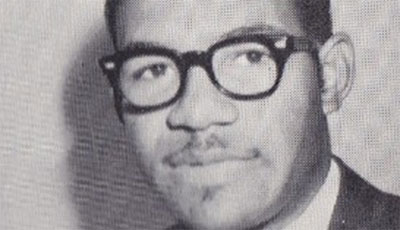
Charles A. Black: 'It was generally pretty boring'
Charles A. Black was involved in organizing so many sit-ins his nickname became "Sit Down Black." His friend and fellow civil rights leader Julian Bond says Black still leaves voice mail messages using that moniker.
Charles Black recalls his teacher's "horrible monotone; it was nothing like how he sounded when he was giving a speech."
After college, he went on to run a consulting business with Bond and other civil rights leaders like John Lewis and Lonnie King. It helped supply a more diverse workforce to government offices.
Today he continues his civil rights work, in addition to acting and voice work for TV and films.
What I remember about the class is that it met for two hours in the afternoon not even for a full year. My ex-wife told me I had to stop saying this, but I thought at the time it was generally pretty boring. We'd sit in a circle and Dr. King, he had this horrible monotone; it was nothing like how he sounded when he was giving a speech. But he would use this horrible monotone and would talk about all this heavy material, and it was after lunch so I know I'd get tired.
I think in a way having him teach a class, it was Morehouse's way to give him some income and give him something to do. You know how poor he was. He really didn't make much money at all, so this was at least some steady income.
I think there was an emphasis in the class more on multinational philosophy folks like Gandhi and it contextualized the philosophy of what we were doing with our protests. Looking at the great thinkers like Plato and Socrates and Gandhi's philosophy of nonviolence, this was a concept that had been around for a long time, and it was grounded in something much bigger than us. This was really at the core of all his great speeches. I do remember a good debate about Machiavelli and talking about do the ends justify the means. Dr. King disagreed; he said the end is inherent in the means. Nonviolence wasn't just about a philosophy; it was about what is right.
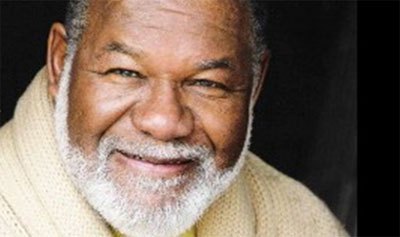
Black still works for civil rights. He also acts and does voice work for TV and films.
(During the boycotts) we targeted Rich's since they were the highest profile department store at the time. At the time Rich's said that the protest wasn't a big deal, but I learned later that they lost $10 million in sales that year. That was a lot of money back in the '60s. Hundreds of people closed their accounts or sent us their Rich's credit card so they wouldn't use it. They didn't know us from Adam's house cat, but still they sent them in to us. We put them in the bank deposit box.
We were encouraged to do another group of protests, but it was getting on Easter and the merchants really wanted us to shop downtown again and there were all these businesses that had black owners that wanted the shoppers to come back. There was a real split in the community. The older people in the movement wanted us to give in and call it quits.
Lonnie, Julian, and I knew what we needed to do. I said we need to get Martin Jr. here. He had just been in Alabama and he was sick with a terrible flu. He was at home and he didn't want to come in. But we called and convinced him that he had to be here. He said exactly the right thing. You would have thought that he walked on water after that. In my opinion, that was the best speech he had ever made. He brought us together. He said we could not afford the luxury of discounting the boycott. And the boycott did continue.
Julian Bond: 'I'm so ashamed I didn't take notes'
He was the first African-American nominated as vice president, although he was too young to accept. He was an outspoken member of the Georgia Legislature. He's even hosted "Saturday Night Live." But long before any of that, Julian Bond helped lead one of the first student sit-ins in Atlanta, where he was a student of King. To explain the protests, he and other students, including Charles Black, wrote "An Appeal for Human Rights," which ran as a full-page ad in the Atlanta newspapers and The New York Times.
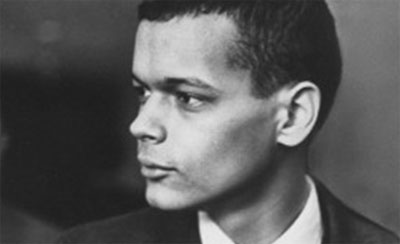
Julian Bond says he knew he was privileged to learn from King, "but he never made us feel as if he was that important."
At the March on Washington, Bond passed out copies of John Lewis' speech, which movement leaders made him tone down for fear of offending the president. Listed as "Horace J. Bond" on the roster for King's class, he disagrees with his old friend and classmate Charles Black. He didn't think King was a "little boring." To him the class was a good philosophical grounding for a life's work in civil rights.
I wouldn't call it boring, not at all; it was a survey course on the great philosophers like Plato and Aristotle. My memory of the class was not a strict study of the philosophers, though. We read them -- there was an awful lot of reading -- but mostly the class would use them as a kind of jumping off point to then talk about the civil rights movement and about what happened in Montgomery. I'm so ashamed I didn't take notes. A lot of my memory of the specifics of the class has all vanished.
(King) was certainly known, but he was not nearly as famous then as he became, and he certainly didn't act like a famous person. That was my feeling in being in that class and listening to him. He was important. He definitely seemed like an important person, and he was important in my life. I knew even at the time that I was privileged to learn from him, but he never made us feel as if he was that important. That's not what it was about.
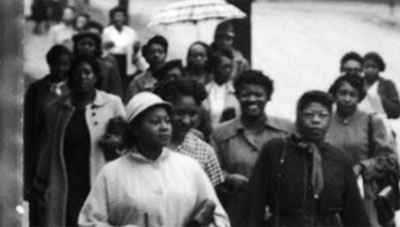
African American women walk along the sidewalk during a bus boycott, Montgomery, Alabama, February 1956.
When we started our plans (for the sit-in protest), I talked it over with my parents. They were a little worried about it. I remember my parents always told us growing up that whatever you do, don't get arrested. Getting arrested is like getting a tattoo on your forehead, they said; you will not get a job. Turned out that wasn't completely true. Thankfully.
While we were training and building toward sitting in, Dr. Rufus Clement -- who was the president of Atlanta University and the collection of black colleges -- heard about it. On campus you can't have any secrets, I learned. And he called us into his office. He said, "I can't stop you, but you ought to tell people why you are doing this." So together with a couple of other students we wrote the statement ("An Appeal for Human Rights").
It was a little scary to be doing this. We were kind of the good kids, and our parents always told us not to get in trouble, but this is something we knew we needed to do. We didn't know what would happen as a consequence. We didn't know if we would be treated badly or beaten, but we had to do this.
I led a group of people who went to the Atlanta City Hall cafeteria. It was in the basement. We walked in with about 20 of us, men and women. We saw black women working over at the steam tables, and they had both looks of fear and admiration. They had heard about it ahead of time, and so they were nervous already. The woman who I later found out was the manager was sitting in front of the cafeteria at the table and she said, "I'm awful sorry, this is for city hall employees only." I responded, "The sign out front said that the public is welcome." She said, "We don't mean it." So I told her, "I will stand here until you do." The police came and arrested us.
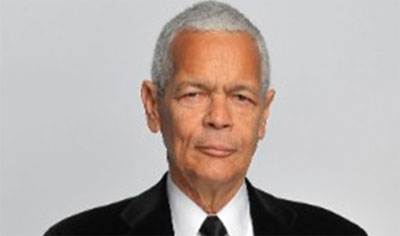
Bond remains a leader in the civil rights movement and also has been a successful politician.
There were 200 of us arrested all around Atlanta that day. Because so many of us had been arrested, they decided to try one of us from each of our groups. I was chosen from my group, and for the first time I found myself standing in front of a judge.
The judge bonded me over to a grand jury, and some well-to-do people in Atlanta paid our bail and we got out of jail. Then I immediately went with a couple of other guys straight over to Spelman where my heroism could be reflected in the eyes of all those beautiful co-eds.
I never got arrested again in Atlanta, during that time period anyway. I did get arrested some years later outside the South African embassy protesting apartheid. Just this year I was arrested at the White House protesting the Keystone pipeline, hoping to convince President Obama that shouldn't happen.
As I hear about the anniversary for the march, I have been thinking about what it was like. I remember listening to all the speakers. We all had different assignments. One of my assignments was passing out John Lewis' speech -- the one he wrote, not the one he had to edit and ultimately give.
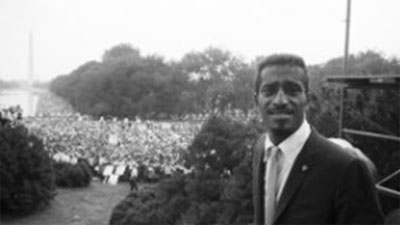
Sammy Davis Jr. was among the celebrities at the March on Washington. Bond recalls serving him a Coca-Cola.
I thought his speech would be the one that stood out. I remember his was the only one to use the word "black" people or citizens, I think. This was radical at the time. We were not calling ourselves Negros or colored people.
I also had a fun job. I was in charge of giving Coca-Cola's to the movie stars. I remember giving one to Sammy Davis Jr. and he pointed his finger like a gun at me and said, "Thanks." I don't really remember talking to any of the others, but I saw them and was excited to be around them. There was Burt Lancaster and Harry Belafonte and Joan Baez and Bob Dylan.
At the March on Washington: The anger, fear, love and hope
The Rev. Amos Brown: 'More intense than my other studies'
His church is known as Ebenezer of the West. A San Francisco fixture for more than 160 years, it's been visited by presidents and international dignitaries and has provided food, housing and help for those in need. But before he became pastor at Third Baptist Church, the Rev. Amos Brown was mentored by civil rights activist Medgar Evers.
Brown first met King in San Francisco after riding with Evers cross-country to an NAACP meeting, where the 15-year-old Brown was a youth leader from Mississippi. Here he recalls King's class and the sit-ins taking place in Atlanta at the time:
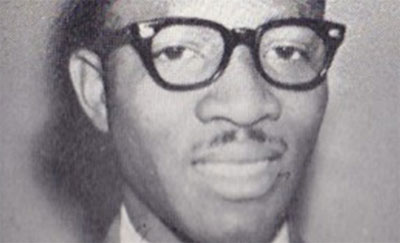
Amos Brown went to jail with King. He says he saved King's notes from a class on Rousseau's "Social Contract."
The class was in the chapel on the second floor. What I remember most from that class is Rousseau's "Social Contract." I actually have the notes from that class written in Dr. King's own hand. They are in an old Blue Horse notebook that cost 25 cents. You know that's got to be old then, right? There is also an interesting price list in his hand. It looks like he was raising money for an event.
We also learned about Plato's "Republic" and Kant and Hume. Also I remember we talked a lot about Dr. (Edgar) Brightman at Boston University, whose writings had a great influence on Dr. King when he talked about personalism -- the idea that every person was imbued with worth and dignity and metaphysics.
The class itself was a little more intense than my other studies, and yet we related the experiences we had in the context of this philosophy.
I had already been to jail with Dr. King and his brother. We all got sent to the prison farm to work. We were there for 10 days. But we continued staging sit-ins at Rich's (department store) and Woolworth. It was incredible. But the class itself, it was a little more intense, especially the moments in which we related the experiences that we had.
We also had a kneel-in at the white First Baptist Church. Kids from Georgia Tech and Spelman and Morehouse decided to go in. I organized it. I was privy to the floor plan and knew to sit right up front. Other students who had stayed in the back got thrown right out with the aid of the ushers. They let those of us in the front stay since the TV cameras were there.
I actually met my wife-to-be on the steps of that church. She was one of the Spelman students who was thrown out. After that I helped organize several other protests. We integrated Savannah beach. We called that one a "wade-in."
Brown is now pastor at Third Baptist Church in San Francisco, referred to as the Ebenezer of the West.
When I interviewed to go to school at Morehouse, I knew that's where I wanted to be. When I got in, I had a professor who was the same speech teacher that taught Dr. King. I was so happy -- I got A's in that class. But when (King) took it he didn't do so well. Can you imagine? I had been speaking for a while though.
When I was 17 years old, I gave my first sermon. I still remember it to this day. I talked about how important it was to stay true, how important it was not being disobedient to the vision. I urged them to take a stand others can't see.
To be continued…
Jen Christensen
Source: edition.cnn
|


