
|
Abdolhadi Haeri: A Man who Kept Hope Alive

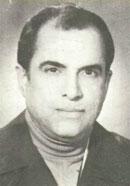 |
On the Occasion of the 20th Anniversary of his passing away
When Dr. Abdolhadi Haeri found out that his leukemia did not give him more time to add more knowledge to Iran, began to write his biography upon the recommendation of some of his students, and like Kopernik, held in his hand its printed copy in the last days of his physical life in the hospital. Now, twenty years have passed from that day.
Earlier, I have written at length that the scientists are like icebergs whose published works are their only external and visible part. And unfortunately, this part is only used in evaluating the scientific record of the scientists. The main part of the history of science is never written. If a scientist does not write, others may or may not have access to part of the hidden part of the iceberg through attempts like interview or writing of memories or inciting and encouraging the scientist to autobiography and finally conducting interviews with the students and survivors and studying the works, documents and handwritten remained form him or her. And it is very excellent that they themselves write while it is done less and Abdolhadi Haeri was among the few who wrote by using different types of nick names and briefly, and …
The writing of biography and memories which has become common today (and of course it is a good tradition) put on display very pasteurized works. The individuals who have made their utmost to take steps through law, sharia and ethics. The works which justify the entire practices of living for the writer and narrator with the elimination of all deviations and mistakes which I think it is not effective.
In the last part of his life, I became his student in Mashhad University and history group which was concurrent with his illness and his history classes were held every other one and some in his house. I had less time to go to his university room and house since I did not reside in Mashhad and went there only when I had a class. Perhaps it was better for his older students, who were with him from the very first days he came to Mashahd to write about him, but in their absence or lack of knowledge, let me write a little about his book.
The essence of writing scientific memories and the bittersweet fate of scientific activities is sacred and more scared for a scholar like Abdolhadi Haeri. He observed all religious and ethical matters in writing the materials which were also related to others from writing childish verbs to some amorous and perhaps unethical actions which are appropriate for the human nature but are considered as sins according to the Sharia and to expressing of the animosities of his own relatives and their obstructions in scientific advances which might incite family discontents. He did not fear to express his failures, friendships and animosities. In my view, Dr. Abdolhadi Haeri believed more than anything else that a man is a man and he should be seen a man with all the shortages. He believed that a man is not sacred whose actions and deeds and words are according to law, sharia and ethics. Dr. Abdolhadi Haeri studied in the west and his memories show that he was more compatible with the Christian culture. How can we write the destiny and memories and not to dispraise or not to backbite and accuse and not to take part in illegal and religiously-banned places and not to talk and meet with unjustified persons? Dozens of legal and ethical pretexts cause a man not to say everything correctly or to say something vaguely or ironically. Dr. Haeri made his utmost effort to free himself from some of these pretexts, writing his human biography, and worth more commemoration and attention from this viewpoint. When he became disappointed from the continuation of his physical life, he selected the name Omid (hope) for the character of his book.
I visited him for the last time two weeks before his human death in Mashhad’s Qa’em Hospital. As soon as he saw me, said, “How are you Mr. Jafari?” Then, we talked and laughed for half an hour about odd naming and that what had been his main surname and what name his father chose for his interest to philosophy and how he could select the name Haeri for himself by his uncle after the death of his father. I had a camera but was ashamed to take a photo. I may write for a few but I write for him that he was just a man with all human characters. A man who was alive for hope and kept hope alive.
Mohsen Jafari Maz'hab
Translated By: Mohammad Bagher Khoshnevisan
|


