
|
Ali Tatari (PhD), Director of Document Center of Islamic Consultative Assembly

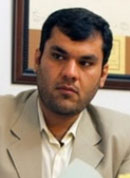 |
Note: Here is a brief interview with Ali Tatari, PhD, on the occasion of the 100th issue of Oral History weekly. Ali Tatari, PhD, is a university professor and the director of Document Center of the Islamic Consultative Assembly. He is also the son of Esmaeil Tatari, representative of Kermanshah city in 4th and 6th rounds of parliament. “Akhund Khorasani in Documents”, “The Developments of West of Azerbaijan in Documents of 3rd to 5th Rounds of National Parliament”, “Women in Constitution Era”, etc. are some of his works in the field of contemporary history of Iran. We asked him, as the secretary of the last meeting of oral history, held previous year in National Parliament Hall, to state his views about Oral History Weekly and the related site.
The site is a positive step in essence
All those active in oral history believe the philosophy of the site and the weekly is positive and a step forward. Despite the resistance of our society in accepting cultural issues, it can be claimed that we already felt the vacancy of such an electronic journal with such content. Although besides, you should consider that many people are too busy for daily check of a site, except in certain circumstances.
The Need for Periodical Meetings
A need is felt for the managers of the site to reconsider their methods of activity at least in every 30 or 50 numbers, how the weekly is sent, its weak points, and …. I mean the site should be checked and problems found out. This can be done through dialogues or periodical meetings. Problems of any field should be found out. Even those centers on the first ratings have a look at their past occasionally and successful workshops have a monthly regular operation check too. I think you are a little late for opinion poll. You may have gone over your operation internally, but it seems late for external one. It should be done actively and seriously. I should once more assert that your presence is much better than your absence.
And another point; these two sites received more attention initially but it seems they were less favored at some point of time and afterward. Holding meetings, dialogues, and taking into consideration of the comments and ideas can be a solution for renewing them.
Make Relation with Traditional Experts in Their Own Styles
It is important to be active electronically due to society developments, but one should consider that doing research in web space is still strange for some individuals. In other words, many experts are still traditional; they do not have email or anything. It is better to make a relation with them. Our best experts have no email. Unfortunately our young professors have no email too. They are accustomed to paper research and documents. As an example I should tell you that we have four publications in parliament library: “Baharestan Documents”, “Baharestan Publications”, “Baharestan Massage”, and “Baharestan Letter”. They are issued in our site in PDF format immediately, but some still look for the paper issues. You should have both. The paper issue is more durable.
Newsletter, Periodical, Yearbook
You have good subject matters that can be referred by those interested. I propose this content to be published as newsletters, periodicals and yearbooks. Your first hand subject matters are divided into editorials, news, articles, produced interviews, reports and translations. If the officials deem it necessary, they could be transformed into written form, because they are not found anywhere else and could be forgotten. Electronic documents have not found their proper place in people’s minds and archives yet. This is our greatest problem.
It is important to have a bilateral relation with National Archive, although there is no proper cooperation unfortunately, so that thousands of international documents are lost every day. This has been foreseen by the west, we are not doing it yet and this is damage. A virus or an attack can eliminate all the information at once. Sometimes even having back up files is of no help. So it is better to write them down, to have them beside the digital files forever. We should have them both and besides we should accustom the readers to use electronic tools too. On the other hand, it should be known this process is time taking and is not realized yet. It is a young plant which needs care to get strong enough.
Strengthening the International News Part
Sometimes I have reviewed the weekly fast and sometimes I have studied it thoroughly. Normally the domestic news is good enough. You almost cover the meetings, conferences, books, news, etc, as much as possible. Strengthening the translation part and world news about oral history will help to develop and harmonize views and framework of oral history.
Setting forth the world movements will help us in terms of educating and taking an example. We had basic problems in oral history, but gradually the tradition of oral history is accepted. We ignored the written form previously, did not record our memories and most social classes transferred their sciences orally. When it comes to scientific recognition there appeared contradictions and resistance. Review of the world development helps us to exemply. Even our historiography is western. We should care for the international renovations and reproductions to utilize the latest scientific accomplishments of others.
Interviewer: Maliheh Kamaledin
Translated by: Asghar Abutorabi
|


