
|
Saeed Alamian, Sacred Defense Writer and Journalist

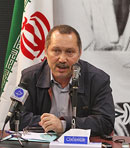 |
Note: With the background of war reporting and editorship experience in the press, Saeed Alamian has been writing events of Iran-Iraq war in the form of memoirs of war narrators for more than a decade. He has recently published the first volume of the Narrative of Hassan Bagheri’s life. This book was written by trends to memories and oral history of this Sacred Defense commander.
Recorded History of Oral History Brings New Moves
We shared the publication of 100th issue of Oral History weekly with Alamian. “I do not have time to read all of the articles,” he said, “If a book on oral history is published or I know the Author of the work, I follow them. Indeed, I read selectively. But overall, I have evaluated the Oral History weekly a professional and updated work. It has all aspects of a magazine in electronic format; the layout is also good.”
By pointing out that “special topic of this weekly makes fewer people to pay attention to,” he added, “one can always read, or expect to read, fresh news in Oral History weekly. Translation of foreign materials has attracted my attention, the information which stored in the mind and I know that they help to the quality of my works.”
From the critical point of view, Alamian first said, the background color of pages of Oral History weekly is dark and hurts the eyes. Then, he added “the place of scholarly criticism is empty; a two-way criticism, that is, a critic who dialogues with author about the published works or the works of another author. Even this can also be done for foreign works. This leads to the production of documents for the topics and the works.”
This writer considers the dialogue of critics as a kind of oral writing of topics and works. He also added, “What the speech suggests, is more honest and sincere than paper. In writing, author is attentive, knows what he writes, and is able to review. But in verbal criticism, remaining sounds have more truthfully role and effect. Recording of oral history is a writing of “speech” and we know what privileges it has, in comparison to novel and autobiography.
He advised that “the records of oral history’s works, especially in Iran, should be recorded and written in Oral History weekly.” He said, “In this ground, books are printed and gradually leave the windows of bookstores. According to history of oral history’s works, these books can be introduced again. New generations, also become familiar with them and memoirs of oral history is very useful in this regard.”
By emphasizing on the introduction of new books published abroad about oral history, Alamian said, “selective translation of diary books that are published abroad and studying them makes Iranian writers familiar with new procedures.”
He mentioned about one of his photographer friend who recently had a trip to Sweden and said, in the margins of Peace Museum of this country, he has seen memoirs books and oral history associated with their electronic version. And references to this version have drawn his attention, because by referring to any of them, audio or video source would play and the audience became certain about the citation to book. These are new methods that we must be aware of them.”
Latest news about Saeed Alamian is that, he has edited memoirs of Mohsen Rafighdoost from the first decade of revolution entitled by To date, I say, and Islamic Revolution Literature Bureau has given it to the Soreh-Mehr publication for print. “Memoirs of Mr. Mohsen Rafighdoost is important because of time the writer, Mr. Saeed Alamian has spent.” Hedayatoalh behboodi, manager of Islamic Revolution Literature Bureau said, “Although Mr. Rafighdoost have no executive responsibility, he is very busy and recording of diary took a long time. Saeed Alamian spends about three years for recording memoirs of Mr. Rafighdoost. After three years it was approved and submitted to the office of the Islamic Revolution Literature, but we asked Mr. Alamian to record and add the memories of Mr. Rafighdoost from the days before the revolution which on that period he was member of official welcoming committee of Imam Khomeini (RA), and it took place.”
Interview and Setting: Ahmad Godarziani
Translated: Zahra Husseinian
|


