|
REVISITING AKENFIELD: 40 YEARS OF AN ICONIC TEXT (1)

 |
Ronald Blythe’s Akenfield, now forty years old, is generally acknowledged as one of the most influential books in the field of oral history.1 First published in 1969, Akenfield is a classic which still has the power to move the reader with its unsentimental, straightforward descriptions of a rural life that was hard, unremitting and something to be endured. This evocative portrait of life in an East Anglian village illustrated the potential for a new kind of history which told the stories of ordinary folk in their own words. To the twenty-first century reader it is a powerful description of a world we have lost.
In this article I want to revisit Akenfield as a classic of British oral history, to examine how its reception and use has mirrored trends in oral history practice in the UK, and to reposition it as a text which can have a lot to say to oral historians today. For 40 years Akenfield has acted as a lightning rod, attracting criticism and praise in equal measure but always reflecting the obsessions of the oral history community. Akenfield should not just be seen as an exemplar of a certain kind of oral history practice that was path-breaking and yet not quite professional enough as some have intimated. Rather, I suggest that it can still teach us a lot about how to write history using oral narratives and dare I say it, offers a master class in the writing of a history which speaks to its readership.
Akenfield is a portrait of English rural life based on a series of interviews or conversations with the inhabitants of several villages located in the Deben Valley of East Suffolk, some twenty miles from the county town of Ipswich. In 1966 Blythe was commissioned to write a book about the changing nature of the English countryside. He decided ‘to do something unusual’ in his own patch, having been born in Suffolk and at the time living in the village of Debach. Some years later Blythe remarked that his only real credentials for having produced the work were ‘that I was native to its situation in nearly every way and had only to listen to hear my own world talking.’2 Oral history was not something with which Blythe was familiar; not altogether surprising as the term only
entered the British academic lexicon in the late 1960s - but a conversation with the village nurse demonstrated to him the insight to be gained from allowing people to speak about their own lives.
From there, I just shaped the book. I cycled around on a Raleigh … I would ask somebody to talk to me about keeping pigs – and suddenly he would tell me something astonishing about himself, or be so open about his emotional life that I was astounded. Often I hardly asked any questions at all, I just listened. These were people whose lives covered the 1880s to the 1960s, and they talked about bell-ringing and ploughing and the church and the village school.3
Blythe spoke to a range of inhabitants, drawn chiefly from the village of Charsfield but also from the surrounding villages and rural environs, in order to capture the rhythms and everydayness of an ordinary rural community on the cusp of change. The voices of labourers old and young, skilled craftsmen, professionals, men of the church and village women are represented, from the vet to the gravedigger, the thatcher to the magistrate. All engage with Blythe in what he called ‘a natural conversation’ about life, work and death, apparently speaking freely, openly and without sentimentality about a shifting social and economic landscape. The book as Blythe describes it, ‘is the quest for the voice of Akenfield, Suffolk, as it sounded during the summer and autumn of 1967.’4
Ronald Blythe was born in Suffolk in 1922 and has lived all his life in rural East Anglia - notably in the landscape described in Akenfield, and latterly on the border of Suffolk and Essex where today he resides in the house formerly occupied by the artist John Nash. His working life has encompassed employment as a reference librarian, the editor of Penguin Classics for more than 20 years and a Reader in a rural Essex parish of the Church of England.5 But predominantly Blythe has lived a writer’s life, ‘looking, listening, storytelling, dreaming – and toiling in the inescapable Suffolk manner’, influenced by ‘East Anglia, literature, Anglicanism and my artists and writer friends.’6 His literary output and contribution is encompassed by these interests: the English countryside, the everyday-ness of rural life, the place of the church and the spiritual in that environment and the representation of all of these by writers and artists such as George Herbert, John
Clare, Francis Kilvert, Benjamin Britten and John Constable.7 And running through much of Blythe’s work is an autobiographical thread that links the past with the present, which weaves together the spiritual and the secular, and which facilitates a conversation across and between generations of rural folk. All of this is done without the hindrance of rose-tinted spectacles on account of Blythe’s childhood and upbringing in the years characterised by depression in the agricultural counties and his experience of massive and irreversible change in the countryside which had profound effects on the structure and psychology of the rural community. Akenfield was not Blythe’s first book – he had already published a novel, collections of short stories and was a noted editor – but it was this book that brought him acclaim and set the tone for much of his later work.8
Akenfield is generally regarded as one of the seminal texts in the history of oral history in the United Kingdom, often coupled with George Ewart Evans’ contemporaneous studies of English rural life – also largely from Suffolk - which likewise were based on oral or ‘spoken history’.9 The significance of the book, then, derives in part from its timing: it was part of that social history revolution which viewed history from the bottom up, and which aimed to give a voice to ordinary historical actors. Following on the heels of Richard Hoggart’s The Uses of Literacy (1957) and E.P. Thompson’s The Making of the English Working Class (1963), Akenfield tapped into a new spirit within historical writing which sought to document and interpret the lives of working people and furthermore, to validate or legitimise people’s own interpretation of their experience.10 Until then largely the preserve of the antiquarian and the ethnographer, oral history now entered British historical practice with this book in particular partly responsible for a popular boom in the methodology at all levels, from academic to community-based studies.11
At the same time, Akenfield offered a different perspective on rural life than the social scientific approach, exemplified by W.M. Williams’ A Sociology of an English Village: Gosforth (1956) and his later study of Ashworthy in the West Country.12 Blythe acknowledges Williams’ work along with one of Ewart Evans’ studies, The Horse in the Furrow.13 It is perhaps worth noting here that Ewart Evans argued that there were two entirely different kinds of knowledge – that derived from oral evidence and that deduced
from scientific analysis – and ‘they are not in their essence antagonistic but complementary.’14 Akenfield sits within this longstanding English local history tradition but offers a view of rural life drawn from people’s own sense of the past and the present.
.
The second and perhaps most compelling reason for Akenfield’s place in the canon of British oral history is its sheer literary quality. Blythe is a poetic writer; indeed the author remarked in the preface to the Penguin Classics edition that ‘the book is more the work of a poet than a trained oral historian, a profession I had never heard of when I wrote it.’15 The author’s skills as a writer are artfully deployed, not only to evoke the Suffolk landscape - ‘On a clear day – and they are mostly clear days in this part of the world - you can see as far as you can bear to see, and sometimes farther’;16 but also to mediate between his respondents and the reader in a series of introductory passages which provide context for the ruminations of his interviewees. And arguably (and more controversially) it is Blythe’s skill as a writer that allows him to convey the words of his narrators with such sympathy and unsentimentality.
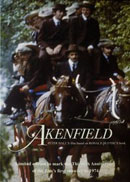
Akenfield, then, has a prominent place in the annals of British oral history on account of its methodological innovation and its quality as a piece of literature. Indeed it is probably fair to say that it occupies a special place in British cultural memory, prompting not only several reprints, culminating in the accolade of becoming a Penguin Classic, but also a celebrated film based on Blythe’s screenplay directed by Peter Hall and, in 2006, a homage in the form of Craig Taylor’s Return to Akenfield, consisting of a series of interviews with the next generation of inhabitants.17 Having said this, many oral historians, while acknowledging Akenfield’s significance, regard it as a book of and in its time, a piece of history itself which, in the context of today’s practice, would not pass muster.
Upon publication in 1969 Akenfield was hailed as a masterpiece, The Times reviewer describing it as ‘a delectable book, a book to linger over and cherish.’18 But it soon attracted criticism from the relatively new academic field of oral history and the social science disciplines more generally. While the elegiac quality of Blythe’s village portrait
was recognised and appreciated, the lack of social-scientific rigour was widely deprecated. As early as 1972 following the publication of the second edition, Jan Marsh writing in the Cambridge Quarterly looked to Akenfield for the combination of ‘sociological authenticity with the kind of insights formerly regarded as the prerogative of novelists’ and found it lacking. ‘Exhilarating to read’ it might have been, but authentic and verifiable it was not according to this reviewer who deplored Blythe’s methodology as much as his deployment of a ‘cheap “mystical” version of pastoral idealism’ which allegedly shapes his portrayal of English rural life.19 Marsh was irritated by what she saw as Akenfield purporting to represent something it was not. Blythe himself said that Akenfield could be anywhere, ‘not spectacular’, ‘the book was meant to be about not a special village but any village’.20 The fact that Akenfield was a pseudonym for a number of villages was not in itself condemned, but Blythe’s failure to inform his readers of this fact was, and for Marsh this initial sleight of hand resulted in mistrust of the book as a whole. Added to this the realisation that the list of occupations given at the beginning of the book is also ‘sketchy’ if not a fabrication, and that the oral respondents speak little about their families and this reviewer is very worried indeed. ‘What all this amounts to is that not enough facts are included for the reader to check Blythe’s account of rural life for himself.’21
Similarly Howard Newby, at that time a sociologist conducting research on social change in rural Britain, reviewing Akenfield upon the appearance of the film in 1974 in one of the early issues of Oral History, expressed academic anxiety about the book purporting to be something it was not.22 ‘Although Akenfield is clearly not sociology’ he writes, ‘it certainly seems to be documentary, and even … oral history.’23 And yet he concludes it is neither of these. The amalgamation of several villages into a single fictitious one, the personal selection of respondents by Blythe and examples of what Newby describes as ‘artistic licence’, all combine to create a book which ‘is a statement by Blythe not by the inhabitants themselves.’24 Although acknowledging the book as a ‘magnificent piece of writing’ this reviewer, with his own intimate knowledge of Suffolk rural life and concern about scholarly integrity, concluded that artistry and academic standards were uncomfortable bedfellows. ‘If all oral historians were allowed such artistic licence, what
then for oral history? More enjoyable, more pleasurable to read, perhaps, but certainly not history.’25 Newby’s anxiety, of course, was symptomatic of a more widespread debate within the historical profession regarding the nature and practice of history. Akenfield as Newby states, sits on the cusp – or, as he less charitably puts it, in a no-man’s land – between a novel and a documentary study. In 1975 these demarcations were more rigidly drawn; just a decade later historians were actively questioning the distinction between history and storytelling and advocating an easier and more productive relationship between the two.26
Concerns amongst oral historians about Blythe’s methodology are forcibly expressed by Paul Thompson in The Voice of the Past. Although Thompson is at pains to praise Akenfield, remarking that ‘it succeeds through the immediacy with which the spoken word confronts a reader with the presence of people themselves’, at the same time he compares it unfavourably with the ‘exacting standard’ set by Ewart Evans in his Ask the Fellows Who Cut the Hay.27 Whereas the latter’s work skilfully amalgamated historical and cultural perspectives with a close and painstaking attention to the language of the respondents Blythe, it is implied, plays fast and loose with his material; in short Akenfield cannot be trusted. Blythe is accused of ‘less careful scholarship’, blending stories from a number of villages into a portrait of one, inventing data and Thompson implies that Blythe has manipulated the words of his informants. Although the oral evidence in Akenfield is the book’s strength, in Thompson’s opinion its authenticity and reliability has to be doubted.28
Such criticisms are not surprising when we recall the scholarly context within which pioneering oral historians like Thompson were working in the 1970s. Oral history was a new methodology and was generally mistrusted by many historians and social scientists. Memory was regarded as unreliable; oral history did not produce data which could be verified and counted. Oral evidence was way down the hierarchy of acceptable sources, playing second or even third fiddle to written materials and especially official documents. Pioneering oral historians, then, were at pains to justify their practice to the critics. Verification of evidence obtained from oral interviews was one of doing this, cross
checking with written sources in order to separate truth from fiction as well as setting the oral evidence in the wider context and checking for internal consistency.29 Oral historians working predominantly within a social-science framework were also concerned about the representative nature of their data, recommending the use of scientific sampling methods and making strenuous attempts to obtain a representative sample of respondents.30 At this time oral historians were a somewhat defensive group within the historical profession, at pains to justify their practice in order to gain acceptance for themselves and their research. It was not until the 1990s that oral historians had the confidence to critique their own discipline, accepting that myth and subjectivity were intrinsic to the construction of oral accounts but in no way detracted from their veracity.31
The methodology employed by Blythe fell short of all of these ‘standards’ and therefore, in the context outlined above, it was difficult to defend. The picture of Blythe cycling around the villages, stopping to talk to people who might have something to say, with no concrete sense of a representative sample and lacking even a structured interview schedule, let alone a system of recording and transcribing the interviews, was enough to give the historian apoplexy, hence Thompson’s accusation of ‘less careful scholarship’. But we should remember that Blythe was not an academic or an historian in the professional sense; his approach to writing the book was a personal and literary one and his aim was not to produce a rigorous scholarly study whatever the expectations of the publishers Allen Lane who contracted Akenfield as part of a series of sociological studies of changing village life across Europe.
More critical perhaps were misgivings about the presentation of the oral history evidence itself. In 1971 Raphael Samuel, in a peroration on ‘The perils of the transcript’, argued powerfully in favour of maintaining the integrity of the spoken word in the process of translating speech into text.32 At its worst the spoken word might be ‘mutilated’, at best merely smoothed out, but for Samuel such imprecise transcription which ignores the rhythms and imperfections of the spoken word, which renders dialect silent and which even imposes the author’s interpretation of a respondent’s words, is a dangerous practice which leaves the reader suspicious. To drive home his point Samuel cited an extract from
Akenfield, a passage he suggested had been tidied up and which, in his opinion, sits dead on the page. Paul Thompson too writes of the dangers of mutilation and distortion and cites the very same passage from Akenfield to illustrate the pitfalls of failing to preserve the syntax of the spoken word.33 Both critics juxtapose Blythe’s rendering of the spoken word as text with that of Ewart Evans who, Samuel suggests, produces a more memorable passage because ‘the speech is ragged at the edges; it twists and turns, gnaws away at meanings and coils itself up.’34 In short, Samuel is suggesting to us that Ewart Evans has the facility, the artistry even, to retain a degree of authenticity whereas Blythe has somehow taken something away from the speaker. ‘One wishes to know’, writes Thompson of Blythe, ‘where the interview has been cut, and what has been put in to sew it up again.’35
Again, these concerns are reflections of a particular moment in oral history practice when the retention of authenticity and the attempt to render the spoken word as faithfully as one could was regarded as an essential skill of the oral historian. The motivation underpinning this was a laudable commitment to hearing the voices of the dispossessed, of not silencing those whose voices had been silenced in the past, a commitment to democracy in the interview and research process and the obligation to be a good researcher – ‘The historian ought not to impose his (sic) order on the speech of his informants’.36 And practitioners today are usually taught to aim to reproduce the narrator’s speech as closely as possible because ‘faithful reproduction takes us one step closer to actual data, any deviation becomes an error.’37 But we should remember that all of us, to some degree, manipulate our material to suit our agenda. Even Samuel and Thompson, by selecting a short extract from the middle of a longer conversation with the farm-worker Leonard Thompson have, at the very least, taken his words out of context. If one reads the extract in question as part of the longer description of his family’s circumstances the reader can comprehend all too well the material poverty and psychological hardship of this man’s experience.38
Notes
I would like to thank Ronald Blythe for his polite and helpful response to my enquiries and Callum Brown and Donald Spaeth for valuable comments on earlier versions of this article.
1 Ronald Blythe, Akenfield: Portrait of an English Village (1st edition, Allen Lane, London, 1969, 2nd edition Penguin, 1972; reprinted with new preface Penguin, 1999, published as a Penguin Classic 2005). All references to the text in this article refer to the 2005 edition unless stated otherwise. It was also published in French as Memoires d’un Villages Anglais and in Swedish as Porträtt aven Engelsk by Akenfield.
2 Blythe, Akenfield, Preface to 2nd edition (1999), p 8.
3 Blythe in Craig Taylor, Return to Akenfield: Portrait of an English Village in the 21st Century (London, 2006), p 7.
4 Blythe Akenfield, p 18.
5 For a brief biography written by Blythe see Taylor, Return to Akenfield, pp 3-7.
6 Ronald Blythe, Field Work: Selected Essays (Norwich, 2007), p ix.
7 It is not possible to list Blythe’s extensive literary output here but some exemplars include: Selected Writings of William Hazlitt, edited, with an introduction, by Blythe (Harmondsworth, 1970); Divine Landscapes (Harmondsworth, 1986); Word from Wormingford: A Parish Year, with illustrations by John Nash (London, 1998); Talking about John Clare (Nottingham, 1999). For an abbreviated but representative selection of Blythe’s writing over 30 years see Field Work.
8 The pre-Akenfield books included A Treasonable Growth (1960), Immediate Possession (1961); Age of Illusion (1963). There are strong echoes of Akenfield in Blythe’s collections of Church Times articles published in the Wormingford series, Word from Wormingford (London, 1997); Out of the Valley (London, 2000); Borderland (Norwich, 2005); A Year at Bottengoms Farm (Norwich, 2006).
9 George Ewart Evans, Ask the Fellows Who Cut the Hay (London, 1956); Where Beards Wag All: the Relevance of the Oral Tradition (London, 1970); Spoken History (London, 1987), amongst many others.
18
10 Although very different, Studs Terkel’s work had the same ambitions. See particularly Hard Times (1970).
11 Paul Thompson, Review of Return to Akenfield, Oral History, vol 35 no 2 (2007), p 111.
12 W.M.Williams, A Sociology of an English Village: Gosforth (London, 1956); A West Country Village, Ashworthy: Family, Kinship and Land (London, 1963).
13 Blythe, Akenfield, pp 11-12.
14 Ewart Evans, Crooked Scythe: an Anthology of Oral History (London, 1993), p 197.
15 Blythe, Akenfield, p 8.
16 Blythe, Akenfield, p 21.
17 Akenfield (1974), directed by Peter Hall; Taylor, Return to Akenfield.
18 The Times, 10 May 1969, p 20.
19 Jan Marsh, ‘A Miraculous Relic?’, The Cambridge Quarterly, vol VI, no 1 (1972), pp 70-77, p 76.
20 ‘Ronald Blythe: Writer’ in Taylor, Return to Akenfield, p 7. Blythe explains the choice of the name Akenfield in his preface to the 1999 edition.
21 Marsh, ‘Miraculous Relic’, p 72.
22 Howard Newby, The Deferential Worker: a Study of Farm Workers in East Anglia (London, 1977); Green and Pleasant Land: Social Change in Rural England (London, 1979); Property, Paternalism and Power: Class and Control in Rural England (London, 1978).
23 Howard Newby, ‘Akenfield Revisited’, Oral History vol 3, no 1 (1975), p 80.
24 Newby, ‘Akenfield Revisited’, p 81.
25 Newby, ‘Akenfield Revisited’, p 82.
26 See, for example, John Brewer and Stella Tillyard, ‘Waterland: History and Telling Stories’, History Today, vol 35, no 1 (1985), pp 49-51.
27 Paul Thompson, The Voice of the Past (3rd edition, Oxford, 2000), p 102. It is interesting to note that Ewart Evans was also criticised, particularly for his interest in and use of myth and his stress on the continuities in rural life. See Alun Howkins, ‘Inventing
19
Everyman: George Ewart Evans, Oral History and National Identity’, Oral History, vol 25 (1994), pp 26-32, here p 31.
28 Thompson, Voice of the Past, pp 101-2..
29 For a summary of this debate see Rob Perks and Alistair Thomson (eds), The Oral History Reader (2nd edition, London, 2006), pp 2-4.
30 Paul Thompson’s Edwardians project at Essex University was typical of this approach. For details of the sampling and data collection methods employed see http://www.qualidata.ac.uk/edwardians/about/introduction.asp
31 See Raphael Samuel and Paul Thompson (eds), The Myths We Live By (London, 1990).
32 Raphael Samuel, ‘The Perils of the Transcript’, Oral History, vol 1 (1971), pp 19-22.
33 The passage cited is from the interview with Leonard Thompson, in Akenfield, p 32.
34 Samuel, ‘Perils’, p 391.
35 Thompson, Voice of the Past, pp 260-1.
36 Samuel, ‘Perils’, p 391.
37 R.O.Joyce cited in Valerie Yow, Recording Oral History (2nd ed., Oxford, 2005), p 317.
38 Blythe, Akenfield, pp 32-44.
End of part I
To be continued…
Lynn Abrams
Source: eprints.gla.ac.uk
|


