Before starting we want to state a few caveats about what we will be talking about when we talk about oral history and archiving.
First a warning: we will be talking within the perspective of archival practices as they have emerged in the United States. Therefore some of what we say has to be recognized as culturally and historically limited, and of course reflective of a real difference in resources, although given current spending policies in the United States this difference may not last long. But a good deal of this discussion has to be seen within the context of traditional European, especially Anglo Saxon, ideas about the law as that law relates to issues of ownership of intellectual property, public accessibility and personal and institutional privacy.
Secondly, we are going to use the term archives to cover a wide field including the repositories of institutional records, libraries or manuscript depositories holding research collections and online digital archives. In each case we should keep in mind what we mean when we talk about archival practice, and the special nature of the records involved when we talk about oral history. We are also talking about archives management and practice as an active, not passive, responsibility -- active, not only because in this century the archivist, overwhelmed with the amount of records to be managed has to actively cull that record and make decisions selecting only a fraction of it for preservation and organization, but also because oral history records push this active role even further. In many cases, archivists are called upon to mount, direct and conduct oral history projects for the institutions for which they work, and manuscript libraries devise programs to complement the collections that they have amassed. Therefore they have a direct responsibility for the creation of the very records that they will preserve, organize, manage and present to the public.
Thirdly, we want to stress the issue of technology. Like all records, the preservation, management, organization and public presentation of oral histories is to a large measure determined by the nature of the tools used for the creation of the record, and the format that those tools create. It is important for the archivist, especially in this digital age, to recognize and understand the needs of the various technologies that under gird the field. While digital formats require extra vigilance in terms of long term preservation, through migration and building redundancy, they can be preserved for infinity. This vigilance demands purchasing high-level digital equipment, as well as good preservation practices (A good place to start an inquiry concerning recording equipment and practices is: www.vermontfolklifecenter.org/fieldguides. The Library of Congress also regularly provides updates on best practices in digital preservation)
Keeping these three points in mind: the possible cultural bias inherent in the procedures we want to describe, the activist role of the archivist and the history of the technology at the base of our procedures, we want to frame this presentation on a more practical level. We want to take each step of the oral history process, describe its history and evolution where possible, in the Columbia Oral History Office comparing best practices with what was actually done and thereby draw some lessons out of our personal experiences. We want to do this because many of the guides and much of the discussion of the management of oral history collections gloss over the details of what the real situation of an actual functioning collection is, and the particular problems we face. (For general questions concerning oral history practices and projects and other information a good starting point is: H-ORALHIST@H-NET.MSU.edu)
RECORDS OF PROVENANCE
If this were a workshop in oral history we would begin by outlining a project design, and then move on to a discussion of staffing and research. Here we want to concentrate upon those stages of the process that produce records that must be preserved, managed and made accessible. In general there are two types, external and internal. In this sense the staring place for a discussion of external records is the initial invitation to be interviewed. Ideally this would be in some formal manner, perhaps correspondence. Our long standing practice has been to send a cover letter spelling out the nature of the project, why that person is being asked to participate and a general statement about the steps in the process. To that letter we attach a copy of our procedures, which go into some detail about what will happen. The goal here is to produce a record that indicates informed consent. Our practice emerged out of the necessities of an elite program where the people being interviewed were public figures, whom we could assume were familiar with the processes of research and who had access to legal advisers. With the expansion of oral history work into fields of social and cultural history where it was possible that one would be asking people to participate who were not familiar with such processes and did not have access to legal advice, and, in some cases, were not able to read or write these practices had to be adjusted. Even if a written record can not be produced, it is important, and is now a matter of law, and in many cases a matter of institutional review, to create some record that indicates that one has fully explained the process and allowed the person selected for interviewing to fully understand what his or her rights are, and what will happen to the products of the interview. In other words, oral history ethics revolve around granting those we interview the right to review and even edit, or partially restrict their interviews. University Institutional Review Boards largely oversee ethics in all human subjects research in the United States, with the rare exception of Columbia University where the Oral History Research Office has been granted an exclusion from review based on our reliance on an ethically stringent series of practices that allow those we interview to place their own controls on both content and use.
Regarding communication with those we interview about their rights, there are situations in which interviewees may not be able to provide consent in the way we normally expect.
There are several ways to deal with such situations from dealing with close family members or community liaisons, who can speak on that person’s behalf, to recording an initial conversation in which all these details are completely covered. No matter how one proceeds, records of the interaction with potential interviewees must be kept. In situations of interviewing people about traumatic experiences, we may also reach out to experts in the field of mental health, who can provide those we interview with professional services in case they are required.
The records we keep on such communications are records of provenance. They tell us of the origins of all the subsequent materials, which will define our work. Thus it is important to set forth a few distinctions. The ways in which we conduct ourselves in this initial stage may differ from the ways of other social scientists. As archivists we must assume for the most part that the interview we produce will become a public document. Our interviews are only very rarely covered by agreements to respect and maintain anonymity. Even when we are conducting a project which is internal to an institution, we have to assume that at some time in the future someone other than the researcher and the interviewee will have access to the text, in all probability to the full text. The interviews will not be hidden away in a cellar or attic after the publication of a book summarizing the results of the research project. In oral history there is no source monopoly. Thus it is very important that the archive maintain such records. Perhaps, not every culture is as litigious as that of the United States but in our case we have to be prepared for that time when someone we have interviewed sees or hears their interview quoted or cited in some manner that they feel injurious to themselves or embarrassing, and have at hand a record of all of our understandings.
A second and maybe even more important reason is to overcome the inherent bias in copyright law in favor of literate creators and publishers. Emerging out of the enlightenment in Europe the aim of copyright was to protect the individual rights of both for a long enough time for them to reap a profit on their work. But those laws made no accommodation for the rights of those who held traditional knowledge, folklore, oral traditions; aspects of communication where the rights may be those of the community. One could say, it was a form of colonization wherein it was quite possible for literate people to expropriate the product of non-elites – think of the use of folk tunes in classical symphonies, or novels, or more immediately what modern pharmaceutical companies are doing to traditional medicine today. By recognizing the rights of those we interview explicitly we can implement local ideas of ownership.
Internal records are accumulated in the process of defining the project. They would include memos etc. indicating the initial conception of the project, any grant applications, of course, and records of staffing and funding. Most important they would include materials created in the process of research for the interviews. When someone agrees to be interviewed it is expected that the researcher/interviewer, archivist/historian will undertake a serious research effort prior to and during the interviewing process, producing along the way a set of notes and a bibliography of works consulted, as well as an interview outline and a record of documents consulted and where they are located and can be found by those consulting the interview. This is best practice. Unfortunately not very many projects produce and maintain such records, Columbia included. There are several reasons given for lax practice. Research records, it is argued, will never be useful to anyone else, making them public would be a violation of confidentiality, they could be potentially embarrassing to both parties to the interview, etc. Our opinion is that such arguments are simply excuses. At a time when we are more and more concerned to understand the interview as a joint creation and a time when we recognize the role of the interviewer in the process of the interview it is crucial that we keep these records. At one time the interviewer was seen as removed emotionally and cognitively from the interviewee and it was argued that if properly conducted and if all biases were eliminated any one interviewer could produce as good an interviewer as any other. Thus it was unimportant that we know much about the interviewer. This was an especially potent argument among archivists. Such passivity is no longer possible, nor desirable.
THE INTERVIEW
From most any perspective the heart of the oral history process is the interview. While it may be the case that there are still situations where the interview involves note taking we will assume, for this discussion, that we are talking about some form of electronically recorded conversation. The Columbia University Oral History Research Office was founded in 1948 and therefore we have had experience with a variety of recording formats, each presenting its own problems. Legend has it that the first interviews were recorded on wire recording devices. This claim cannot be verified because the second part of the legend goes on to say that those wire recordings and that equipment were once donated to a proposed museum of recording artifacts, which was never built, and the wire spools were lost along the way. No one now working in the Office never seen such spools and there is no record of them ever having existed. However, among the earliest recordings we still have in our files some on laminated paper. They are in such state of decay that the next time they are played will be the last, and we have never had the money, a sizeable amount, we think, to transfer them even if we could find a sound laboratory that has the proper equipment for such a transfer.
Very early in the life of the Office recording was done on reel-to-reel recorders and we now have about 3000 hours of reel-to-reel recordings. Luckily enough we have found that most of these tapes are still in fair condition and are capable of being replayed and reproduced. When we first started recording on reel-to-reel tape it was possible to purchase equipment that recorded at variable speeds, 1 and 7/8ths, 3 and 3/4ths,and 7 and 1/2 rpm. Since tape was expensive at that time, it was decided to record at slower speeds even though best practice suggested that a better recording could be obtained at higher speeds. In addition, it seems that different interviewers had a favorite speed so there was no standard. In the mid 70s the whole field was standardized at 7 and ½ and eventually there was no inexpensive playback equipment available for recordings at slower speeds. We still have an old and very large wooden Tandberg that can play tapes at variable speed. It is still held in the Office but we now use a commercial sound studio for any reproduction of reel-to-reel recordings. Whenever possible we have made attempts to migrate the recordings to, at first cassettes, and now to a digital format which we will describe below. It is a slow and uneven process totally dependent upon finances and staff.
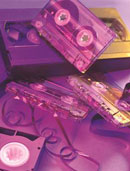
In the 1970s the transition was made slowly but surely to cassette recording, and we now have over 5000 hours of such materials. Although many have speculated on the shelf life of these recordings so far we have not had any problems, but we know that the most problematic of all of our recordings are those done on cassettes before standards were developed for the field. Expert advisers have informed the Office that it is unwise to replay these early cassette recordings. The Columbia Libraries are now transferring our analog files to digital ones, and we have recently transformed 1,500 hours of analog records at risk into digital formats. We expect that this work will continue to be done at a regular pace.
In the early 1990s we moved to so-called digital recording, which still used analog formats as a medium of storage; first using the DAT format and then the MD or mini disk. At this date DAT recording has virtually disappeared along with the equipment to record in that format and mini discs are no longer produced. We have recorded solely on digital recorders since 2003.
Today our preferred digital recorders act as hard drives and simultaneously back up the data on compact flash cards. We record at the highest bit rate that our recorders are capable of, according to Library of Congress preservation standards. After conducting the interview, we copy the master files over to two different preservation sites- a local external hard drive and the University’s local server. In turn, the files on the server are ingested into an asset management system by the Libraries Digital Preservation department. After the master files have been safely backed up, we create compressed mp3 derivatives for use in transcribing, audit editing and general inter-office review.
Up until the 1960s the Office gave no heed to quality sound recording or preservation. All interviews were transcribed, a process we will get to in a few minutes. As long as the recording was capable of being heard and understood by the transcriber it was considered
of good enough quality. Tapes were not preserved but were reused for the next interview after creating the transcript. It was believed that no one would ever be interested in the recording and it could be embarrassing for those interviewed to have someone listen to their conversation full of pauses, false starts, ers, and ums and other locutions. The model for the interview was a well-crafted memoir edited in order to make the language as close as possible to a literary style. Indeed, in some of our earliest interviews the questions were eliminated as an intrusion.
Once it was decided to retain the tape recordings, little was done to store them properly in a temperature and humidity controlled environment. They were simply labeled, their existence noted in a master file, and packed away in boxes. They would be made available in special circumstances but it was estimated that only one out of 1000 researchers ever asked to listen to the tapes. By the late 1970s and early 1980s, however, more and more inquiries came in from filmmakers and videographers seeking to use portions of the recordings for their documentaries. Now, in the age of the internet a real effort is being made to post our interviews, in all forms, on the internet. As we will see later, this poses complicated legal and ethical problems, but it also means that methods must be found to digitize all analog recordings, migrate those digital recordings, which are now in outdated formats, and re-index and re-catalog everything. This is, perhaps, the most important and demanding archival problem facing the Office at this time.
Just staying with the issue of tapes for now, it is clear that analog reel-to-reel tape, which was the accepted preservation media, has been phased out by the industry along with the necessary playback equipment. It is the general consensus that digitization is the way to go which raises questions about standards of access, preservation, rights, management, funding, and infrastructure. In addition acquiring the equipment necessary for transfer is a huge capital expenditure which means that most of the work will be outsourced in order to work carefully with disintegrating analog formats. The added expense is worth it, in our estimation, as it is important to ensure consistency in sound levels, metadata records and professional preservation practices that can only be done by well equipped labs.
To be continued …
Ronald J. Grele (PhD)
Former director of Columbia University Oral History Research Office