
|
Oral History Theory

 |
Oral History Theory
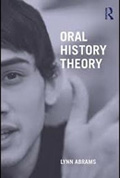
ORAL HISTORY THEORY. By Lynn Abrams. London: Routledge, 2010. 214 pp. Hardbound, $115.00; Softbound, $29.95; eBook, $29.95.
Oral History Theory is a book of large ambitions. It seeks to winnow through the increasingly large and varied literature on oral history and the body of theory that underlies and defines the practice in order to “provide a user friendly guide to [that] theory” (viii). That Lynn Abrams is successful in so many ways is a testament to her wide and astute reading of works based upon oral history interviews in both historical and cultural studies, various social sciences, and newer fields such as performance studies (although, curiously enough and probably of some interest to an older generation of oral historians, not much folklore), as well as her ability to draw from them the theoretical implications embedded in such a wide range of methodologies. While I have some reservations about the details of the story as presented here and some considerations of where we can go now, based upon the conversation that Abrams has initiated, none of that should diminish the achievement.
A good part of the accessibility of Oral History Theory lies in its organization. Abrams starts her analysis with the conscious attempt to move the discourse from projects to process—the necessary first step toward a discussion of theory—and by trying to pull together the wide range of definitions and practices that define oral history. She then traces out the transformation in thinking about oral history and fieldwork practice that came in the wake of the movement among oral historians from a drive to accumulate data to a concern with the creation of texts (from information to culture). Next, based on many sources, but heavily reliant on the work of Alessandro Portelli, Abrams outlines the unique characteristics of oral history as a genre and follows with chapters concerned with the ways the presentation of self, subjectivity, memory, narrative, …
Ronald J. Grele
Former director of Columbia University Oral History Research Office
Source: http://ohr.oxfordjournals.org/content/early/2011/07/19/ohr.ohr059.extract
|


