
|
War is Unwritable

 |
The cultural history of war is a very important approach in historiography which not only reviews the hidden angles of war and contributes a lot to understanding the “spirit of a war” by the mind and the language of a society living during a war, but also gives valuable research materials to other scientific fields concerned with the culture. As the book Sites of Memory, Sites of Mourning authored by Jay Winter elaborates on the complicated impacts of WWI, there are leading authors in the area of resistance history and Sacred Defense of our dear and brave people in the eight-year imposed war who have focused on the war history with this important approach.
The following article has reviewed the works of some of these writers:
War and Memory; the Approach of Cultural History toward War and War Memoirs
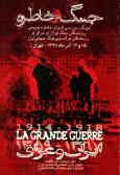
Now, it is nine years that valuable book War and Memoir - an anthology of about war memoirs of the Iranian (and Iraqi) fighters and the French combatants of WWI – has been published. It is a book which is still remained unique. This is not because of its perfection but represents the inaction of academic and non-academic research centers I wish at least five other books like this had been published since that time so that today we were able to talk about the intellectual consequences and waves of the book’s publication in the country’s research and scientific centers, and introduced the similar and close measures to this activity by other centers and institution.
I would feel pity if several years after the publication of the book (2002, by Sureh Mehr Publishing Co.) I introduced the book just in a way that I did a few years ago. Although the book is unknown for many academic circles, it is necessary that its subjects are repeated. Preferably, I refer the readers to Kaman Biweekly No. 175 instead of writing previous subjects, and this time for introducing the book which is worthy of studying, I look at it from a new viewpoint, the one that is the result of a continuous intellectual effort about war during the recent ten years.
Among the seven articles of War and Memoir, I preferred to choose and stress the one which is closer to my goal, hoping that finally the reader also finds out the purpose, and thinking about it boosts his or her hunger for studying the book.
The fire of war has quelled and the ash of destruction has spread everywhere. Now how can we narrate the war for ourselves and others in a way that in this narration, a collection of artistic and literary functions, attitudes, methods and creations are made public well and the perception of the war collection is achieved inseparably from its entire characteristic?
How can we achieve a history immune from these plain secrecies out of the historical themes the important undesirable events of which (ranging from the horrible crimes and consequences of war to blind and aimless violence in the battlefields, fears, threats, impositions and so forth) have sometimes been purged so skillfully that the understanding of parts of it has become impossible for the posterity?
Is it possible to write a history which is able to approach and engage with the human''s body, pleasure and pain by citing the functions and mentalities of war''s perpetrators?
Is it possible to use post-war psychological harms to the benefit of reviving the memoirs which the post-war undeniable complication – the forgetfulness of body and the physical pains resulted from war – hinders them to be revived again?
These are just parts of shocking questions which the approach of cultural history toward war can raise and claims to study them. The content of the valuable article of Eduan Roseau –French researcher – in the book "The Cultural History of Great War" represents the significance of this approach by attributing to the efficiency of war memoirs. He has ended the article with this considerable comment from Carlo Ginsburg that the humans are free to choose between "adopting a weak scientific status for achieving important and effective results, and adopting a strong scientific status for reaching slight results".
I use this comment well for adding this issue at the end of the mentioned book that the memoirs –specially war memoirs – as an issue deserving research enjoy a status which not only involve the viewpoint of scientific, research and study fields and even beyond that, provide the grounds for numerous scientific majors and research and study centers, but also can base the formation of the centers of cultural studies in various fields, and this means the extraction of important and effective results from a material or materials called memoirs
(and here war memoirs) which some people may preoccupy with hesitation over the content value and their status in serious and effective studies and researches.
Sites of Memory, Sites of Mourning: A search for the conception of war with cultural history approach
When Mr. Ashtiani was busy translating “Sites of Memory, Sites of Mourning”, I witnessed closely his continuous efforts and repeated reference to the experts of translation and the issue of war. The contents of the book were very praiseworthy as well as very strict and this prompted him to translate with special passion and with a lot of questions (The book has been authored by Jay Winter and published by Sureh Mehr Publishing Co.).
I wrote the book''s preface through word by word studying of its handwritten translation and before they were given to the editor. My thought and interpretation was that the interdisciplinary nature of the book''s content – sciences regarding the culture such as history, anthropology, sociology, cultural studies, etc) would attract the interested from various academic and scientific tendencies. Moreover, it could attract the organizations involved in the collection, recreation and publication of war memoirs in various forms. Thus, I predicted that the second edition of the book was published very soon. But …
Without any reference to why and how this did not happen, now at the end of the year 1386 92007) – a few years after writing its preface – I introduce the book in terms of the cultural history approach; the one that has focused on the understanding of the spirit of war in the mind and language of the society lived during war by establishing a relation between the status of memory and mourning (on one hand) and the artistic, literary works, ceremonies and religious rituals (on the other hand).
The best sentence that I can say about Jay Winter''s effort in this book is that “Sites of Memory, Sites of Mourning” is the analysis of the complicated impact of the WWIon the European cultural history through concentration on one basic content called memorial-mourning format and content for those who were killed in the war; in other words, Winter in the book seeks to use the old and lasting nature of the traditional language of mourning which represents the status of memory in order to make us understand what the war does with the individuals'' life and how the memory of those who have been killed in the war is revived by those who are alive.
Winter in the book also seeks a very more important goal from searching in the status of memory and mourning that is why the single real effective language for portraying the war during the period between the end of WWII till the emergence of WWII and the emergence of new forms of modern life effects is still the traditional language of mourning which is manifested in the literary, artistic and visual formats in the form of ceremonies, and rituals? Does this mean the invalidity of a theory which regarded WWII and its large, inhumane and horrible dimensions as a reason for showing the end of the life of traditional language and its reach to the end of borders of its efficiencies and capabilities in portraying a powerful modern phenomenon? Is the victory of traditional language in creation and innovation of the emerging forms of the disasters and pains of the new wars a clear reason for the continuation of cultural history in the countries which had weathered the experience of these two wars entirely?
Although the writer in the book have described about one of the many aspects of cultural history – mourning history – and that is the cultural history of the WWI and by focusing on three main countries in the war i.e. France, Britain and Germany, it cannot be said that this insist and emphasis has distanced it from the main theme of cultural history approach – which may be called animism; because the approach of cultural history in any form is dynamic and has its own main questions with regard to the spirit of what has passed; a spirit which the cultural history approach is searching for it in various effects of language since the objectivity of war should finally and inevitably pass the filter of language in order find meaning for the humans. And this is the language which makes lasting the mental meaning formed from the war objectivity in various forms of memoirs, commemorations, ceremonies and rituals.
I like to end this introduction with a comment: in one of the issues of the journal "History and Geography Monthly" – 110 – there was an article entitled "The Nature of Cultural History" which is the journal''s interview with Misters Dr. Fazeli, Dr. Molla Slaehi and Dr. Rahmanian. Also immediately after this, the article "Ups and Downs of Cultural History" authored by Dr. Fazeli is seen. The studying of these two articles created both delight and regret inside me! Delight for the valuable discussion of cultural history has found a place for question, view and suggestion, and regret for none of these dear professors have not even made any reference to the book. Maybe they had never taken any look at the book.
In Remembrance of Memory
Rahim Nikbakht
Memory and memory-writing has an age-old antiquity in the history of human, in a way that the two can be regarded as twin. There are few works regarding the theoretical debates of this subject. Among few and excellent books in this regard, we can refer to two books from Alireza Kamari, "A Prolegomena to Memory-Writing in the Spectrum of Resistance Literature and Culture of Front" (published by the Artistic Center of the Organization of the Islamic Propagation in [1994]), and the other one is the valuable book "In Remembrance of Memory" (published in [2004] in Sureh Mehr Publishing Co.). Alireza Kamari is a well-known researcher concerning the narration of resistance and the literature of sacred defense.
His second book "In Remembrance of Memory" despite its small size is a sea of science and knowledge which we are going to review it in this limited time.
The book has been formulated in two parts: The first part has the title of generalities and in two separate chapters has discussed about the generalities of memory, memory-writing and written memoirs.
The second part has discussed about the history of written memoirs from the beginning until Islam. This section in two chapters has explained about the course of memory writing in Iran from the beginning until the Parthian era (Ancient Persian works) and the second period (Middle Persian works).
The first edition of the book is the result of Kamari''s long obsessional research and calculation which has started since (1987), and the next volume is supposed to be devoted to memory writing during the Islamic period until Pahlavi era and the final volume to studying the issue of memory writing during the revolution and sacred defense periods.
He in the book which relies on "the criteria of recognition of literature and study of history according to demands of the discussion" has tried to "use the criteria in his study method which is the interpretation of text in a way of content analysis and then extract results in a deductive-inductive way – moving from currents towards recognition of generalities- and spread them to the general." (Page 21)
The words of "memory" have been derived in the early discussions of the first part, and their meanings have been recognized in historical and literary texts. In the origin of the first remembrance and memory, he has started from the clarification of the holy Qur''an and goes on,"…can''t we suppose that the hidden and visible desire for being recognized and becoming famous, durability, visualization and fulfilling "ego" and egoism have been the main cause of man''s attention to memory?" In continuation of his theoretical debates regarding "memory", the writer refers to the functions of memory and memory-stricken and in "restoration of memory and its proportion with reality" has added, "Is memory in fact the restoration of the past or it is a look at them from the present station?" (Page 37) and about memory being fluid, he has written, "Another feature of memory is that it is fluid and current. Memory is never in custody of time and place."(Page 39) In addition to the subjects mentioned in the text of this chapter, more subjects have been presented in the footnotes from other dimensions on the basis of valid and numerous resources. I wish the footnotes were written at the bottom of every page and there were no gap between the two.
The main subject in the first chapter was about the memory itself, but in the second chapter, the "generalities of memory-writing and written memoirs" or in other words "memory in the written meaning" has been noticed. About the value of memoirs, this part of the book says: "The value of memoirs depends on the amount of courage and self-surrenders of their writers in stating the facts and reciting the unsaid. Otherwise, memory has no other role but a cover for pretending the owner of the memory as rightful and distortion in quoting the facts or manipulation in them. It can be inferred that these types of memoirs are more anti-memory and a loophole for final distortion and the pretension of the owner of memory…" (Page 65)
The second chapter of this part is "Memory from the Viewpoint of Science, Literature and History". In continuation of his discussion, he regards one of the problems of the past historiography in Iran in its formality and being state of historiography (page 74)
What presented in the first two chapters of the book "In Remembrance of Memory" is in fact the gate of the main objective debate "The history of written memoirs from beginning to Islam". Now, the trace of memory and its link with the Iranian ancient history can be followed by the theoretical clarification shed on the conception of memory and memory-writing in the early discussions of the book.
"The recognition of the written types remained from the ancient times needs a synopsis and transient knowledge about the Iranian history and the origins, the first habitat and living places in this land." (Page 117) It is on this basis that he has referred to the course of history and mythology in Iran based on "Avesta, the First Book" according to resources. In Avesta, the Zoroaster in his whispers and prayers has introduced his era and the writer has presented new points by reviewing the Avesta (pages 126-129)
"Script and inscription" has played a major role in the endurance of memoirs. Although, this choice has not been held by all, it can shed light on some parts of the dark ancient history. Then, "The Bistoon Inscription" has been analyzed as the most ancient and valuable Iranian historic document.
The book''s final chapter has been donated to post-Achaemenid era and the issue of memory-writing at that time. About the Achaemenid era, the writer believes that the oral tradition had come back again, thus there is no written work worth studying like the previous era, Achaemenid, and the next period, Sassanid. About Sassanid era, the writer has studied the status of memory in the works remained from this dynasty like "memorial reliefs", "inscriptions" and the texts like "Bozorg''mehr Relic", "Khosrow Qobadian''s Letter of Advice", Anoushirvan Report Card" and "Zariran Relic". After citing a subject from "Khosrow Qobadian''s Letter of Advice", he says, "…it is a sample in which there are wills and letters of advice in Pahlavi language and their names have been cited in the resources, but their texts are not available. The significance of such instances in identifying the career of memory-writing is that some of them have been written and provided in view of the current state of the owner of translation or has started with the first-person singular pronoun and this represents the important aspect of egoism." (Page 179)
As it was said in the book''s introduction, and has been included on the cover of the book, the issue is still continuing, and hopefully, the writer has succeeded in publishing other volumes of "In Remembrance of Memory".
Faranak Jamshidi
Translated by: Mohammad Baqar Khoshnevisan
Source: Zamaneh Monthly Magazine, no. 64
|


