
|
Hidden aspects of the Mashhad photography history

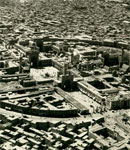 |
On Tuesday, February 24, 2015 the lecture of Mahdi Hesami, photograph expert of Documentation Center of Astan Quds Razavi, was held with the attendance of a number of history experts. Mentioning to the photography history in the world and in Iran, he said: “Photograph literally means photography technique and taking photographs as well as action and profession of photographer. This art is called ‘photography’ in most languages which is a combination of two Greek words: ‘photo’, meaning light, and ‘graph’, meaning the recording or writing. Thus, the meaning of photography is ‘drawing with light’. In 1822 AD, the first photo was produced by French inventor, Nicéphore Niépce. But practically, the invention of photography was announced on January 7, 1893 at French Academy of Sciences. This invention has been attributed to Louis-Jacques-Mandé Daguerre. In 1884 AD, George Eastman invented roll film and by construction of box camera in 1888, made photography economic for ordinary people and created a major change in photography.”
Pointing out the entrance of photography to Iran three years after the photographic camera invention, Hesami said: “However, with the emergence and progression of this industry in the world in less than three years, it reached Iran at the end of Mohammad Shah Qajar governance. First photographs in Iran were taken unofficially by Russian Pavlov in 1842 AD. And the first official photos were taken by French Jules Ryshar on 23 or 25, Azar, 1223 (14th December 1844) from Nasser al-Din Shah Qajar at the time of being crown-prince in Tabriz. Later, due to the interest of the royal court and especially Nasser al-Din Shah in art and photography industry, a number of prominent people who were familiar with this industry came from European countries to Iran and began training people who were supported by the court. Some of the elite and influential people in the court were sent to Europe for training and buying photography equipments. The photographers were able to leave precious photos of secret and private life of courtiers and even the king himself. Now these photos are the most valuable documents from Qajar era. Ernst Hoeltzer is of these individuals.”
Citing Aqa Reza Akkasbashi and Abdullah Qajar as the first Iranian photographers, Hesami said: “Malik Qasim Mirza is the first Iranian photographer; Aqa Reza Akkasbashi is the first professional photographer and Abdullah Qajar is the first scientific and technical photographer in Iran. In 1285 L.H (1868) the first public photographer’s studio was founded in Tehran Under the supervision of Aqbal-al-saltaneh by Abbas Ali Baig. He arranged a shop at the Jeba-khaneh Mobarake Street and started photography. The price of photos was associated to the size of them. ‘A dozen big photos are four thousand dinars, after that if wanting more, each one is three thousand dinars. A dozen small photos areone thousand dinars, after that if wanting more, each one is thirty Shahi.’”
In connection with the arrival of photography to Mashhad, photography expert of Documentation Center of Astan Quds Razavi believed that:“Given the importance and the place of photography history in Iran's contemporary political history, photography history in Mashhad is very vague and hidden, so that the distance between the first taken photo in Mashhad at 1276 L.H (1860) and the first official taken photo at 1319 L.H (1901) by Mirza Faraj-o-lah Abadaf is 43 years, and with the first official taken photo in Iran is about 61 years. Finding the causes of this gap requires a scientific study of history. Fortunately, before taking photographs of Mashhad, some paintings had been produced, includingones which had been produced by Colonel C. M. McGregor at 1875 AD.
Mehdi Hesami pointed that the most important cause of the lack of photography in Mashhad is insecurity and continued: “Fear of the Turkmen in Khorasan was so much that the Arminius Vámbéry wrote: ‘I have the audacity to such an extent that I journey four-way-station between Mazinan and Shahrood without any supporter, while the Iranians themselves are less ventured this far without the support of artillery, because they are afraid of being invaded by Turkmen.’ Also Victor Bérard stated that Khorasan was invaded by Bedouin tribes of the Iran desert and Trans-Caspian steppes Turkmen about 1862 AD; and the governance was only the owner of big cities behind mud walls with battlements and there have been no security in roads. The first official photographer who was sent by royal court to the war scene to cover the news was captured and imprisoned by Turkmen around18 months. In 1861, Blackville following the Iran army went to Marv. The costs of photography in Iran, especially in Khorasan and Mashhad, were very high because of relatively large distance from the capital, transportation of photography glasses, print and developing. For example, based on the Iraj Afshar notes about photography history where he refers to tax photography in Khorasan, we realized that photography had been common in Khorasan years before: ‘In 1329 L.H (1911), Photography tax in Khorasan was twenty Tomans for one year and bookstore tax was five Toman. Stone press tax was ten Tomans and lead press was sixty Toman.’”
He said the arrival of photography to Astan Quds dated back to the Qajar era and continued: “Consistent with other centers and institutions, Astan Quds Razavi has taken advantages of photography art and industry as soon as it arrived to the city for two purposes: first for recording the events, visits and other religious and political procedures and second for recording changes in Razavi holy places and architecture. Even they employed some photographers. Sample documents relating to payment of stipend to photographers at the shrine during the Qajar period is available. But apparently there are no photos which were taken by these photographers. Among these photographers we can note to Mir Agha Akasbashi.”
Referring to the style of pilgrimage photography, Mr. Hesami, the photograph expert and Director of Information sector at Documentation Center said at the end of his speech: “The first people who began taking photo of pilgrims around the shrine were photographers who hadn’t photographer’s studio. They often brought their customers to the roofs of houses around the shrine, where the view is good and taking photo of them in such way that the shrine view had been placed just behind customers. But carrying heavy camera equipments and unsuitable lenses did not satisfy the customer and the photographer, so photo montage was welcomed. The subjects of screen are sacred concepts and places which were often related to the shrine, domes and minarets, precincts, and so on. However, photographers of the shrine or pilgrimage photographers during theiractivity always paid attention to the customer demand for placingin the most natural and realistic view of the shrine; and have tried to create pictures which would bemore similar to reality.”
Gholamreza AzariKhakestar
Translated by: Zahra Hosseinian
Persian Source:
http://www.ohwm.ir/show.php?id=2619
|


