Translated by: Zahra Hosseinian
Mahdi Samti, communications professor of Northern Illinois University
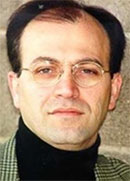
Iranian history: this is the story of Mohammed, The left one in the photo beside that skinny one (i.e., me), one of my best comrades who was killed in the Iran-Iraq war.
In Iran, the government accounts of the war include myth making of what happened on those years, but in overseas, narratives involve geopolitical, military and academic speech. Both of these don’t show the reality of war in a way soldiers and their families experienced it. Although we believe in sacredness of hero, but myth making shines such a bright light that make us blind for seeing the suffering, break hearts, pain, and even true stories of heroism and sacrifice.
The story of soldiers of Iran's army, who were the main component of that war and the Iran's contemporary history, is not told from the perspective of them. I’m one of them; one of those soldiers, many of my friends did not survive to tell their stories. In this short narrative, I want to memorialize their memory, sacrifice and families.
This is a brief narrative, a personal story about a friend who died in the bloody war.
I met Mohammad when I went to high school. We both were the players of a football team. He was very muscular, having degree black belt in judo, and was first-rate footballer. He was a strong young man, unique in etiquette, and as a powerful athlete, of noblest people.
His laughter was contagious and had a wicked humor, and sometimes joked strangely. He was thoughtful and modest. We spent a lot of time with each other. I had met his family and knew them, his mother, sister, one of his aunts and his younger brother. We went to food shops very much.
Me, and Mohammad were sent to military service in the Army of Iran, but we served in different units and different fronts. Every month and a half, we had eight to ten days off and we returned home. Having shower, clean and tidy beds, being far from dust and insects (mortars and grenades and bullets aside) were valuable enjoy. Further, in the days of being away from the front, Thursdays were a full of grief and anxiety day for us because the public obsequies of those who killed in the war were held.
During the leave, I dropped in on Mohammad's house to see whether he has come. Before ringing the doorbell always wait a little. I said myself one day will come when someone tells me he has killed. You know, it was a usual sense. Every time I returned to the front, my first question was that “who was killed during this time?” But when the doorbell of his house rang, usually his mother opened the door and informed me of his situation and braveries.
Few months elapsed, I was still healthy physically and my mental state was good. I was fully aware of suffering that military service would make for our parents. Every time I would say goodbye to them and back to the front, see sadness in my parents’ eyes.
But that day came, let me say again, that day came, that dreadful day, I rang their doorbell. I waited for a few minutes and again I rang. His mother opened the door. Seeing me, she burst into tears and asked me sobbingly: “Mahdi! Where is my Mohammad? Wasn’t he your intimate friend? Why you didn’t bring him home?” No matter how strong you would be. It is a thing that no army can ready you for facing it. It makes you brittle, and wound your soul.
I could not get myself together and exchanged a word with her. I must go. I left there without saying goodbye.
I finished my military service and survived. Contrary to much of my comrades in arms, my spirit and body had stayed established. I left Iran and went to the United States. In fact, in the war time, which was prolonged, I was studying English and preparing myself to go to a university in the United States. It was a way to minimize the fatal boredom. Over the years, every time I would come to Iran, I couldn’t gather sufficient power to go to the house of Mohammad and see his family again. I guess I hadn’t enough strength anymore to face his mother.
In May, I had been curious that whether I can find a member of his family at Facebook? I found one of his relatives who put me in contact with Mohammad’s younger brother, who is now an experienced lawyer. I emailed him and said I will come to Iran late May. During my residence in Iran, one night he came to my parents’ home and we went out for dinner together. It was hard, not only due to confronted with the past that would constantly was in traffic, a history that its weight is still on our shoulders, but also I saw what the passing of time has done on the lives I knew close. Indeed, I wouldn’t face with an abstract past, an abstract history.
I saw Mohammad in the eyes, smiles and laughter of his brother. For a moment I became happy and at he another moment, I got upset and painful. I did everything I could to prevent flowing of my tears. I asked about his mother. He said his mother, father, sister and aunt have passed away. As if all of them were in a hurry to die. As I know, Mohammad's death was beyond his mother’s tolerance.
I had heard from some friends that Mohammad’s mother has composed poetry after his death. One of these days I will be bold enough to ask about that poetry; a mother’s poem about her precious son who was killed in a war, with many stories to be swallowed by abstraction. One of these days I’ll be ready for reading that poem, even if it wounds my soul another time.
We can mourn a death or feast a beautiful life. My dearest friend wanted the latter. I am celebrating his life.
Source: Iranian history
Persian