
|
The voice of women’s mind could be heard in their narratives of Sacred Defense

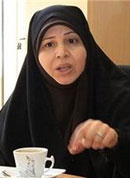 |
Ramhormozi in an interview with the Hoze Honari News Website:
Masumah Ramhormozi, researcher of Sacred Defense literature, said about the role of women in Iran-Iraq War and dealing with it in literature: “Women’s memories of war are abundant in their inner feelings and emotions that accompany the reader.
Ramhormozi, who herself had been bound to the Iran-Iraq war fronts as a rescuer, said to the reporter of Hoze Honari News Website: “Generally speaking, any subject which can explain one of the lesser known aspects of the war is required and will be welcomed; the role of women in war is one of them.”
This writer and researcher continued about feminine’s narratives of war: “What distinguishes the women’s narrative of war is that their views not only don’t focus on combat and aren’t war-based, but the life is more attended to than the war. Life has high priority for women and even in total darkness, they are trying to see the bright spots which are existed; and this kind of look has special importance in the fight against the enemy.”
The author of last Sunday (Yekshanbe-ye Akhar) also added: “This hopeful view helps individuals not to be in a passive position, but to be placed in an active and positive one, so they can fight against difficulties in hard situations by more hope and motivation and picture a bright future.”
Referring to the works which have been illustrated the mothers and wives of martyrs and warriors, Ramhormozi said: “These works are full of emotion and affection and enjoy social company and acceptance; As we can see this happens in the works like, Mother (Da) and Track 143 Degrees (Shiyar 143 Darajeh) movie.”
She emphasized: “Acceptance of women's memories is very high, because they have simply spoken of their inner feelings and emotions; while in many works which narrate the men’s memories, inner feelings like nostalgia, needing to support, tear and so on could be seen less and these issues are hidden out. In men’s monologue we can less hear their real and emotional thoughts, but the voice of women’s mind can be heard in their works and made their writings more impressive.”
Referring to the books that explain the role of women as women fighters, rescuers, and … in the war, Masumah Ramhormozi said also: “In this group of works, women aren’t narrated as mothers and wives of fighters and martyrs, rather their role and activities during the imposed war are seen and discussed. In these works, who the women were in the war is the subject of narrative; although these women might have other roles too. Because of passing of many obstacles for attending and servicing at front, the women in these books are strong, stable and selector; so the burden of grief and sorrow are less in these works and despite all the hardships of the war, footprint of joy, movement and energy can be seen in them very prominently.”
She continued: “These categories of books are works which were interested by young readers and girl students. The characters of these books can be considered as a kind of model for them, guided them toward their aspirations, and presented them some methods and styles for their social activities.”
Translated by: Zahra Hosseinian
Source: hhnews
|


