
|
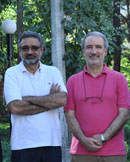
“Morteza Sarhangi” & his two world perspectives

 |
One of the titles of Sheikh Abdol-karim Haeri Yazdi is “Ayatollah Moasses”(1). The title was given and remembered in history because he established an influential and important foundation. Qom Seminary was founded when the circumstances were not in favor and thrived by the efforts of Haj Sheikh and in the next decades it transformed into a foundation which changed history.
I had the chance to cooperate with Morteza Sarhangi in the establishment of Resistance Literature and Art Department and work there for two decades. There is no doubt that this department was based on wisdom, providence, patience and twenty seven continuous efforts of Mr. Sarhangi which evolved to become involved in social streams. What is now called the literature of resistance is rooted in those features. Hence I dedicate the title of “Adib Moasses” (Founding Scholar) to my brother Morteza Sarhangi and I certainly hope that history will confirm my understanding of him.
Three decades of close collaboration with Morteza has made me an honest narrator of his life; however in defining his characteristics I only stick to one and express it in balance and free from any exaggeration. The secret of his override of time and space is his perspective.
He would think of nothing but national interest. He doesn’t involve taste, union or sect interest in his work. A proof of this is the title of his book “Nooreldin, son of Iran”.
He has a regional perspective in his work and I understand the reason that he stepped into the camps of war captives in the beginning of 80s from two operations of Fath-ol-Mobin and Beyt-ol-Moghaddas of Iran-Iraq war and recorded the memories of the invaders on paper. He realized that Iran has held captives of not only Iraq but all thirty three countries that supported Saddam in this war.
Morteza has a global perspective. In his interpretation of Resistance Literature, he refers to Human Literature which is also acceptable to human nature. He recognized that the young generation defended their country based on their nature and he perceives this literature as a universal literature. He believes that the world will one day ask for this literature to be translated.
He has a perspective involving two worlds where he has accepted this world and the eternal word with his faith. This means that his work ethic is based on this world as a transitional one and the other as an eternal one. Twenty seven years of effort behind a desk focused on one duty is based on this perspective.
In my opinion our “Adib Moasses”, Morteza Sarhangi is the emanation of the cultural leader of Islamic Revolution.
Note:
1-Moasses can be meant as pioneer or founder.
By: Nataly Haghverdian
|


