
|
“The Oral and the Written in Early Islam” criticized

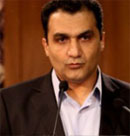 |
Iran Book News Agency (IBNA) - Critique session of “The Oral and The Written in Early Islam” by Gregor Schoeler was held with Dr. Ahmad Pakatchi, religious scholar and history researcher; Dr. Masood Sadeghi, professor of history and Islamic nations’ civilizations, in Tehran University college of theology and educations of Islam; Dr.Nosrat Nilsaz, the translator of the book and Dr. Zahir Syamian, assistant professor of literature and humanities college of Shahid Beheshti University.
In the critical review, this question was posed that, how much Arabic writing in early Islam could play a role in authentic transfer of sciences? Syamian also posed this question, “how much the content of the present hadiths are reliable and how they have been transferred?” and said Islamic Feghh [religious jurisprudence] is the greatest product of Islam which itself emphasizes on hadith tradition.
“Arts and architecture are also affected by hadiths, because they convey what is allowed and forbidden in Islamic laws. So the authenticity of narrations is very important. Quran interpretation and apprehension, principles of Feghh, history of early Islam bear much importance to understand the hadiths”, Syamian added.
“The concept of history is divided into two periods of pre and post invention of writing. Lack of written sources has made western scholars to consider the first 200 years of Islamic history as oral. They consider absence of written documents as a reason for unreliability of hadiths”, Masood Sadeghi said.
“Schoeler using other scholars’ views about this, has presented his own ideas in the book. He insists on Arabic writing but it should be considered that how much writing could play a role in authentic transfer of science in early Islam”, he said.
“Two articles have been omitted from this book which could be useful in better understanding of Schoeler’s points of views. Besides, it would be much better if the book was translated from the German text. Montgomery, editor of the English translation, also had added a good article to the book which could help for a better understanding, if it was present in the Persian translation”, Sadeghi said.
“Schoeler knows the path he has taken. He has been teaching in Paris, Sorbonne University in 2000. He first set forth his ideas about the oral and the written in ’Writing and Transfer in Early Islam’ but unfortunately the title was changed in English translation as ’The Genesis of Literature in Islam’ ”, Dr Ahmad Pakatchi said.
“Schoeler referred to his article as ’Oral and Written’ in the first chapter of that book, but later he used the same title for his book, ’The Oral and the Written in Early Islam’. In this book he insisted on the existence of oral tradition in barbarism era of Arabs, which has continued strongly after Islam”, he said.
“Schoeler believes wisdom and life of the prophet have been transferred in oral form. He holds that Arab literature is formed upon oral poetry and compares oral Torah with hadith”, Pakatchi said.
“This book tries to revive the idea of direct relation between hadiths with oral Torah, Talmud. Such a relation is not seen in Islamic hadiths. The distance between historical texture of Talmud and hadiths is the other distinction present in this regard”, said Pakatchi.
“One can find parallel hadiths in Islam which is not encountered in Talmud. This can be considered an important difference between these two and one of the criticisms posed on Shoeler ideas”, he added. “Ignoring linguistics in paraphrasing the hadiths is another criticism posed on his opinions”.
“I first encountered with this book when I was compsing my doctoral thesis. I decided to translate it after reading its articles.”Dr. Nilsaz, the translator of the book said. “Because the translation should be in great conformity with the original text, it would be much better if it was translated from German”.
Translated by: Asghar Aboutorabi
|


