
|
TEN YEARS IN IRAN – SOME HIGH LIGHTS (4)

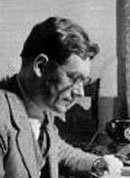 |
Lecture delivered at the Society’s Anniversary Meeting on 13 June 1991. Sir Denis Wright GCMG first went to Iran in December 1953 as charge d’affaires to reopen the British Embassy after the break in diplomatic relations following Dr. Moussadeq‘s nationalisation of oil, remaining there under Sir Roger Stevens as counsellor until October 1955 when he was appointed an under-secretary in the Foreign Office. He returned to Tehran as ambassador in April 1963 and served there for the record period of eight years before retiring in 1971. He was President of the British Institute of Persian Studies 1978-87 and is currently President of the Iran Society. He is an Honorary Fellow of two Oxford colleges, St. Edmund Hall and St. Antony’s. Translations of his two books, The English amongst the Persians and The Persians amongst the English have both been pirated in Tehran -the former by four different publishers under four different titles! Sir Denis joined the Society in 1945 and has lectured to it on three previous occasions.
***
Last week we read the parts (I, II, III) of this article and here is the fourth or last part:
By August 1968 we had reached deadlock and it was not until four months later, in December, that the dialogue got going again. Through Senator Abbas Massoudi, owner and publisher of Ettelaht, Tehran’s leading newspaper, with whom I used to discuss our Gulf problems from time to time, I learnt that the Shah liked my suggestion that the United Nations might be used, rather than a referendum, to sound out public opinion in Bahrain. I reported this to the Foreign Office who, after consulting our representatives in Bahrain and New York, instructed me to put the idea to the Shah, impressing on him the need for secrecy and step-by-step agreement at every stage. This I did on Christmas Eve 1968, the day before the Shah left Tehran on a State Visit to India. He accepted the UN idea as “constructive” but said he would need time to prepare public opinion. I asked him with whom I should conduct what would undoubtedly be difficult and complicated negotiations. To my relief he nominated Amir Khrosrow Afshar, the Number Two in the Foreign Ministry rather than the Foreign Minister, who was the Shah’s son-in-law and was known as a hard liner on Bahrain. During the months ahead I dealt exclusively with Afshar and not his chief.
I anticipated that the Shah would need weeks, if not months, to prepare public opinion. My surprise, and delight, was great therefore when at a press conference ten days later in New Delhi at the end of his Indian visit he announced, in answer to a question, that he had no intention of using force to settle the Bahrain issue but was willing to accept " an expression of the will of the people ". I learnt later that this very important statement, which opened the way to negotiations, was made without the prior knowledge of any of his Ministers — an example of the Shah’s one-man rule.
Thereafter my negotiations with Afshar moved forward fairly fast. Twice we ran into difficulties and I had to appeal over his head to the Shah. In November 1969 l went home on my last leave believing that the Bahrain exercise was all but over, but I was wrong. The Iranians who, we had agreed, should make a formal request to the Secretary-General of the UN to use his good offices in ascertaining the wishes of the people of Bahrain, now proposed doing so in language that was so offensive to Bahraini feelings that neither they nor HMG would accept it. Unless the Iranian Government moderated their language we were ready to abandon the whole exercise.
Despite strong representations by our charge d’aH`aires in Tehran the Iranians refused to budge. I was therefore sent from London, where I was still on leave, to see the Shah who was skiing at St. Moritz. Afshar, by this time ambassador in London, was also present. Without too much difficulty we reached agreement on wording which I accepted on behalf of HMG and on 9 March 1970 the Iranian representative in New York addressed a letter to U Thant, the Secretary-General, asking him to exercise his “good offices with a view to ascertaining the true wishes of the people of Bahrain".
The rest of the story is public knowledge. U Thant sent the Italian head of the UN’s Geneva office with a four-man mission to Bahrain on 30 March 1970: on 2 May he reported that the Bahrainis were virtually unanimous in wanting to become a fully independent and sovereign Arab state. Nine days later the Security Council unanimously endorsed the report and Iran formally abandoned her ancient claim.
This peaceful settlement of a long-standing dispute was a success for the UN, for secret diplomacy, and — in the eyes of all but a few Iranians — a credit to the Shah.
The fate of the other islands, the Tumbs and Abu Musa, was not settled until the end of November 1971, six months after I had left Tehran. I had however, been involved in the early stages of negotiation. At one point I had to reject an Iranian proposal that agreement on Bahrain must be subject to agreement on the islands. I had also to warn the Iranians that any attempt to seize the islands before the abrogation of our protective treaties with the Sheikhs of Ras al Khaimeh and Sharjah, whose sovereignty over them we recognised, would bring us into armed conflict with Iran.
When, in June 1970, the Conservatives under Ted Heath won the General Election there was a possibility, hinted at in their Election Manifesto, that the new Government would reverse the Labour Government’s decision to pull out of the Gulf. In order to make up their minds Sir William Luce, a former Political Resident in the Gull was called out of retirement and instructed to consult the various Gulf Rulers including the Shah and make recommendations about withdrawal and attendant problems, namely the creation of a Union of Arab Emirates, the disputed islands, and the Saudi claim to the Buraimi oasis.
As part of the same exercise I was summoned to London and on 10 July flew with the Foreign Secretary, Sir Alec Douglas Home, to see the Shah in Brussels. This was Sir Alec’s first mission abroad as Foreign Secretary. He found the Shah uncompromising both on British withdrawal from the Gulf and Iran’s claims to the islands and I have little doubt that this Brussels meeting was a major factor in HMG’s ultimate decision to withdraw from the Gulf by the end of 1971 and let the Shah have the disputed islands, though for years we had upheld the Arab sheikhs’ claims to them. An example of realpolitik — and not for us British a particularly happy ending to 150 years of Pax Britannica.
Finally I come to my third highlight — the oil Consortium/OPEC confrontation in Tehran in January and February 1971 which marked a major turning point in relations between the big international oil companies and the oil producing countries.
Oil, as you know, was and is Iran’s major export and earner of foreign exchange. Throughout my years in Tehran the Shah was relentless in exerting enormous pressure on members of the oil Consortium to increase Iranian oil production and exports. He needed the money for his increasingly ambitious military and economic programmes. He was never satisfied.
Growing impatience with the oil companies came to a head when Libya succeeded in obtaining better terms from some American companies for her oil than Iran was getting. Shortly afterwards, in December 1970, OPEC members met in militant mood in Caracas, determined to get similar or better terms for themselves. They were fortified by signs of a world shortage of oil and passed a resolution calling, inter alia, for higher posted prices and a new round of negotiations with the oil companies in Tehran.
These negotiations took place in January and February 1971 when the oil companies were led by Lord Strathalmond of BP (the son of Sir William Fraser whom I have already mentioned) and the Gulf members of OPEC headed by Jamshid Amouzegar, the very able Iranian Minister of Finance. Amouzegar took his orders from the Shah, by this time very knowledgeable about oil, who was determined to squeeze the oil companies for whom he had no love; at the outset he rejected their proposal that any agreement reached in Tehran should apply to all members of OPEC and not only its Gulf members.
There is no time to describe the tense atmosphere of those hectic days in Tehran — the pressure brought to bear by the Shah on the American ambassador and myself, the representations we both made on behalf of the oil companies, the telegrams between London and Tehran etc., ending with a televised press conference in which the Shah threatened legislation against the companies unless they caved in — which they did, reluctantly accepting that the price of Marker Crude oil (Arabian Light) should be increased from 98 cents a barrel to $1-27. This was a miniscule increase compared with what happened later (again with the Shah in the lead) but a turning point. Previously the oil companies had themselves posted the price of oil without consulting the country from whose soil the oil came: henceforth the host countries would call the tune. Anthony Sampson and Daniel Yergin describe all this in some detail in their books The Seven Sisters and The Prize. Thus began the spectacular rise in oil prices — a catastrophe for much of the world because of its inflationary effect, though it stimulated the development of North Sea oil. At the same time it was a personal success for the Shah, long haunted by the ghost of Moussadeq’s triumph over AIOC 20 years earlier. But it also, I believe, contributed to his growing megalomania and so, in the long run, to his fall.
So much for some of the political highlights of my ten years in Iran. For my wife Iona and me they were intensely happy years for, as Dennison Ross once wrote, “there is a peculiar magic in the air of Persia which inspires all who visit her with poetry and romance”. It was a joy to live, as we did, in spacious Anglo—Indian style residences in the Embassy’s two delectable, shady century-old compounds — one in the very heart of Tehran, the other at Gulhak in the Shimran hills above Tehran where we spent the hot summer months.
We were lucky to be in Iran at a time when Anglo-Iranian relations became as close and friendly as they have ever been — when we were able to make friends with Iranians at all levels, and when we were free to travel where we willed — by horse and mule and Landrover — so that there were few corners we did not visit.
Perhaps my happiest memories, as I look back, are of camping and fishing for trout in the Larvalley under a cloudless blue sky with Mount Demavend towering majestically above: and of wanderings through the lively, crowded bazaars of Tehran and Isfahan, Shiraz and Yazd, Zenjan and Tabriz in search of rugs and qilims and watching coppersmiths and potters, wool carders and felt makers plying their age-old crafts. Do they still, I wonder, or have plastics killed them?
DENIS WRIGHT
Source:
Wright, Denis, “Ten Years in Iran-Some Highlights”, Journal of the Royal Society for Asian Affairs, 1991 (October), Vol. 78(22), Part 3, pp: 259-271
|


