| |
|
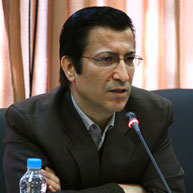
Translated by Mohammad Shahba

Gerald Prince’s “Narratology : the form and functioning of narrative” is converted into Persian by Mohammad Shahba.
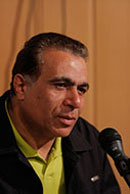
IBNA: Prince in this book makes a Strusturalist approach to the main component parts of narrative such as the narrator, narrate, internal narrator, audience, etc. In other words the author explains the function of narrative in simple words, said Shahba.
The academic member of the University of Art continued: “In general the author tries to offer a grammar for basic narratives in this book. Prince mentions a few conditions for ‘narrativity’ such as the existence of two events or situations, and also a temporal relation between them. The causal relations grow out of temporal relations.”

| |

|
|
MEMORY AND CULTURE
The 7th Cultural Studies Symposium on Memory and Culture jointly organized by the Turkish Cultural Studies Association and Bilkent University, Department of Political Science and Department of Architecture, will be held on September 5-7, 2013 in Ankara, Turkey. The International Cultural Studies Symposia that are organized every two years have been contributing to cultural studies and bringing together researchers who work in this area. Since the first meeting in Kemer, Antalya (2001), the Symposia have been organized, jointly, in Van with Yuzuncu Yil University (2003), in Istanbul with Koç University (2005), in Şile with Isik University (2007), in Zonguldak with Karaelmas University (2009), in İstanbul with Kadir Has University (2011).
| |
|
|
ECLAP 2013 Conference
The Information Technology age has facilitated many significant changes in the field of cultural heritage and continues to be a dynamic and exciting forum for the emergence of new possibilities. This wave of change has had particularly significant consequences in the field of the Performing Arts, where the vast potential for digital content and new information technology exploitation continues to reveal itself, opening the doors to new and as-yet-unexplored synergies. Many technological developments concerning digital libraries, media entertainment, and education are now fully developed and ready to be exported, applied, utilized, and cultivated by the public.
| |
|
|
Historically Speaking: Letters from Nagasaki tell of atomic bomb
This article written by Carolyn Krause features additional information about Carl Bretz. She introduced him to us two weeks ago, cited his career and how he came to be an Oak Ridger. The source Carolyn used is his soon to be published oral history.
This article written by Carolyn Krause features additional information about Carl Bretz. She introduced him to us two weeks ago, cited his career and how he came to be an Oak Ridger. The source Carolyn used is his soon to be published oral history.
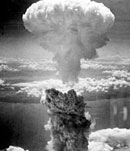
Now let’s continue with Carolyn’s input to Historically Speaking as she provides more insight into Bretz using his letters home from one of the cities destroyed by an atomic bomb to end World War II. His personal observations made during his early visit to that destroyed city made a life-long impression on him, as seeing either Hiroshima or Nagasaki must impress all who visit these two cities forever tied historically to the atomic bomb.
| |
|
|
Documenting the service of Jewish vets of World War II
"The first six people we've done have had pretty exciting and impressive careers in the military," said Miller, a retired cardiologist and Air Force veteran. "What we'd eventually like to do is get down to the more ordinary people. That's the reality of the people in the service."
Harris and Miller said they picked up a vague idea last year among some Jewish War Veterans members and ran with it. Through Miller's connections at the local senior center, which produces cable access programming, the two were able to find a home for their project on TV.
The first interview subjects have been some of the oldest post members, such as Highland Park resident Nathan Firestone, the subject of a recent Tribune article. Firestone was a prisoner of war during World War II who, with two fellow soldiers, escaped his Nazi captors and wandered through the Alps for days before meeting up with another group of American soldiers.
Talking with Jewish veterans who fought a regime bent on eliminating their people produced some particularly poignant moments on camera, Harris said.
| |
|
|
Oral History Weekly Magazine Aims and Regulations
Oral History Weekly Magazine wishes to create a suitable place for thoughts and idea development; Its main field would be “Oral History” and subjects as telling & writing memoirs, writing diaries, travelogues, chronologies, and all other subfields of history which are presented in the form of news, articles, reports, notes, interviews and memoirs can be included. There is no limitation on the length of would-be-sent materials.
Mentioning the name, academic background and email is necessary. Articles with complete references and bibliography are more credited and an abstract would quite helpful.
Weekly is not about to publish any material consisting insults and libels about other people or anything that brings anxiety to public opinion. Weekly can edit and translate the received materials.
The published articles and materials are only the writer’s ideas and Oral History Weekly Magazine has no responsibility about their content.
|
|
|

The professional conference of "Oral History Compilation" was held in the building of Iran's National Archive on December 18th, 2012.

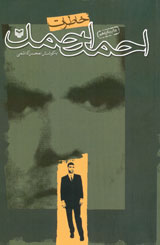
Ahmad Ahmad Memoirs (16)
Edited by Mohsen Kazemi
Soureh Mehr Publishing Company
(Original Text in Persian, 2000)
Translated by Mohammad Karimi
INP Uncovered
During early days of my arrest, I could not find the reason behind uncovering INP; later I found it in prison.
Mr. Mohammad Baqer Senobari, a new INP member, was so enthusiastic in expanding the party and was so active. In a mission in the city, he had asked an individual to swear for the activity in the party; but that person would not appear for the meeting. Senobari who had waited till night darkness would go to a monastery in order to save his time. He remains there till late that night and when coming out of there, the police agents became suspicious to him quite accidentally and after some chase and flee he is arrested. He had a bag containing papers of INP manifest and journal. Mr. Senobari would throw the bag somewhere in a garden or a house, but the agents find the bag soon after a short search. They take Senobari to a police station. They become suspected to the papers inside the bag. Then the police intelligence enters the story. The tortures begin on the young member of INP. He defiantly resists the tortures. His answer to all questions was “It’s concealed.” Finally the agents succeed in finding out his higher rank official, Mr. Mir Mohammad Sadeghi. |


|
|