| |
|
11th oral history workshop to be held in Khuzestan

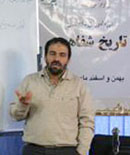
An official at the Arts Bureau of the Islamic Development Organization announced that the 11th edition of oral history workshop will be held in Khuzestan Province.
IBNA: Hussein Nasrollah Zanjani told IBNA that the previous edition of the workshop was held in Isfahan.
The workshop will be conducted by oral history scholars like Zanjani himself, Hujatoleslam Saeid Fakhrzadeh, Mohammad Ghasempour, Alireza Kamari and Hamid Ghazvini.
The workshop is arranged to last 36 hour classes.
As he said, an assessment done in the city of Sari, northern Iran, it was revealed that the number of the books authored by oral history writers have been rising in the past few years.

| |

|
|
New book to be released on Sacred Defense
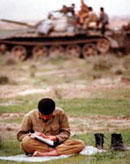
40 of the best pieces submitted to the Valfajr 10 Memory Writing Festival will be published in a new book.
IBNA: Speaking with IBNA, an official from the Foundation for Preservation and Publication of Sacred Defense Works and Values stated that as many as 110 pieces were submitted to the secretariat of the festival by 55 comrades who took part in the Valfajr 10 Operation from Mazandaran Province.
As Mohammad Sadeghi asserted, 90 works were shortlisted in the first phase of assessments by the judges and in the final round, 40 were chosen to be published in a volume presented to the guests of the festival’s closing ceremony.
| |
|
|
Corporate Voices: Institutional and Organisational Oral Histories
Founded in 1979, History Factory is a US-based pioneer of heritage management: leveraging the collective memory of organizations—the stories told, the words used, and their commonly understood meanings—to help implement strategies and tactics that shape the future. Working with clients as varied as Subaru, Campbell Soups, Prudential and Whirlpool, History Factory offers a range of products and services from publications and exhibitions to archival services and oral history.
AbdelAziz EzzelArab (American University in Cairo, Egypt)
Professor Abdelaziz Ezzelarab directs the American University in Cairos Economics and Business History Research Center, whose staff members have interviewed leading figures active in Egyptian business, industry, commerce, and government since the mid-20th century. He will introduce us to a unique oral history archive in Egypt, a land known for its business culture and also one which has been at the forefront of the Arab Spring.
| |
|
|
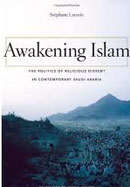
AWAKENING ISLAM
While also a social history of the Saudi Islamist movement, Stéphane Lacroix’s Awakening Islam examines the origins of a failed “insurrection” in the early 1990s against the Saudi state by an Islamist movement it had earlier nurtured.
Lacroix is a political scientist who successfully uses the historical perspective to better understand the social origins of Islamist politics in Saudi Arabia. Blending data from interviews with written sources in Arabic, French, and English, he examines its local, regional, and international dimensions, grounding the Sahwa in a broader historical narrative. Some prior knowledge of Pierre Bourdieus sociology will aid the reader as it informs the study throughout, particularly his concept of the “field.” It is to better understand the fields—these competitive spheres of the social and political landscape—that Lacroix mobilizes the historical perspective.
| |
|
|
Oral histories reveal a different Salinas
For fun, there were endless movies. Then, across Main Street from the popcorn fragrance and red neon glow of the Fox Theater, stood the Pep Creamery, popular teen hangout.
“A quarter bought you a grilled cheese sandwich and a chocolate milk shake,” Dorothy Wallace recalled.
Gazing tenderly into each other’s eyes was free.
The Pep Creamery is one of the Salinas images Wallace recalls when she thinks of her hometown between World War I and World War II. The National Steinbeck Center will present clips from recorded versions of her recollections and others Thursday at 12:30 p.m. at the Steinbeck Center, plus recordings of other long-term Salinas-area residents. They’re discussing the Salinas they knew growing up.
| |
|
|
Ryan White AIDS story honored with oral history
KOKOMO – Ryan White was diagnosed with AIDS in 1984. The next year, the 14-year-old was barred from attending Western Middle School because of the disease.
What happened next brought a firestorm of media attention to Kokomo, and thrust White and the city into international headlines.
For those who lived through the Ryan White saga, the story doesnt seem like a piece of history, but a vital experience.
But Dave Broman, executive director of the Howard County Historical Society, said it is history, and it needs to be documented for future generations.
Thats why he said the historical society recently completed an extensive oral history project documenting the firsthand experiences of 22 people who were intimately involved with White and his place in Kokomos history.
| |
|
|
Oklahoma State faculty, students recording oral histories of Oklahomans
STILLWATER, Okla. — A group of Oklahoma State University faculty members are turning on the camera and audio recorder and allowing select people to share their stories for research and preservation.
The Oklahoma Oral History Research Program at OSU contains three tenure-track faculty members, one visiting assistant professor and two students in capturing the stories. Mary Larson, the head of the program, said oral history has advantages over written history.
“The problem with written history is that it focuses on prominent individuals to the exclusion of the vast majority of people who were involved in shaping history,” she said. “Oral history lets us cover those gaps. It lets us talk to everyday people and find out what their involvement was in either certain movements or certain historical moments.”
| |
|
|
Oral History Weekly Magazine Aims and Regulations
Oral History Weekly Magazine wishes to create a suitable place for thoughts and idea development; Its main field would be “Oral History” and subjects as telling & writing memoirs, writing diaries, travelogues, chronologies, and all other subfields of history which are presented in the form of news, articles, reports, notes, interviews and memoirs can be included. There is no limitation on the length of would-be-sent materials.
Mentioning the name, academic background and email is necessary. Articles with complete references and bibliography are more credited and an abstract would quite helpful.
Weekly is not about to publish any material consisting insults and libels about other people or anything that brings anxiety to public opinion. Weekly can edit and translate the received materials.
The published articles and materials are only the writer’s ideas and Oral History Weekly Magazine has no responsibility about their content.
|
|
|

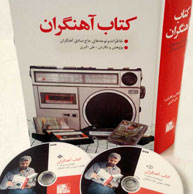
Written and researched by Ali Akbari, A Book by Ahangaran: Memoirs and Threnodies of Hajj Sadeq Ahangaran during the Sacred Defense is to be published by Ya Zahra Publications in 920 pages and accompanied by two audiovisual CD-ROMs.

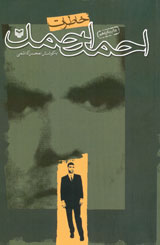
Ahmad Ahmad Memoirs (15)
Edited by Mohsen Kazemi
Soureh Mehr Publishing Company
(Original Text in Persian, 2000)
Translated by Mohammad Karimi
Ambiguities
When we reached the police office, they did not take me to my brother and we were separated. It seemed my brother had understood from their talks that the problem was with me. An hour later they would tall my brother that he could go. He had asked: “What will happen to my brother?” they had told him: “He is guest of us for a long time. You can go.” Haj Mehdi had told them: “He is young and doesn’t understand. He has done nothing and if he has done something wrong, it has been just because of his youngness; he did not mean to." They had told him: "He has done something that you not think of. Go, we will send him later."
When Haj Mehdi found out how bad were the conditions, based on his experience went to a police warrant officer and gave him 50 Toomans note and told him: "Take 30 Toomans of this money for yourself and spend the rest for my brother." The warrant was impressed by my brothers generosity and said: "Dear Sir, they bring the youth like your brother everyday here. It is not clear what the matter is. They say these youth had wanted to rise militarily!" Then, Haj Mehdi found out the matter was so important. However, he did not know what to do to get more information, because the relations inside INP were secret. He just could understand the matter is something about military activity.
About five oclock in the afternoon they took me to another room. There, I could hear the sound of traumatic crying and shouting. These sounds would destroy my concentration and would not let me think. Later I found out those sounds were only on a tape to scare the detainees.
Finally it became night. I called a guard and told him that I wanted to pray. Then he fiercely insulted me and said: "You wanted to disturb the country. You wanna pray?! May God break your backbone!" I did not note to his insults and asked again: "Sir, which direction is Qibla?" He showed me a direction angrily. I went to the bathroom and became ready for prayers. I said my prayers and then they took me to another room for interrogation. There were three people. The interrogator was in front of me and two other stood on my both sides and took my wrists. Whatever the interrogator asked I did not say anything. He asked about Khalq newspaper. I pretended that I have not even heard of it and said: "Khalq is word used by the Communists!" He said: "Yes. But you are worse than the communists." |


|
|