| |
|
Sacred Defense POW writes captivity stories

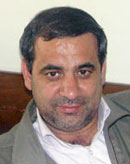
Ahmad Yousef Zadeh who spent 8 years of his life in Saddam’s prison camps has finished writing stories of his captivity in a memoir entitled as Those 23.
IBNA: The book title stands from the number of the teens attending the Beitol Moghadas operation during the Sacred Defense by Iranian forces. The 23 were captured by Iraqi forces during the operation and were taken to Saddam’s detention camps, and were meant to be exploited as a took against Iran, but after they went on a five-day hunger strike, Iraqi forces backed out and agreed to give them what they wanted, said Yousef Zadeh in an interview with IBNA.

| |

|
|
Memories of Sacred Defense pilot to be displayed at TIBF
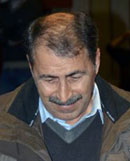
Mohammad Moama is currently working on a book on life and memories of General Commander Abdolhamid Najafi. The book is expected to be displayed at Tehrans 26th international book fair.
IBNA: Najafi has numerous stories about prominent Sacred Defense martyred pilots like Abbas Babaei, Sayyad Shirazi, Hussein Shahramfar and Mostafa Ardestani, said Moama in an interview with IBNA.
As he said the book will comprise several parts encompassing Najafis childhood, his graduation from the university, his trainings in the US, returning to Iran, and participation in air force operations in Kurdistan and other war fronts during the Sacred Defense.
| |
|
|
Oral history, research, and technology
A month ago, the Oral History Association (OHA) hosted their 2012 annual conference, “Sing It Out, Shout It Out, Say It Out Loud: Giving Voice through Oral History” in Cleveland, Ohio. Through papers, performances, exhibits and roundtables, conference attendees examined “the ways many people express themselves within oral histories, and also the ways in which people craft existing oral histories into other means of expression.” Unsurprisingly, one topic that came up in both formal presentations and casual conversation was the field’s use of the latest tech. Below are two reports from conference by Jeff Corrigan and Melanie Morse that speak to technology’s increasingly importance to the collection and dissemination of oral history research.
| |
|
|
Vivalogue Successfully Publishes Book as Fundraiser for Women’s Shelter
Vivalogue Publishing today announces the launch of Grace, Grit and Gusto: Profiles of Remarkable Royal City Women. The book is being launched in New Westminster on December 6 to coincide with Canada’s National Day of Remembrance and Action on Violence Against Women. One thousand copies of the book will be sold at $20 each, generating $20,000 for Monarch Place, a transition house which annually helps more than 250 women and children fleeing domestic violence.
This book was researched and written by New Westminster authors who each volunteered her time to profile of a woman, past or present, who has made a significant contribution to the city, province or country.
| |
|
|
Capturing the oral history of todays vets
WASHINGTON - For those who fought in Iraq and Afghanistan, history is already calling.
Unlike wars past, decades wont go by before todays generation of veterans are asked to share their stories. Still in the midst of the longest period of fighting in American history, a new project launching this week is set to capture and share the tales of war from the last 11 years.
StoryCorps, a national non-profit oral history project that is partnered with the Library of Congress and can be heard weekly on NPR, is hoping to record nearly 2,000 veterans, active-duty servicemembers and their families for the Military Voices Initiative. Over the next year, the nonprofit, along with Iraq and Afghanistan Veterans of America and the Veterans History Project, will collect about 700 stories.
| |
|
|
Oral History Project connects generations of Black males
African-American boys, teenagers and older men have a lot to learn from each other and the Crossing Fences oral history project proved that.
Thirty-Five boys ages 12-22 and 36 men ages 20-80, each from all walks of life living in the Hill District, Hazelwood and Homewood gathered during the summer of 2012 to conduct oral history interviews on a varied list of topics including self-confidence, parenting and community service.
Crossing Fences was created by Saturday Light Brigade Radio Productions and funded through a $75,000 grant from the African-American Men and Boys Initiative, an arm of the Heinz Endowment that was created in 2007.
| |
|
|
Oral History Weekly Magazine Aims and Regulations
Oral History Weekly Magazine wishes to create a suitable place for thoughts and idea development; Its main field would be “Oral History” and subjects as telling & writing memoirs, writing diaries, travelogues, chronologies, and all other subfields of history which are presented in the form of news, articles, reports, notes, interviews and memoirs can be included. There is no limitation on the length of would-be-sent materials.
Mentioning the name, academic background and email is necessary. Articles with complete references and bibliography are more credited and an abstract would quite helpful.
Weekly is not about to publish any material consisting insults and libels about other people or anything that brings anxiety to public opinion. Weekly can edit and translate the received materials.
The published articles and materials are only the writer’s ideas and Oral History Weekly Magazine has no responsibility about their content.
|
|
|

The war veteran and Sacred Defense researcher Nader Daryaban, who had been hospitalized in one of the sanitariums in Tehran since November 2nd due to severe spinal cord pains, joined his martyred friends and passed away at 2 a.m. on the 10th of December.

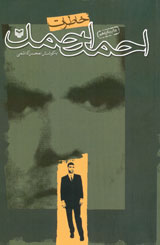
Ahmad Ahmad Memoirs (14)
Edited by Mohsen Kazemi
Soureh Mehr Publishing Company
(Original Text in Persian, 2000)
Translated by Mohammad Karimi
Marriage “No!”, Arrest “Yes!”
Being a teacher and working with the children were my personal interests. So, political activity was not an impediment for keeping these interests.
I was teaching sports in several schools and had contacts with many teachers and students. It was necessary for me to keep Islamic behavior as a good Muslim believer. It was a kind of positive propaganda for Islam. In an atmosphere that sin, iniquity and corruption had occupied all the ranks of regime, my behavior was obviously observed. All the people around, particularly the unveiled ladies would react with other men in relax and easy going way, but when talking to me they would respect Islamic laws in behaving strangers. Among these ladies, there was a teacher in Haq-Shenas School who would respect me a lot and considered herself compatible with my ideals. One day she came to me and offered that I marry her. I was stunned of her offer, because it was something abnormal and quite strange to me either. However, I did not reject her offer and asked for some time to think. She was not a veiled lady but she would obey Islamic rules for Hijab in an acceptable way considering those days situation. She would respect me a lot and her behavior was quite polite and sincere. I accepted her offer but I told her she had to wear Chador and then I informed my family about the matter. My Mum who had traditional viewpoints rejected the matter. She believed that she had the right to choose her bride by her own wish. She believed a bride should stay at home and care about her husband and family. So I was facing a big impediment. |


|
|