| |

|
Electronic Publishing: A Modern Society Need

Most units at Hozeh Honari (the Art Center) were not equipped with computers when I was first employed by the Center about twenty years ago. The first periodical published almost daily at the Center was Baztab or Press Clippings. This publication in fact copied the articles published by other domestic periodicals about the Art Center. The said publication is still in circulation without any special hint of innovation, and what is more interesting is that some other subdivisions at the Center are independently (!) publishing similar pamphlets. However, it so seems that we live in a modern era which requires the omission of these traditional, expensive methods and applying new technologies.

| |

|
|
Book being written on memories of Pearl Military Operation
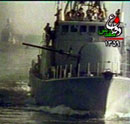
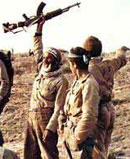
The Arrow in the Heavens is the title of a book compiled by Jalal Mousavi on the oral history of Islamic Republic of Iran’s navy. The work encompasses memories of the comrades at Pearl Operation during the Sacred Defense.
IBNA: Speaking with IBNA, the book’s author said the work is being prepared and will be published in the near future.
As he said, some 30 navy commanders participated in the operation of which only 12 were accessible for the interviews.
| |
|
|
Martyr Motahari’s Man and Fate appears in German
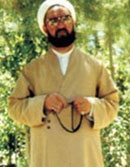
The German rendition of Man and Fate has been published in Berlin by Iran’s Islamic Culture and Relations Organization.
IBNA: According to the public relations office and information center of the Islamic Culture and Relations Office (ICRO), most of Ayatollah Motahari’s works are independent of time and place and everyone in any society can enjoy reading them and learning from their rich content.
The book addresses queries about human fate and destiny, questions which have always been pursuit by humans throughout history. The questions are answered in Moslems’ holy book of Quran. Some Quranic verses explicitly speak of human’s definite fate and some others clarify his freedom and power of decision making.
| |
|
|
An Eye for An Eye signing ceremony to be held
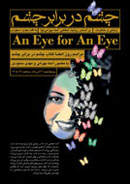
Copies of Ameneh Bahrami’s memories published in a volume by Mehdi Sojoudi will be signed in a ceremony arranged on Thursday, November 29, 2012 in the presence of the author and Bahrami.
IBNA: The ceremony will be held in the presence of the book’s author and its narrator Ameneh Bahrami at the bookstore of Ofogh Publishing Institute.
| |
|
|
Book to be released on memories of Sacred Defense commander
The Sacred Defense Works and Values Preservation and Publication Foundation will release a new oral history book based on Commander Ali Akbar-nejad’s war recollections.
IBNA: Author of Flight over Ghalavizan, Isa Jamali told IBNA that he has finished gathering the commander’s memories from the interview he had with him, and will have the book published by the Foundation.
Akbar-nejad was one of the commanders of the Division 25 of Karbala during Sacred Defense and was present in many major operations like Karbala V and Valfajr VIII.
| |
|
|
Oral History Project revived after four decades
that is how an oral history project started by the Lompoc Historical Society and the Lompoc Museum in the late 1970s has nearly come to fruition today.
As Patricia Sazani, who grew up in Lompoc, was completing her anthropology degree at Columbia University, she got the idea to call the Lompoc Historical Society to ask if they would be interested in having her start an oral history project.
It turned out that they didn’t need someone to start an oral history project, they needed someone to finish one.
| |
|
|
UKs Doug Boyd Schools Nation on Oral History Practices
Information in this day and age is rarely scarce, but often not collected and saved properly for future generations. However, one national project under the leadership of oral historian Doug Boyd, director of the Louie B. Nunn Center for Oral History at University of Kentucky Libraries, hopes to remedy that through the dissemination of best practices via the Oral History in the Digital Age (OHDA).
| |
|
|
Oral History Weekly Magazine Aims and Regulations
Oral History Weekly Magazine wishes to create a suitable place for thoughts and idea development; Its main field would be “Oral History” and subjects as telling & writing memoirs, writing diaries, travelogues, chronologies, and all other subfields of history which are presented in the form of news, articles, reports, notes, interviews and memoirs can be included. There is no limitation on the length of would-be-sent materials.
Mentioning the name, academic background and email is necessary. Articles with complete references and bibliography are more credited and an abstract would quite helpful.
Weekly is not about to publish any material consisting insults and libels about other people or anything that brings anxiety to public opinion. Weekly can edit and translate the received materials.
The published articles and materials are only the writer’s ideas and Oral History Weekly Magazine has no responsibility about their content.
|
|
|

Reparation and reconstruction of the house of the late founder of the Islamic Revolution Imam Khomeini (May his soul rest in peace) has been followed up by the Institute for Compilation and Publication of the Works of Imam Khomeini, and at present, the reparation project is going to be completed soon.

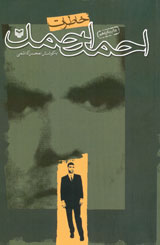
Ahmad Ahmad Memoirs (13)
Edited by Mohsen Kazemi
Soureh Mehr Publishing Company
(Original Text in Persian, 2000)
Translated by Mohammad Karimi
Concurring with Islamic Nations’ Party
When I was officially accepted as a member of INP (1), I participated in some secret meetings. The first 3 meetings were held in Mr. Mir Mohammad Sadeghi or in the mosque. In these meetings, he would talk about my status in the party and my connections. There I understood that I could only be in contact with the individual higher than myself in party ranks. I would also participate in party classes just in the specified domain for me.
After the primary meeting I entered party classes. My task in this level was participating in classes and learning party teachings. Other than that I had to find and introduce trusted and enthusiastic people to be examined and then joined to the party.
Each member in the party had an ID number. Once when I was given this number for the first time, I thought to myself what a large number of people have joined the party that my number was that. This ID number and the imagination of having a several thousand members for the party, was a heartwarming reason for me to participate in the meetings, classes, activities and speeches.
In party classes, we would talk about the programs, the party manifest and goals and also the kind of government they were about to create and Islamic parliament.
The journal of Khalq [people](2) was the only organ of the party that I would read most and I had only permitted to have for 24 hours. After this time I had to give it back to the party to be available for another member. Beside that I would read books by Engineer Mehdi Bazargan & Dr. Yadollah Sahabi. The other things that they would teach us were the rules of working secretly, membership techniques, and organizational discipline. In some classes, some of writings, articles and analysis of Khalq would be discussed.
Our units commander in the party was Mr. Seyyed Mohammad Mir Mohammad Sadeghi and the other members of the class were Javad Mansouri and Hadi Shams Ha’eri (3). |


|
|