| |

|
The Audiences Taste

Our scientific and cultural lessons are in a way that we have just learnt to pay attention to the producers and their productions and make different statements about their quality and quantity. We like to talk about the weak points of the writers, historians and researchers or criticize a book or their released articles, and sometimes inflict deep and tough injuries on them.
Undoubtedly, this kind of behavior and function is the result of our cultural and scientific lessons for which we have many justifications most of the times. But we can act in another way. It means that we can play a major role in boosting the capability and quality of the activists and their productions through self-criticism. It should be mentioned that we generally think that we must look at and make statements about the content of Oral History website and its weekly journal until the best quality is achieved.

| |

|
|
From the Intimate Circle to Globalized Oral History
In what now seems a bygone golden age many of us argued that the role of oral history was to revolutionize the study of history by bringing heretofore neglected populations into that study and by recognizing their abilities to formulate their own histories. Despite what are now seen as glaring contradictions, enchanted by the insight that the interviews we gathered, and the people we talked to, told us more than simply information about the past, we began to argue that they were richer than repositories of information or archival documents, they were texts themselves.
| |
|
|
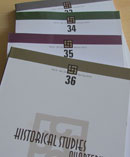
Historical Studies Quarterly Published
Up to now 36 issues of Historical Studies Quarterly have been published by Political Studies and Researches Institute. The last 4 issues have been available published with a long delay and the last issue is still not up to date, since it is for the spring of 2012. Here is the list of contents for these four issues. It should be mentioned this quarterly is published in Persian but at the end of each issue the English translations of articles are presented.
| |
|
|
NCDR obtains membership of American Oral History Association
WAM Abu Dhabi, Oct 31st, 2012 (WAM) -- The National Center for Documentation & Research (NCDR) affiliated to the Ministry of Presidential Affairs, has obtained the permanent membership of the Oral History Association (OHA).
This came during NCDR participation in OHAs 46th Annual Meeting with the participation of more than 300 American institution specializing in the field of oral history.
The membership allows the center to use the e-link of OHAs Oral History Department, which will provide NCDR with all editions of "Oral History Review", published semi-annually by Oxford University Press presenting theoretical and methodological discussions taking place in the profession.
| |
|
|
Oral history project records Vietnamese refugees journeys before they are lost to time
IRVINE, Calif. - The knock came at night more than 30 years ago. Hugo Van, then a young man, had a chance to flee newly communist Vietnam and walk to freedom.
There were no guarantees, but Van didnt hesitate to take the risk. With a few hundred dollars, he and his younger sister got a car ride to a Vietnamese village, then a boat to Cambodia and began the trek across barren land until they were caught by Cambodian soldiers. For nearly two weeks, they were held in a camp where they were given wormy rice to eat and Van found himself staring down the barrels of six guns as guards attempted to attack his younger sister.
| |
|
|
Oral history project captures Czech’s memories of World War II
“So they stood us up against the wall, and my little cousin, who was about 6, she saw her father. … She jumped off and went to him, and this guy said ‘We are ready to shoot, what is this, the kid?’ So the German commander said ‘Oh for heavens’ sakes guys, they’re just children and women, so why are we going to shoot them? What’s the sense of it? Let’s go.’”
Klara Sever, recalling her experience as a Jew in the Slovak Republic during World War II.
| |
|
|
Oral History Weekly Magazine Aims and Regulations
Oral History Weekly Magazine wishes to create a suitable place for thoughts and idea development; Its main field would be “Oral History” and subjects as telling & writing memoirs, writing diaries, travelogues, chronologies, and all other subfields of history which are presented in the form of news, articles, reports, notes, interviews and memoirs can be included. There is no limitation on the length of would-be-sent materials.
Mentioning the name, academic background and email is necessary. Articles with complete references and bibliography are more credited and an abstract would quite helpful.
Weekly is not about to publish any material consisting insults and libels about other people or anything that brings anxiety to public opinion. Weekly can edit and translate the received materials.
The published articles and materials are only the writer’s ideas and Oral History Weekly Magazine has no responsibility about their content.
|
|
|

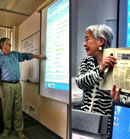
A number of young weblog writers of Tehran have visited “Ahmad Ahmad” a well-know disable war veteran of the Islamic Revolution. The meeting took place on Thursday November 8th, 2012.

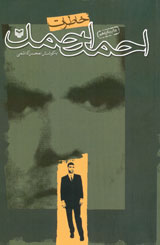
Ahmad Ahmad Memoirs (10)
Edited by Mohsen Kazemi
Soureh Mehr Publishing Company
(Original Text in Persian, 2000)
Translated by Mohammad Karimi
Cortege of Sheikh Javad Foomani
The late Ayatullah Sheikh Jadad Foomani was one of famous southern Tehran clergy and pioneer in political protesting movements. He had a sharp and expressive tongue and had no fear to talk about the regimes corruption. He had been arrested for several times and called to the police intelligence administration.
He was so popular among the poor and Tehran public for his uncompromising attitudes. The regime was so careful about and fully aware of this popular clergy activity.
Finally he passed away on 23rd of Ramadan 1384 L.H. (Jan 26th 1965), Shab-e Qadr (Night of Destiny).(1) People were sad of hearing his death news. His cortege changed to a great political meeting. Predicting the matter the regime cut the phone lines of Bazaar and the district around Khorasan square in a security attempt.
The fasting people of Tehran wearing black suits rushed to his cortege. The cortege started in front of Nou Mosque. Mehdi and I also joined the cortege. We could see men who had put clay on their heads and women wearing thick black suits and all together had taken part in their popular clergy’s funeral without caring the regime’s possible attempts.
We rallied along with the body toward town of Rey in south of Tehran. SAVAK tried to impede the rally but was confronted with the people’s anger. When we entered Rey Street, people started to shout the slogan: “Our Hojjat-ul-eslam went away from this mortal world. Woe! Woe!”
In Shush Square, somebody went on top of an 18 Kilogram oil can and started to shout slogans and speaking to people. SAVAK reacted and tried to arrest him, but they could not and he lost himself among people cleverly. Shush square became full of people. Very soon we found out there were some agents among people wearing ordinary clothes. While I was moving along with people and shouting someone took my hand and pulled. |


|
|