| |

|
In Honour of the Anniversary of the Publication of the Oral History Weekly

The Iranian Oral History Website will be five years old by Bahman (February) and the Oral History Weekly will at the end of this week enter its third year of publication. Time flies by faster than we can imagine; before long we shall have the 100th issue in our hands. These numbers add up to a prestigious resume for all those who, in their pursuit to produce content, have surfed the virtual space days after days, have toiled, and have occasionally furrowed their brows, but have at last broken into a smile of content.

| |

|
|
Series to be published on Iran’s Contemporary Oral History
Senior oral history expert announced the publication of a 5-volume series of Iran’s contemporary oral history by the Institute for Iran’s Contemporary History Studies.
IBNA: As Morteza Rasoulipour said, the collection entails interviews with cultural and history activists in the contemporary era about the top events in Iran’s history in recent decades.
Rasoulipour stated that the interviews were previously published in the institute’s journals and are now being published as a coherent series due to the weight of the information related in them by the interviewees.
| |
|
|
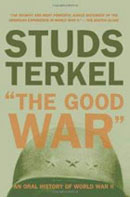
Doing right by Studs Terkel
Reviewer Richard J. Evans is called out by Chicagoan Marc Geelhoed in the new issue of the New York Review of Books for overlooking a set of quote marks. The matter isnt as petty as it sounds.
In the October 11 issue of the NYRB, Evans began his discussion of two books on World War II on this note:
"Ever since it began, World War II has been seen as the good war, to borrow the title of Studs Terkel’s Pulitzer Prize—winning oral history. In sharp contrast to World War I, remembered mainly for its terrible conditions in the trenches of the Western Front, its tragic waste of a whole generation of young men, and its disastrous consequences in Europe, leading to the rise of fascism and communism and the triumph of Hitler, World War II is remembered as the defeat of dictatorship by democracy, racism by tolerance, nationalism by internationalism, extremism by moderation, evil by good.
| |
|
|
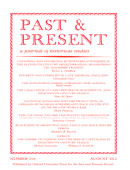
Past & Present Latest Issue Published
Volume 217 Issue 1, of Past & Present has been published in November 2012.Here are the contents of this issue: Robin Fleming
Recycling in Britain after the Fall of Rome’s Metal Economy
Past and Present (2012) 217(1): 3-45 doi:10.1093/pastj/gts027 -
Eric R. Dursteler
Speaking in Tongues: Language and Communication in the Early Modern Mediterranean*
Past and Present (2012) 217(1): 47-77 doi:10.1093/pastj/gts023 -
Richard J. Ross
Distinguishing Eternal from Transient Law: Natural Law and the Judicial Laws of Moses*
Past and Present (2012) 217(1): 79-115 doi:10.1093/pastj/gts022 -
Matthew P. Dziennik
Whig Tartan: Material Culture and its Use in the Scottish Highlands, 1746–1815*
Past and Present (2012) 217(1): 117-147 doi:10.1093/pastj/gts025 -
| |
|
|
How to survive election season, oral history style
Every presidential election, similar concerns arise: Don’t the campaign ads seem especially vicious? Has the media coverage always been this crazed? Will we ever actually get to vote? While I know many who become more motivated the more absurd the election season becomes, I tend to become disenchanted with the whole process, wondering how my one small vote could compete against the Koch Brothers or Morgan Freeman.
Believe it or not, to keep the thoughts of voter purges and new ID laws from sending me into a blind panic, I’ve taken to trolling through online archives dealing with civil rights and past elections. Yes, this historian-in-training finds a disturbingly academic comfort in undertakings like the University of Southern Mississippi’s Civil Rights Documentation Project and the American Folklife Center’s Civil Rights History Project.
| |
|
|
'Poster child' of traveling exhibit from Danville
Danville’s Paula Martin Smith was conference in Lynchburg not long ago, browsing some of the booths set up by various agencies to hand out information.
Smith said she got to the AARP’s table and a flyer caught her eye, one that invited people who had gone through the desegregation of public schools in Virginia to tell their stories for an oral history project.
“I thought, ‘I’d really like to participate in this,’” she said.
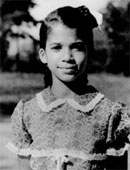
Then she turned to the second page of the flyer and staring back at her was … herself, in a photograph taken when she was 10 years old.
“I can’t even describe the feeling at the time,” Smith said.
Smith said she learned that the school desegregation oral history project is collaboration between Old Dominion University, which is hosting the project; Virginia NAACP; AARP; the Urban League of Hampton Roads Inc.; DOVE (Desegregation of Virginia Education) and several other agencies and colleges, all working to collect local oral histories and artifacts from that time.
| |
|
|
Oral History Weekly Magazine Aims and Regulations
Oral History Weekly Magazine wishes to create a suitable place for thoughts and idea development; Its main field would be “Oral History” and subjects as telling & writing memoirs, writing diaries, travelogues, chronologies, and all other subfields of history which are presented in the form of news, articles, reports, notes, interviews and memoirs can be included. There is no limitation on the length of would-be-sent materials.
Mentioning the name, academic background and email is necessary. Articles with complete references and bibliography are more credited and an abstract would quite helpful.
Weekly is not about to publish any material consisting insults and libels about other people or anything that brings anxiety to public opinion. Weekly can edit and translate the received materials.
The published articles and materials are only the writer’s ideas and Oral History Weekly Magazine has no responsibility about their content.
|
|
|

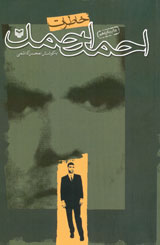
The meeting of introducing and reviewing the book “Description of Name” will be held by the General Office of the Public Libraries of Eastern Azerbaijan Province in Tabriz Central Library on Wednesday November 22, 2012. A number of the prominent critics and writers of the province will attend the meeting.

Ahmad Ahmad Memoirs (9)
Edited by Mohsen Kazemi
Soureh Mehr Publishing Company
(Original Text in Persian, 2000)
Translated by Mohammad Karimi
For some seconds it was calm. I went fast to that boy and lifted him. Some others also came to help me. I took his left arm and one his right hand and the other two took his legs and we moved him together. While we were passing across the street, the colonel ordered the soldiers to fire again. The one who was in front of me and was holding the boys leg was shot and fell down. The one who was in my right side was also shot in back and fell. The other two and I ran away. I took shelter behind the walls of the bank. I found my hands and clothes bloody. I was shocked and looking around dazzled and confused. I could not move or do anything and full of scare. Then I heard people shouting slogans. I saw group of people carrying sticks and shouting: "Death, or Khomeini… Go to Bazaar...Go to Bazaar…"
I was a bit inspired. I saw my brother and some other youth of "Islamic Councils Coalition" coming to my side. Mehdi spotted me. He came to me and patted on my back and said: "Whats up, Ahmad?..." I controlled myself and replied: "Brother, look! Theyve killed them?"
He said: "Come on! Its not too much. Go and look out there. There, they have killed people like fall leaves and there is no one to gather them. Come on! Lets go…do not stand here…" Then he took my hand and we went toward Bazaar. When we were passing through bazaar passages, I could see the corpses on passage sides. In a hallway in bazaar, I saw a shocking scene. A man was shot in the leg and had fell beside a four-wheeled and was writing with his right hand finger on the four-wheeled "Death, or Khomeini". I had a strange feeling. I could not stand and ran away. Gradually it became usual for me to see bloody scenes and killed and killer people. Inside bazaar we were moving from a hallway to the other one; suddenly the military closed the bazaar gates and sprayed people by bullets. The soldier would not enter the bazaar and hallways in it; they would only fire through the gates. If somebody wanted to pass from one side to the other, they would spray him with bullets; he would succeed in passing by several falling and rising or would be shot and killed. |


|
|