| |
|
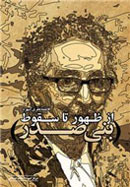
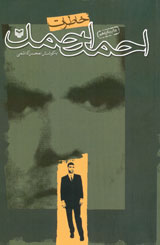
Banisadr: From Rise to Fall released

An account on Banisadr’s social, personal and political life prior to the victory of the Islamic Revolution has been written by Fatemeh Nazari Kahre. The work is published by the Islamic Revolution Document Center.
IBNA: Banisadr was Iran’s first president after the Islamic Revolution. With a background fraught with mysterious relations with Americans prior to the revolution, Banisadr went through a conduct metamorphosis with the revolutionary forces in the critical period following the revolution in Iran which led to his fall and flee from the country.

| |

|
|
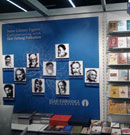
Biographies of Iranian dignitaries offered at Frankfurt Book Fair
The biographies of several noted Iranian editors, translators, authors and scholars are being offered at the 64th Frankfurt International Book Fair by Iran’s Elmi Farhangi Publishing Company.
IBNA: The publishing company will offer 120 selected books and more than 50 e-books as well as the professional biographies of several noted Iranian editors, translators, authors and scholars.
Some of the figures include Avicenna, Ebn Meskavayh, Baba Afzali Kashani, Abulhassan Bahmanyarian Marzban, Abureyhan Mohammad Ibn Ahmad Biruni, Omar Khayyam, Jalal Uddin Mohamamd Davani, Haj Mola Hadi Sabzevari, Abu Soleiman Manteghi, Abdil Razagh Lahiji, Ghazali, Farabi, Razi, Sohrevardi, Mollasadra, Mirdamad and Nasiruddin Tusi.
| |
|
|
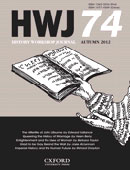
History Workshop Journal Latest Issue
The latest issue of “History Workshop Journal” for the autumn of 2012 is published. This journal is affiliated to “The History Workshop Movement”.
The History Workshop is a movement founded by Raphael Samuel. Its main role was to promote the historiographical tradition known variously as History from below, social history, the history of everyday life, or simply the people's history. Samuel defined the movement as being "the belief that history is or ought to be a collaborative enterprise, one in which the researcher, the archivist, the curator and the teacher, the 'do-it-yourself' enthusiast and the local historian, the family history societies and the individual archaeologist, should all be regarded as equally engaged." It was founded at Ruskin College, Oxford (the trade union college for mature students) in 1966.
| |
|
|
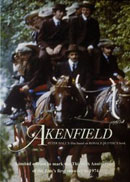
REVISITING AKENFIELD: 40 YEARS OF AN ICONIC TEXT (2)
First Part of this article was presented last week and this week the second and last part of it is presented to you:
Given that Akenfield was not conceived as an oral history but as a literary work, such criticism now appears harsh.(39) Recently Blythe elucidated both the spirit and the method of his approach. ‘The literary aspect of the book comes from my being a kind of poet-historian and the “spiritual” side of it derives from my lifetime association with the rural church.’ And as for how Blythe conducted his interviews: ‘Some of the talk was taped, some of it was taken down as notes, some of it was recalled from childhood onwards.’(40) It was – and still is – rare to find the transparent and unadulterated use of the spoken word in published texts. Even Ewart Evans, whose work is praised as much as Blythe’s is criticised, does not appear to reproduce his informants’ speech entirely faithfully.
| |
|
|
UGA Launches Oral History Project
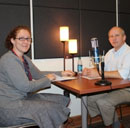
The University of Georgia’s Russell Library launches a new oral history series Friday. Library official Craig Breaden says the First Person Project will document the stories of average Georgians:
“The project was inspired by the belief that everyone is an eyewitness to history and that everyone, sometimes with a little encouragement, has a story to tell.”
Reservations are made for a fee of $10 on a first come, first serve basis.
Officials say the project is loosely modeled on StoryCorps, a partnership between NPR and the Library of Congress.
But the series has a second goal. Officials seek to teach Georgians how to document oral history.
| |
|
|
Russell Library transforms local personal stories into historic gems
The Russell Library for Political Research and Studies usually showcases history in displays and on bookshelves — but with the development of a new oral history project, the library can now record history.
The First Person Project focuses on documenting the experiences of everyday Georgians through recordings of oral narrative. Participants will arrive at the Russell Library on Friday prepared to tell any story — or stories — they want to share.
“The topics we explore, like environment, economy, civil rights, social relations — those are all topics that come up when people have these big stories to tell each other,” said Jan Levinson, outreach archivist at Russell Library.
For Levinson, preserving oral history recognizes the role of ordinary people in creating history.
| |
|
|
Oral History Weekly Magazine Aims and Regulations
Oral History Weekly Magazine wishes to create a suitable place for thoughts and idea development; Its main field would be “Oral History” and subjects as telling & writing memoirs, writing diaries, travelogues, chronologies, and all other subfields of history which are presented in the form of news, articles, reports, notes, interviews and memoirs can be included. There is no limitation on the length of would-be-sent materials.
Mentioning the name, academic background and email is necessary. Articles with complete references and bibliography are more credited and an abstract would quite helpful.
Weekly is not about to publish any material consisting insults and libels about other people or anything that brings anxiety to public opinion. Weekly can edit and translate the received materials.
The published articles and materials are only the writer’s ideas and Oral History Weekly Magazine has no responsibility about their content.
|
|
|

Alireza Kamari, well-known researcher and writer has said that a book on the cultural history of war will be published soon.

Ahmad Ahmad Memoirs (6)
Edited by Mohsen Kazemi
Soureh Mehr Publishing Company
(Original Text in Persian, 2000)
Translated by Mohammad Karimi
Avoiding Boycott
Hojjatiyyeh Society’s goal was fighting against Baha’ism and for this purpose would use its own methods. The society would impede its members from being politicized and would try not to make the government unsatisfied. On those days, Baha’ism was expanding its corrupting ideas so fast and the fight against it was a necessity; but it was all the matter because the regime was the provenance of support and the growth of Baha’ism and as long as they had the government support, their growth was not stoppable. What the society was doing was fighting against the effect not the cause. As a result their degree of success to achieve their goal was limited. In the society it was believed that if they wanted to remain alive and continue their activities they should compromise with the Shah’s regime or at least ignore what it does. They believed involvement in political activities would impede the society of achieving its goals and considered political activities as a misleading strategy. So the society obliged its members not to get involve in political activities. Some accepted this obligation. The society would ask them to guarantee that they would not became a member of any political group and would not bring any political journal or book with themselves to the society’s sessions. Anyone who would not accept this guarantee, he or she had to leave the society. If somebody would hide his/her activities from the society whenever they were revealed, he/she would not be let to enter the society anymore.
One they some representatives of the society came to make me obliged for not entering political activities. But I refused and just said that I would morally promise not to have any political activities in society meetings and would not bring political journals and books. And they accepted. So I could continue my presence in the society while following my political activities. |


|
|