| |
|
On the crucial examination of a phenomenon

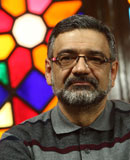
As one of the most striking features of journalism, reports on war have always been appealing to readers. In the interview that follow, Hedayatollah Behboudi, a senior journalist of war, maintains that it is a necessity for the genre to be scrutinized.

| |

|
|
Historian Eric Hobsbawm dies at 95
Eric Hobsbawm, the distinguished British Marxist historian who had a profound influence on the Indian Left and famously said that he wanted to be remembered as an unrepentant flag-bearer for communism, has died at the age of 95.
His daughter Julia said that he died early on Monday in a London hospital where he was being treated for pneumonia. He is survived by his wife Marlene, three children, seven grandchildren and a great grandchild.
| |
|
|
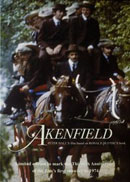
REVISITING AKENFIELD: 40 YEARS OF AN ICONIC TEXT (1)
Ronald Blythe’s Akenfield, now forty years old, is generally acknowledged as one of the most influential books in the field of oral history.1 First published in 1969, Akenfield is a classic which still has the power to move the reader with its unsentimental, straightforward descriptions of a rural life that was hard, unremitting and something to be endured. This evocative portrait of life in an East Anglian village illustrated the potential for a new kind of history which told the stories of ordinary folk in their own words. To the twenty-first century reader it is a powerful description of a world we have lost.
| |
|
|
Oral history program recognized
Burnaby's Community Heritage Commission has been recognized with a Heritage BC Award for its oral history project, that resulted in about 100 hours of audio recordings being digitized and made available online.
The recordings, interviews conducted in the 1970s and '80s with Burnaby pioneers such as former Burnaby reeve William Pritchard, Florence Hart Godwin and Blythe and Violet Eagles, were originally done on analogue audio tape, which was deteriorating, making them almost unplayable.
| |
|
|
StoryCorps is coming
StoryCorps, the oral history project that travels the country recording interviews with ordinary people, will make a three-week stop in Charleston late this month, giving locals the chance to step into their Airstream trailer mobile recording booth to record an interview with a friend or loved one. The idea behind StoryCorps is to allow people to share, record, and preserve the stories of their lives — all interviews are archived at the American Folklife Center at the Library of Congress, and participants leave their recording session with a CD copy of their interview.
| |
|
|
Selected outtakes from our Chipper Jones oral history
In case you haven't seen it yet, Chipper Jones is on this week's CL cover. You can read the full 22-person oral history here, which goes into detail about the life and times of the Braves legend as his career comes to an end. In putting together that story, it was safe to say that there was an abundance of content that we simply couldn't fit into the oral history. Many of these individuals spoke about other parts of Jones' story — like his love for hunting or his relationship with the media. We wanted to share those as well, so here are 10 additional quotes from that didn't quite make it to print.
| |
|
|
Oral History Weekly Magazine Aims and Regulations
Oral History Weekly Magazine wishes to create a suitable place for thoughts and idea development; Its main field would be “Oral History” and subjects as telling & writing memoirs, writing diaries, travelogues, chronologies, and all other subfields of history which are presented in the form of news, articles, reports, notes, interviews and memoirs can be included. There is no limitation on the length of would-be-sent materials.
Mentioning the name, academic background and email is necessary. Articles with complete references and bibliography are more credited and an abstract would quite helpful.
Weekly is not about to publish any material consisting insults and libels about other people or anything that brings anxiety to public opinion. Weekly can edit and translate the received materials.
The published articles and materials are only the writer’s ideas and Oral History Weekly Magazine has no responsibility about their content.
|
|
|

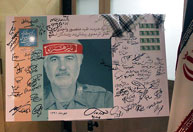
A stamp on the designer of the spiritual work of the war combatants' headband has been unveiled in the Iranian parliament (Majlis).

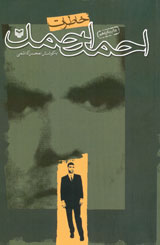
Ahmad Ahmad Memoirs (5)
Edited by Mohsen Kazemi
Soureh Mehr Publishing Company
(Original Text in Persian, 2000)
Translated by Mohammad Karimi
Unburdened Sorrows
Following Imam Khomeini Begins
When Grand Ayatollah Boroujerdi passed away, the Shah’s regime tried hard to show that Ayatollah Hakim in Iraq was officially the most high-ranking Shia clergy in order to transfer Shia power core out of Iran; however, presence of Ayatollah Khomeini and subsequent events showed these attempts were useless.
In 1962 when Asadollah Alam government ratified the bill of “Provincial Councils”.(1) The Clergy and activist groups including Islamic Coalition Party (Hey’at-haye Mo’talefeh Eslami) shaped a movement and many announcements were issued in opposition with this bill.
The announcements and telegrams of Grand Ayatollahs such as Imam Khomeini, Milani, Qumi, Shariatmadari, Golpaygani, Mar’ashi Najafi were read for public in mosques and other religious circles by preachers like Hojjatoleslam Mohammad Taqi Falsafi.
The name of Ayatollah Khomeini was not familiar to me among other Ayatollahs whose announcements were read. My brother had talks about his morals, knowledge and fights against the regime. All the announcements would be read but it was his announcements that would attract people and me. |


|
|