| |

|
Millions of Bodies with War Memoirs

Are words the only conduit for transferring memories of the past? Are memories only doomed to being spoken and heard of? Can other human parts be helpful in carrying memories? Finding the precise answer to these questions can lead us to the boundless treasury of Iranian's memories of far and recent past, especially of the Sacred Defense era. Simply put, memories are kept in the brain and are articulated through tongues and the mouth; however, an in-depth look can yield more detailed answers. Memories are not only oral, they can as well be written, meaning that besides the tongue, fingers can be engaged in the transcription of memories by means of modern or traditional stationery like pens, pencils or the keyboard. Therefore, in addition to speaking, tactile sense, especially of the finger tips, can occasionally convey human experiences. Furthermore, other organisms can play a part in reception and storing of memories, on the one hand, and transfer of such data to others, on the other.

| |

|
|
Sacred defense is flowing in my veins
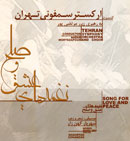
“Chants for love and peace” a symphonic poem composed and presented by surgeon/musician Shahryar Kohanzad and conducted by Nader Mortezapour, has been performed by Tehran Symphony Orchestra in Talar-e Vahdat from Sept. 20 to 21.
The event, marking the anniversary of Iran-Iraq war, was sponsored and organized by the relief and welfare fund of the Islamic Republic Medical Council and Iran Music Association, agencies report.
The performance included symphonic poems “Vigilance”, “Fusion”, “Birth of an Extraterrestrial Love”, “Beast and Beauty”, “Magnificence of Love”, “And the War Goes On”, “Eyewitness to War”, “Children of Universe”, “Descent”, and “Hero of my Heart” declaimed and chanted by Kohanzad both in Farsi and English.
| |
|
|
XVII International Oral History Conference
XVII International Oral History Conference: “The Challenges of Oral History in the 21st Century: Diversity, Inequality and Identity Construction.", was successfully held in Buenos Aires from 4 to 7 September 2012.
Based on the received information from Argentina about 700 papers, and about twice that in terms of people have attended in this conference. We should mention that we received the news few days late because of heavy rain and collapse of internet in Argentina.
The Latin American contingents were quite numerous, especially Brazilians, Chileans, and Mexicans (Argentines of course, but they were supposed to be there). There were all sorts of papers, many really interesting and challenging on the varied uses of oral history... from environmental issues to politics and activism.
| |
|
|
Transferring conditions, sentiments and spirits from talking to writing (2)
The first part was presented last week and this is the second and concluding part: Seeing, hearing and reading memories well and correctly with the aim of deep understanding of what has happened, and correct feeling of the atmosphere of the memory's time, force us to do our best to be informed of circumstances of the events so that we can figure out the history of our land more knowingly and literally. This represents the significance of our attention to the history and identity of our past deeply and correctly which is of course praiseworthy. However, there is also another reason forcing us to make our utmost effort in view of the above mentioned cases.
| |
|
|
US ARMY GUIDE TO ORAL HISTORY (6)
Army historians should use either standard cassette recorders or digital recorders when conducting interviews. Adherence to this policy will facilitate the transcription process and the exchange of interviews between Army historical offices. The use of proprietary software for digital recorders, as well as the use of microcassettes, is discouraged. The Center of Military History will transcribe only standard cassettes. Although most Army historians will want to use digital recorders, standard cassette recorders remain widely available, relatively inexpensive, and portable. If using a cassette recorder, be sure to:
| |
|
|
Oral History Weekly Magazine Aims and Regulations
Oral History Weekly Magazine wishes to create a suitable place for thoughts and idea development; Its main field would be “Oral History” and subjects as telling & writing memoirs, writing diaries, travelogues, chronologies, and all other subfields of history which are presented in the form of news, articles, reports, notes, interviews and memoirs can be included. There is no limitation on the length of would-be-sent materials.
Mentioning the name, academic background and email is necessary. Articles with complete references and bibliography are more credited and an abstract would quite helpful.
Weekly is not about to publish any material consisting insults and libels about other people or anything that brings anxiety to public opinion. Weekly can edit and translate the received materials.
The published articles and materials are only the writer’s ideas and Oral History Weekly Magazine has no responsibility about their content.
|
|
|

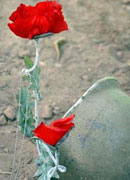
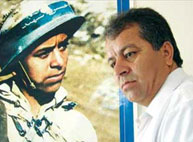
The wounded war veteran whose picture made headlines was introduced by Qods newspaper.

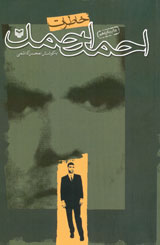
Ahmad Ahmad Memoirs (4)
Edited by Mohsen Kazemi
Soureh Mehr Publishing Company
(Original Text in Persian, 2000)
Translated by Mohammad Karimi
Teachers' Strike and Dr. Abolhassan Khan'ali Murder
In 1960 I was in 6th grade of high school for the second time. In May 1961 a cultural protest was made by the leadership of Mohammad Derakhshesh. In the continuation of this protest, teachers gathered in protest in Baharestan Square for their low salaries and bad economic situation and went on strike.
The protest trend speed up and there were clashes between the teachers and the military. They started to shoot and a teacher, Dr. Abolhassani Khan'ali(1), who was a teacher of Jami High School was shot dead. Two others were wounded. Many protestors were also injured among the crowd when running away while being scared from the fires.
This tragic event resulted in prime minister Sharif Emami censure and then he resigned. Teachers' wages increased and Mohammad Derakhshesh, leader of strikers, became Ministry of Education.
I was acquainted with Abolhassan Khan'ali when I was passing the first 3 years of Jami High School. He was a warmhearted, good believer and with good morals. He was also well-educated. He would go to Imamzadeh Davoud (PBUH) Shrine and voluntarily would manage the affairs over there. (3)
This event had a big impression on me. At those young ages these events were eye-opener for me and would show me the right way. This feeling in me was shaped at a time when many of the youth were led to miserable and corrupting affairs. |


|
|