| |
|
Secretariat of 4th History of Majlis session activates

Head of the document center of the Majlis Library said the secretariat of the 4th specialized history of Majlis session has started its operation and the themes of the session will be presently decided upon.
IBNA: Ali Tatari said the event is arranged annually and the presented articles and papers are published in a book after the session is over.
As he said, holding the session has been one of the engagements of the center in the past 4 years, besides conducting research works.

| |

|
|
Army Endorses Sacred Defense Oral History Projects
The army of the Islamic Republic of Iran has announced its support for researchers and oral historians of the Sacred Defense.
IBNA: Cultural Deputy and Public Relations Manager of the Army’s Political-Religious Organization has told IBNA that the army would provide the means for oral history interviews by interested researchers with prominent Sacred Defense figures.
As he said, so far various memory and oral history books have been published or are about to be released based on the stories told by army commanders like Brigadier General Farzollah Shahinrad, Ahmad Torkan and Saeid Pourdarab.
| |
|
|
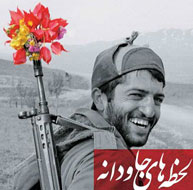
Accomplishment of "Memory-Writing" movement and future of Holy Defense books
We are now in the 32nd week of the Holy Defense. A little more than 24 years has passed from the end of the Iraqi imposed war against Islamic Republic of Iran. During these years, much has been said about the issue by all of those who are attached to and have responsibility and analyze the issues of the occasions, but less has been published about the oral history on the basis of many of those statements (whether in the form of telling memories and narrating events or in the form of promotional and encouraging remarks).
| |
|
|
Transferring conditions, sentiments and spirits from talking to writing (1)
Interview with the active and influential or present elements in historical events is the most important method through which is used in oral history for registering and keeping the history.
Today like the past decades, the devices of recording the sound of the interviewee is the most public and possible way for interviewing. In other words, voice recorders and today digital recorders which is commonly called as "recorders" has the responsibility of paper and pen in order to make talking enduring. Thus, the entire remarks and statements of the interviewee and interviewer are kept and saved by such mentioned devices. Therefore, what is said during the interview is kept and saved in the main or secondary memory of such devices. So, we can find out the quantity and quality of the statements made by the interviewee through listening to the recorded voices.
| |
|
|
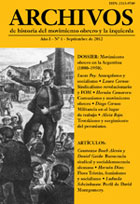
ARCHIVOS, History of the Labor Movement and the Left
The first issue of ARCHIVOS is published under the editorship and management of Hernán Camarero from University of Buenos Aires. A group of 14 instructors as University of Buenos Aires form the committee of editors and a group of 17 instructors from countries such as Germany, Mexico, Brazil, Canada, Argentina, and UK form the advisory council including Dr. Pablo Pozzi head of Argentinean Oral History Association and also Latin America Oral History Netweok.
ARCHIVOS is an Argentinean Spanish journal that covers issues related to labor history and the left and also a scientific journal of social, political, cultural and intellectual, which aims to promote research, review and updating of knowledge about the labor movement and the left, both nationally and internationally.
| |
|
|
US ARMY GUIDE TO ORAL HISTORY (5)
The End-of-Tour Interview Program described in AR 870-5 consists of interviews with the principals of the Secretariat and Army Staff, MACOM commanders, commanders of Army specified commands and Army components of unified commands, commandants and deputy commandants of the U.S. Army Training and Doctrine Command (TRADOC) schools and of the Army Medical Department Center and School, corps and division commanders, and commanders of theater and corps support commands. The program is designed to collect the experiences of individuals in important positions and to ensure that the information is preserved and available to the Army.
| |
|
|
Oral History Weekly Magazine Aims and Regulations
Oral History Weekly Magazine wishes to create a suitable place for thoughts and idea development; Its main field would be “Oral History” and subjects as telling & writing memoirs, writing diaries, travelogues, chronologies, and all other subfields of history which are presented in the form of news, articles, reports, notes, interviews and memoirs can be included. There is no limitation on the length of would-be-sent materials.
Mentioning the name, academic background and email is necessary. Articles with complete references and bibliography are more credited and an abstract would quite helpful.
Weekly is not about to publish any material consisting insults and libels about other people or anything that brings anxiety to public opinion. Weekly can edit and translate the received materials.
The published articles and materials are only the writer’s ideas and Oral History Weekly Magazine has no responsibility about their content.
|
|
|

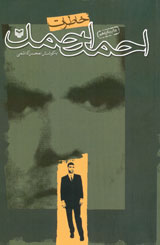
Speaking in a press conference, the new head of the Foundation of Holy Defense Values, Archives and Publication declared The Leg Left Behind as the book chosen by the foundation in 2012.

Ahmad Ahmad Memoirs (3)
Edited by Mohsen Kazemi
Soureh Mehr Publishing Company
(Original Text in Persian, 2000)
Translated by Mohammad Karimi
The First Prison Experience
Pass mark for 1st to 5th grade of high school was 7 and for 6th grade 10. In 1960 I was in 6th grade that I witnessed there was a protest among the students that changed to a guild protest.
Education Ministry had announced that pass mark for 5th grade and the lower grades would higher than 10. The students did not like that. So they reacted so fast. I was in 6th grade of high school and this new regulation had no effect on my educational destiny. However, since I saw that matter unjust, I participated in their protest. The students of Marvi High School had a big in this protest. I observed the silence was broken with these students and they were not kids any more. They were all full of energy and excitement.
The protestors gathered in front of Education Ministry in Tehran near to 30th of Tir Street, north of City Park. And we who had found the chance that we were looking for reached there. We could not control our anger. The students and I broke the windows of the ministry building on the street side and shouted slogans.(1)
When the rally was over, a friend and I went toward Ettele’at Newspaper three-way. On our way, we noticed that four people were chasing us shoulder to shoulder. We speeded up. They did the same. From three-way we changed our way to National Garden (Baq-e Melli) and they were still coming. It was sunset and it was getting dark. In one point they surrounded us. One of them caught me and manacled me. From their dialogues I got that they were monitoring us while we were breaking the windows. I asked; “What’s up?!” they said: “Be quite! Let’s go; it would be clarified.” I told to my friend: “Go and tell my parents that I am captured in the street.” |


|
|