| |
|
Art Center’s books to be presented in 55 countries

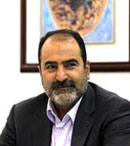
Manager of the public relations department of Art bureau said that 120 book titles of the center’s productions will be distributed in 55 countries.
IBNA: Habib Ilbeigi said: “The international cultural movement is in line with the statements of the Supreme Leader themed on expanding and disseminating Persian language and literature in other countries.”
Ilbeigi hoped that the book’s distribution will fill in the gaps existing in the field of introducing works in the centers of the Islamic Republic of Iran in foreign countries.

| |

|
|
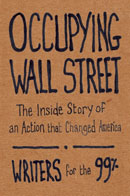
Occupying Wall Street
An essential and galvanizing on-the-ground account of how oxygen suddenly and miraculously flooded back into the American brain. — Jonathan Lethem
[Occupying Wall Street] runs through OWS' beginnings and provides a fascinating look at how Zucotti Park functioned, the disagreements and difficulties in running the community, and contains first-hand accounts of some of its most dramatic moments. Part souvenir, part how-to guide, this is a remarkable and unique book. — The Huffington Post
For two months this fall, Zuccotti Park was the site of an extraordinary political action. Home to the hundreds of anti-capitalist protestors, the park became a communion of sharing and consensus in the heart of a citadel defined by greed and oligarchy.
| |
|
|
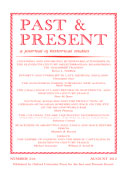
Past & Present Latest Issue Published
No 216, summer issue of Past & Present in 2012 has been published.
Founded in 1952, Past & Present is widely acknowledged to be the liveliest and most stimulating historical journal in the English-speaking world. Past & Present is a British historical academic journal, which was a leading force in the development of social history. It was founded in 1952 by a combination of Marxist and non-Marxist historians. The Marxist historians included members of the Communist Party Historians Group, including E. P. Thompson, Christopher Hill, Eric Hobsbawm, Rodney Hilton, and Dona Torr.
| |
|
|
US ARMY GUIDE TO ORAL HISTORY (4)
After the interview the historian's task is that of product management: summarizing, transcribing, editing, publishing, and storing. The historian's job is not complete until the information contained in the interview is available and accessible to other historians.
a. Label cassettes and digital storage media upon completion of the interview. List the names of the interviewer and interviewee, the date, the place of the interview, and the classification. Digitally recorded interviews should be backed up either on a CD or DVD or on a separate hard drive. If an interview is recorded or stored on multiple cassettes or CDs, indicate that as well: writing "1 of 2" or simply "1 /2" on a label sufficiently identifies part one of a two-part interview.
| |
|
|
Call for Presentations
This inter- and multi-disciplinary conference aims to examine, explore and critically engage with the issues and implications created by the massive exploitation of digital technologies for inter-human communication and examine how online users form, archive and de-/code their memories in cybermedia environments, and how the systems used for production influence the way the users perceive and work with the memory. In particular the conference will encourage equally theoretical and practical debates which surround the cultural contexts of memory co-/production, re-/mediation, en-/decoding, dissemination, personal/mass interpretation and preservation.
| |
|
|
Memories of Conflict, Conflicts of Memory
Posted on September 4, 2012.There are very few facets of public and private life that are not affected by cultural memories of war and conflict. Recent academic scholarship has also been revolutionised as experts on literature, cinema, history, area studies, sociology, anthropology and many others attempt to theorise the memory-narratives of the last century marked by unprecedented totalitarian regimes, coup d’états, military confrontations, popular movements and what Alain Badiou recently called the passion for the real.
This interdisciplinary conference will examine the various ways in which memories of wars and conflicts of the twentieth century are constructed, resisted, appropriated and debated in contemporary culture.
| |
|
|
Oral History Weekly Magazine Aims and Regulations
Oral History Weekly Magazine wishes to create a suitable place for thoughts and idea development; Its main field would be “Oral History” and subjects as telling & writing memoirs, writing diaries, travelogues, chronologies, and all other subfields of history which are presented in the form of news, articles, reports, notes, interviews and memoirs can be included. There is no limitation on the length of would-be-sent materials.
Mentioning the name, academic background and email is necessary. Articles with complete references and bibliography are more credited and an abstract would quite helpful.
Weekly is not about to publish any material consisting insults and libels about other people or anything that brings anxiety to public opinion. Weekly can edit and translate the received materials.
The published articles and materials are only the writer’s ideas and Oral History Weekly Magazine has no responsibility about their content.
|
|
|

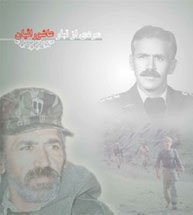
The 83th issue of Shahed-e Yaranmonthly (special issue dedicated to the memory of Maj. Gen. Shahid Hassan Abshenasan(1936-1985)) has been published covering interviews with GityZendenam (his wife), Gen. Nasser Arasteh, Gen.

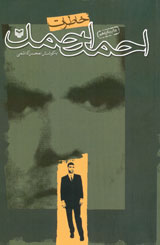
Ahmad Ahmad Memoirs (2)
Edited by Mohsen Kazemi
Soureh Mehr Publishing Company
(Original Text in Persian, 2000)
Translated by Mohammad Karimi
Childhood and Elementary School
I was seven years old when my brother, Mahmood, who was mentally sick, and I went to Farvardin elementary school which was located in the same quarter and registered our names for the 1st grade.
Since my brother was sick, I always had to be beside him. His condition was in a way that always someone had to be careful about him and even at nights one of family members had to sleep beside him to care about.(1)
Because of our family’s bad economic situation we had some hardships for going to school. Once I remember because of not having a pair of trousers, I could not go to school for one week; until my brother, Mahdi, came home on furlough and give one of his military trousers to me. I had the trousers dyed and my mum made it smaller to my size.
I passed my early years by the childhood affections of all kids and economic hardships of my own family. I was in last years of elementary school that bit by bit I started to understand some of conversation happened between the teachers and some groups at school. Their conversations had contradiction with the religious ideas and believe that I was grown up with. Sometimes in religious session that I would participate, I could see that some clergies would criticize those talks and respond them. Living is this duality bit by bit made my mind familiar with some religious and political events which would arouse my sense of curiosity. |


|
|