| |
|
Emphasized by the Supreme Leader

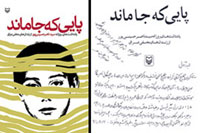
Reading “A leg which was left behind”, the Leader of the Islamic Republic of Iran emphasized on converting the book into English and Arabic. According to the public relations department of the book’s publisher, the work’s 22nd print is ready for publication and its translation into Arabic and English is on the agenda.
IBNA: Reading the book, the Leader of the Islamic Republic of Iran said that the work should be fluently translated into English and Persian.

| |

|
|
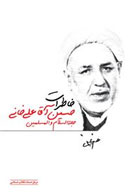
Memoirs of Hojat-ol-Eslam Val Moslemin Hosein Agha Alikhani
Hojat-ol-Eslam Val Moslemin Hosein Agha Alikhani was born in 1944(1323H.Sh) and after his elementary education he went to Qazvin seminary and allocated his life to self-purification and religious studies. In Qazvin, he, along with great teachers of that seminary, like His Excellency Seyyed Abol-Hasan Refiei Qazvini, became determined to propagate and enlighten people about the goals of Imam Khomeini’s movement.
| |
|
|
Released: Oral history of Imam Khomeini’s campaign
A memoir has been published on Imam Khomeini’s campaign under the Shah’s regime.
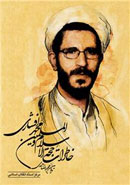
IBNA: Compiled by Mohammad Reza Ahmadi, the book encompasses Mohammad Afshari’s memories he presented in a 25-session oral history project.
In an interview with IBNA, Ahmadi said the book is his latest publication.
As he said, Afshari’s seminary years in Najaf were contemporary with Imam Khomeini’s exiles to Iraq.
Because Afshari could speak Urdu and Arabic, he traveled to Afghanistan, Pakistan and India to disseminate Islamic principles and Imam Khomeini’s religious leadership. He was also a frequent visitor of the imam in Neauphle-le-Château and after the victory of the Islamic Revolution he was appointed as the Friday Prayer leader of Khuzestan.
| |
|
|
“Ukhshamalar” an elegy for the martyrs of the sacred war unveiled
“Ukhshamalar” an elegiac poetry collection produced by Azerbaijan mothers for their sons who have been martyred during the eight-year Iran-Iraq war, has been unveiled in Ardabil, the capital city of Ardabil Province.
“Zaky-u-llah Khoshbakht” director general of the Foundation for Preservation of Monuments and Promulgation of Sacred Defense Values said at the unveiling ceremony of the oral history collection that the book contains elegies recited by mothers of Azerbaijan martyrs and elegiac poetries lamenting the martyrdom of Imam Hussein (AS) on Ashura, reports Iranian Students' News Agency, ISNA.
| |
|
|
Daily Review of Spies Nest Seizure Released
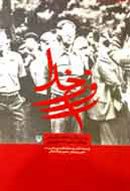
Entitled as the “Day of God”, a daily review of the seizure of the nest of spies (US Embassy in Tehran) on November 3, 1979, is published based on the memories of Seyed Mohammad Hashem Pour-Yazdan Parast, a member of the “Muslim Student Followers of the Imams Line”. The work is released by Sooreh Mehr Publications in Iran.
IBNA: Hussein Nasrollah Zanjani compiled the “Day of God” based on the documents and written materials available about the seizure of the nest of spies.
| |
|
|
US ARMY GUIDE TO ORAL HISTORY (3)
Before arriving for the interview, the historian should double-check to make sure that he or she has all the necessary equipment and that it is functioning. Familiarity with equipment will avoid any embarrassing moments at the start of the interview.
An interviewer should bring the following items to each interview: a recorder (either digital or cassette) and any necessary microphones and cables; power and extension cords; batteries; an ample supply of cassettes or memory media; pen and paper; question list; access agreement; and any supporting documentation such as maps or photographs. Ideally, run two recorders during the interview, which will eliminate the problems that result if the historian's sole recorder malfunctions during the interview.
| |
|
|
Oral History Weekly Magazine Aims and Regulations
Oral History Weekly Magazine wishes to create a suitable place for thoughts and idea development; Its main field would be “Oral History” and subjects as telling & writing memoirs, writing diaries, travelogues, chronologies, and all other subfields of history which are presented in the form of news, articles, reports, notes, interviews and memoirs can be included. There is no limitation on the length of would-be-sent materials.
Mentioning the name, academic background and email is necessary. Articles with complete references and bibliography are more credited and an abstract would quite helpful.
Weekly is not about to publish any material consisting insults and libels about other people or anything that brings anxiety to public opinion. Weekly can edit and translate the received materials.
The published articles and materials are only the writer’s ideas and Oral History Weekly Magazine has no responsibility about their content.
|
|
|

The Research Center for History of the Institute of Humanities and Cultural Sciences opened a chain of meetings on the Discourse of War and Holy Defense on Tuesday 4 September 2010.

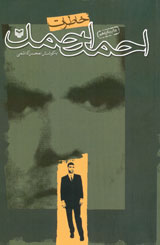
Ahmad Ahmad Memoirs (I)
Edited by Mohsen Kazemi
Soureh Mehr Publishing Company
(Original Text in Persian, 2000)
Translated by Mohammad Karimi
Foreword:
This book narrates known and unknown events and memoirs by people who sought the light and paid heavily for it; and also talks about the ones who lost the way and went astray and reached to a mirage.
This narrative contains the sweet and sour memoirs by “Ahmad Ahmad” who has been interviewed for more than 70 hours in two years. He was patient with our repeated calls and meetings and answered our fair and unfair questions.
For the old Ahmad it was hard to narrate the memoirs of more 40 years ago. However, it happened by referring to different and outnumbered interviews and also some historical books. He admits that interviews remind him of interrogation sessions in prison. What a hard and long interview was the first hour of interview with him to penetrate into his mind and memory! We do not know if the sweat on his forehead was from the heat of 1997 summer or his unwillingness to review his memoirs?
The Bureau for the Islamic Revolution Literature
10th Reprint Introduction
Seven years ago when the print of this book was published, written memoirs of fighters against the Pahlavi Regime were not outnumbered like today. As “Islamic Revolution Documents Center” website admitted then in introducing the book of Hussein Ahmadi (handwritten memoirs): “Publication of Ahmad Ahmad Memoirs is a new opening in researches about MKO(Mujahedin Khalq Organization)”, and in other words it created a new approach to reach parts of historical events and knowing political movements in 1960s and 70s. Since then the memoirs of Mohsen Nejat Husseini, Lotfullah Mesami, Seyyed Kazem Bojnourdi, Marziyyeh Dabagh, Tahereh Sajjadi, Ezzat Shahi and … |


|
|