| |
|
Azerbaijan, Iran Mourns for you

Last Saturday once again we heard about an earthquake in north-east Iran, Azerbaijan, and a number of compatriots have lost their lives. Iranian Oral History Website and Online Weekly colleagues express their condolences to all Iranians and particularly our Azeri compatriots. May God bless them all and health to all who have remained. We wish all the new to-be-constructed houses would not ruin with any other quake and keep the lives inside themselves safe.

| |

|
|
Note:
Next week fasting people will feast the end of one month of fasting and worshiping in Eid-ul-Fitr. Iranian Oral History Website and Online Weekly congratulate this feast to all believers and also inform them that our weekly will not be published next week for participating in Eid-ul-Fitr holidays and ceremonies. The week after Tehran will be hosting 16th Non Aligned Movement Summit and governmental bodies are closed for few days. Consequently our weekly will not be published that week either. Our readers can follow Iranian oral history news on our website during these two weeks.
| |
|
|
POINT REYES LIGHT
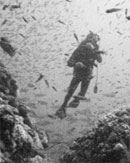
The members of the dive team that explored the Cordell Bank Marine Sanctuary in the 1970s and 1980s were the first to have seen the reserve with their own eyes—and are now sharing their stories of the experience through the Cordell Expeditions Oral History Project.
The sanctuary is named after surveyor Edward Cordell, who was drawn to the area in 1869 after noticing the abundance of birds and marine mammals attracted to it. It had been discovered in 1853 by George Davidson of the U.S. Coast Survey, but it was Mr. Cordell who first plumbed its depths, lowering a lead weight over his boat’s edge until it hit bottom.
| |
|
|
Jack Welch: An Oral History
Since he retired as chief executive of General Electric (GE) in 2001, after two decades in the job, Jack Welch’s legacy has been the subject of heated debate. Under Welch, the company’s market value grew from $14 billion to $410 billion, and revenue multiplied fivefold to $130 billion. Yet his brutal management style was legendary. Each year he famously ranked employees and fired the bottom 10 percent. As retirement neared, he pitted three top executives against each other in a bake-off to determine who would be his successor. “You got to be rigorous in your appraisal system,” Welch told Diane Brady in an interview for this story.
| |
|
|
Learning History Firsthand
Madeline Rich, of Centreville’s Manorgate community, tells the students about being a Jewish girl in German-occupied France. Photo by Bonnie Hobbs.
Centreville — Each year, WWII comes alive for seventh-graders at Rocky Run Middle School. That’s because, besides what they learn about it from their textbooks, they get to hear firsthand from those who lived through it.
#Before school ended, history teacher Jamie Sawatsky organized the annual, WWII Oral History Day. Both veterans and civilians came to the school. Some addressed large gatherings, while students interviewed others in small groups. Some interviews were videotaped and sent to the Library of Congress for its Veterans’ History Project.
| |
|
|
LSU grad recording history of 9th Ward
A young researcher with family roots in New Orleans’ 9th Ward is seeking people who lived in the community between 1920 and 1960 for an oral history project financed by National Geographic. Caroline Gerdes, a recent LSU graduate, will record stories of the 9th Ward at Grace Lutheran Church in Lakeview on Saturday from 9:30 a.m. to 4 p.m.
Caroline Gerdes wants to interview people who lived in the 9th Ward between 1920 and 1960.
Gerdes is doing the research with a Young Explorers grant from the National Geographic Society. The program gives grants to young people interested in research, exploration and conservation.
| |
|
|
US ARMY GUIDE TO ORAL HISTORY (2)
Army historians conduct several types of interviews with names that reflect their focus and content: biographical (sometimes known as career interviews), subject, exit, end-of-tour and after-action. A biographical interview focuses on an individual's life or career. Army historians usually conduct this type of interview after an individual with lengthy and significant government service has retired. A subject interview focuses on a single event or topic, such as the Army's role in providing disaster relief in the aftermath of a hurricane or the formulation and making of a particular Army policy or decision. Exit interviews and end-of tour interviews are conducted near the end of a person's tour in a particular assignment and concentrate on the issues and decisions unique to that job.
| |
|
|
Oral History Weekly Magazine Aims and Regulations
Oral History Weekly Magazine wishes to create a suitable place for thoughts and idea development; Its main field would be “Oral History” and subjects as telling & writing memoirs, writing diaries, travelogues, chronologies, and all other subfields of history which are presented in the form of news, articles, reports, notes, interviews and memoirs can be included. There is no limitation on the length of would-be-sent materials.
Mentioning the name, academic background and email is necessary. Articles with complete references and bibliography are more credited and an abstract would quite helpful.
Weekly is not about to publish any material consisting insults and libels about other people or anything that brings anxiety to public opinion. Weekly can edit and translate the received materials.
The published articles and materials are only the writer’s ideas and Oral History Weekly Magazine has no responsibility about their content.
|
|
|

The following books have been submitted to Oral History Weekly:
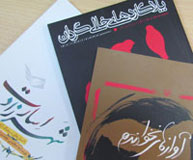
Blank Banners: Published by the Resistance Art Bureau of Ardebil in 103 pages, this book retells the memoirs of Mehdi Aqazadeh and was compiled by Mahmud Mahdavi, who did its interviews.

In the previous issue, we covered the last part of Mohammad-Rezā Hāfezniā's abridged memoires. The next issue will introduce a work considered groundbreaking for almost 15 years in the realm of memoires-writing of Islamic Revolutionary freedom fighters. It was an attempt to address the pre-revolution memories of a Muslim freedom fighter from a professional oral historic perspective. As admitted by the Islamic Revolution Documents Center, "A new window was opened to the studies on the People's Mujahedin of Iran," after it was published. Tapping the experience he had gained in his earlier works, the author sought to avoid propaganda and persuasion and act like a historian in discovering the truth free from common exaggerations. However, there are few words of propaganda and persuasion in his work. As he himself admits in the prologue to the tenth edition of the book, "while I do not approve of some common words and sentences, I find no reason to obliterate the signs of that era."
One of the shortcomings of ideological works published by government-run organizations and even private publishers is that they campaign propaganda and persuasion. Although stemming from the authors' and publishers' commitment to defend the Iranian nation's struggle to safeguard the Islamic Revolution and their sacrifices during the Iraqi-imposed war, this leads to the creation of works which would not last long enough to experience their second edition without governmental support. Repeated propaganda and incessant slogan-shouting discourages the readership; on the contrary, the truth has more impact on the reader's mind and encourages him to read a work.
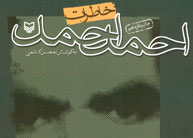
Mohsen Kāzemi seeks to achieve this in Ahmad Ahmad's Memoirs by recording the reality of pre-revolutionary era without letting the narrator's and his ideological feelings infiltrate the memoirs. When the reader reads Ahmad Ahmad's Memoirs, he faces no question to which the narrator has tried to provide an answer. It is, however, clear that an inquisitive and hardworking interviewer has sought to scavenge the truth from a freedom fighter's memories through loaded questions. While the propaganda literature is brimming with sole-black and sole-white characters, Kāzemi seeks to depict gray characters. However, the ferocity of SAVAK torturers gives him no option but to reveal their evil characters. Meanwhile, Kāzemi tries to provide the readers with their backgrounds in the footnotes so that they can understand the reasons for such brutality. |


|
|