| |

|
The Decency of Writing

In past and present Iran, we can divide writers to two main and many derivative branches: 1. Those who write for knowledge development and expansion of mankind’s knowledge and awareness and choose producing thoughts, especially pure, original and valuable thoughts as the aim of their living and writing; 2. Writers who write to gain money or fame and go on with their lives. This group of people has found writing as a job to make a living out of and use its lateral fame to show off in various meetings and gatherings. In other words they write to make their lives pass, unlike those from the first group who pass their lives to write and add up to others΄ and their own knowledge.
So we can say that for the first group, thoughts and manifestation and appearance of that science is important, and the effort to produce and supply worthy living and for the second group, earthly living with its enticing features such as money and position and fame are important and living to attain them is meaningful and valuable.

| |

|
|
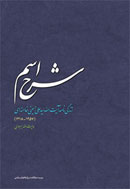
Sharhe Esm Unveils
According to Iranian Oral History Website report; the book of Sharhe Esm: The Biography of Ayatollah Seyyed Ali Hosseini Khamenei (1939-1978) will be unveiled with the presence of The Minister of Culture and Islamic Guidance and a number of the leading experts and interested people in contemporary history and literature of our country at Sooreh Hall in Arts Center on Saturday 4th July from 11 to 13.
It is programmed that the invited experts examine this work from various aspects of historical, methodological and literary and discuss their points of view.
The book of Sharhe Esm: The Biography of Ayatollah Seyyed Ali Hosseini Khamenei (1939-1979) by Hedayatollah Behboodi first released at this years Tehran Int. book fair by “Political Studies and Research Institute” and following great welcome of readers became extinct fast.
The publisher has called this book at its introduction as the second edition of this work but as its implied the structure and text of the book has remained unchanged except for some specific names and details of some events that has been changed with the comments of supreme leader as the only aware person regarding those issues.
| |
|
|
Active interview course runs at Isfahan University
The first oral history training course kicked off in Isfahan University with some 40 participants during April.
The program was arranged by the history group of the university from April 22 to May 20, 2012 with 40 participants from a range of study fields and levels. The workshop was arranged at Dr Mehralizadeh Hall of the literature faculty.
Having been prepared for months, 8 workshop sessions in 16 hours lasting 4 weeks were put on as a brief introduction to oral history and active interview mechanisms and was aimed at training expert forces for research projects of Isfahan University and other oral history centers in the country. Most of the participants were history students in post graduate levels besides students of seminary, librarianship, fiqh and Islamic law.
| |
|
|
Fear in the USA
Detained Without Cause is a collection of oral history accounts by six New York based Muslim immigrants who were incarcerated following 9/11. None of these men had any connection to terrorism, and yet as their stories reveal, they were presumed guilty by the arresting officers, the FBI, the court system, the media and their communities. They were held without trial for several years in solitary confinement, in maximum security facilities where their human rights were systematically violated before being deported on trumped up immigration charges. Rory Creedon finds an important book with policy implications relevant far beyond the borders of the US.
| |
|
|
An oral history: The 1998 U.S. Womens Open at Blackwolf Run
Hanging on the wall of the Blackwolf Run clubhouse is a celebratory photograph of Se Ri Pak and the 1998 U.S. Womens Open trophy. Forever 20, Pak smiles widely, exhaustively. It took the then-LPGA Tour rookie 92 holes to best American amateur Jenny Chuasiriporn to win her second consecutive major championship and start a revolution.
That photo greets you as you walk down the stairs to the locker rooms at Blackwolf Run, where Se Ri Pak visited late this spring.
Im Se Ri Pak, but Im basically born in 1998 U.S. Open at Blackwolf Run in Wisconsin, she said.
Girls in South Korea were awoken in the dark hours or watched Paks victory on tape delay the next morning, then rushed to small driving ranges – stepping over all other interests.
Since that Monday in Kohler, and including Paks other majors, a South Korean woman has won two LPGA Championships, two Kraft Nabisco Championships, three Womens British Opens and four U.S. Opens.
| |
|
|
UVA to Explore President’s Botched Ouster in Class
University of Virginia students will explore the ouster and reinstatement of the school’s president, Teresa Sullivan, in an oral history class that aims to capture the drama of the 17-day conflict.
Students in the course, which will be taught by two professors and labeled “Documenting U.Va.’s Future: Oral History of the Ouster and Reinstatement,” will collect interviews to compile a record of the saga for UVA’s library archive, according to a statement from the Charlottesville-based university.
“It’s a teachable moment about higher-education policy issues, about the relationship between democracy and education, and about students’ roles in their own civic life,” Walter Heinecke, an associate professor in the Curry School of Education and one of the professors teaching the course, said in the statement.
| |
|
|
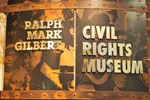
Savannahs Ralph Mark Gilbert Civil Rights Museum seeking oral histories
The Ralph Mark Gilbert Civil Rights Museum is teaming with a social network group to create an oral history website of the struggle and its connection to Savannah.
Stephanie Reaves, with remember.com, said Friday the site, which is already up and running, is redesigning its page and plans to be ready in two weeks.
Reaves, a Savannah native and 2002 graduate of Savannah Country Day School, told a group of the Earl T. Shinhoster Leadership Institute it will “really generate the content around civil rights for future generations.”
Billy Jamerson, board chair of the museum, said he envisions the website as a full discussion of the experiences of the era to include both black and white voices.
| |
|
|
Oral History Weekly Magazine Aims and Regulations
Oral History Weekly Magazine wishes to create a suitable place for thoughts and idea development; Its main field would be “Oral History” and subjects as telling & writing memoirs, writing diaries, travelogues, chronologies, and all other subfields of history which are presented in the form of news, articles, reports, notes, interviews and memoirs can be included. There is no limitation on the length of would-be-sent materials.
Mentioning the name, academic background and email is necessary. Articles with complete references and bibliography are more credited and an abstract would quite helpful.
Weekly is not about to publish any material consisting insults and libels about other people or anything that brings anxiety to public opinion. Weekly can edit and translate the received materials.
The published articles and materials are only the writer’s ideas and Oral History Weekly Magazine has no responsibility about their content.
|
|
|

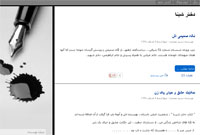
The blog dedicated to The Girl from Shinā is accessible at dokhtareshina.persianblog.ir. In 12 June 2012, Nasim Mohammadi wrote, "My greetings go to all those interested in resistance literature and other issues related with the holy defense.

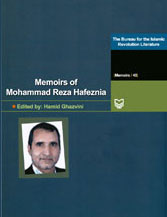
Memoirs of Hafeznia (16)
I stood there and started talking to my God. One moment, I said “Oh God save me if I am useful for this Islamic movement and for your way.” In Fact with this prayer, I decided to leave there. I said if I was useful, I would leave, if not, they would fire at me, and achieve my goal that was martyrdom.
I remained there until the barrage being fired at the hole ended in order to throw myself out of the space between the interior and exterior layers of the prison. When the barrage ended, I remained for some ten seconds and then jumped toward the wall and reached myself to the banned area. Nobody hung around there. It was filled with bushes. Since it was foggy, the projectors lightened limited space.
At the same time, I considered precaution since it was possible that the guards had night-vision, anti-fog and UV cameras. So I decided to crawl among the thorn bushes some 50 meters.
As soon as I reached in the middle of the wall, the barrage started so I lied down on the floor. When the barrage ended, I continued my way again. Of course, I had heard that before me, a few people had left there and taken the ladder to that side, the same ladder which had been predicted to be put on the exterior wall so that the prisoners could go up. I continued my way in the same path directly but didn’t know where the ladder had been located exactly.
I guessed that it had been taken directly beside the wall. Fortunately, there was no fire. I saw that the ladder was there. I went up from it. There was an almost much distance from the end of the ladder till above the wall, so I caught my hand above the wall with difficulty and went up and lied on the floor to see what was going on that side. I saw that a rope had been tied up to the ladder and was hung from that side of the wall. The conditions were ready for jumping. At this time, a military vehicle was approaching there. I stayed quietly. After a few moments, I caught the rope and slid downward. I didn’t understand how I fell down. The wall had a high altitude and I fell down on the mud from behind. But I didn’t lose myself. Fortunately, I had warm underclothes. I had a brown pullover on which I had worn the prison’s clothes that if it became dirty, I would take them off and could escape with usual clothes.
Since the soldiers in the turrets could see that side of the wall, I had to crawl with difficulty again. The difference between this crawl with the previous one was that the ground was sandy there and here was muddy.
There was another risk. I might meet with the vehicles that were turning, or one of the tanks. So, I continued my way through crawling some 50 or 60 meters in the darkness of the night and the foggy weather. Then I crouched and moved against the direction of the wall little by little. After a few moments I saw that the light was disappeared. Thus, I chose the direct path and reached the wall of a garden. I thought that I had really distanced from the prison. It was still dark and I didn’t know where I was going.
I continued my way unavoidably until I saw a gleam in front of me. I decided to move toward it. As I was going, suddenly I heard the sound of a barrage. I found out that I was moving toward the prison without being noticed. I immediately changed my direction. Of course, I had little hope and was worried that another incident might take place.
All of a sudden, I heard the sound of several dogs barking. For one moment, I imagined that these hungry dogs would attack me tonight. I escaped from the prison, but was entangled with the dogs here! Suddenly, an idea came to my mind.
It was foggy and I didn’t see the dogs, but it sounded very close. I looked around myself. I saw the rampart of a well the snows of which had been partially melted. Its ground was dark unlike the surroundings which were white and snowy. I lied down in that dark area. My clothes had been soaked and I was shivering. It was really hard to tolerate the cold weather. However, running and movement had balanced the problem to some extent, and if there was not the movement, I would certainly freeze. I got up cautiously and started moving. I tried to watch the surroundings very carefully until I reached the wall of a garden which had iron fencing. It came to my mind to find some tools in order to be able to defend myself against the dogs if attacked.
I had nothing and was empty-handed. I saw that one of the bars of the fencing was loose, so I shook a little and took it out. So, I felt relief and continued my way until I got to a river. I had not seen the area before. I looked for a narrow area in order to pass through it – in fact to jump. I feared to fall into the river. I didn’t know how much the volume and the pressure of water were. After a few minutes, I found a place and could jump with difficulty and pass healthfully. Then, I became sure that I had distanced the territory of the prison’s security forces as well as military forces. They were on the other side of the river and I was this side. I continued my way very comfortably. However, it was very difficult to move in that dark and foggy weather. I was looking for a sign to see where I was. Then, I heard the sound of a factory. Since most factories around Mashhad had been located in Mashhad-Quchan road, I decide to move toward the same sound. In other words, I had been dragged toward the sound automatically, just like the missiles dragged toward the heat of a plane. When I reached behind the factory, I turned it and saw that a stream was close to it. The stream was along Mashhad-Quchan road and I knew that it went toward Mashhad. However, the stream moved so slowly that it was not possible to recognize its movement in nigh darkness. It was very important for me to understand the direction of water. It was possible to find out the direction by throwing a small object on the water. So I looked for around there in order to find something. Finally, I found some dry leaves left beside a tree. I threw them into the stream. I specified the path toward Mashhad. I took off the prison’s wet clothes, hanging them on a tree beside the stream. Now I had just a trousers and a brown pullover.
Translated by: Mohammad Baqer Khoshnevisan |


|
|