| |
|
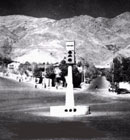
In Memory of Shemirān

The Research Center of Tajrish Neighborhood House and the Youth Center of Municipal District One of Tehran intend to hold the festival In Memory of Shemirān. The event will cover such fields as memory-writing and document-collection. Those interested are asked to submit their works to the Research Center of Tajrish Neighborhood House or the Youth Center of District one of Tehran till 21 September 2012.
The festival will be held by the Research Center of Tajrish Neighborhood House in autumn 2012, and the winners will receive valuable awards and the right to have their memories published in a book and their documents on a CD.
The participants are asked to send their written memories in two to ten pages and their documents in the form of video interviews and films to the directorate of the festival.

| |

|
|
A Bibliography of Mersād Operation Memoirs
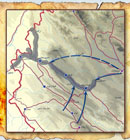
The 26th of July is the anniversary of the day Operation Mersād was first launched in 1988. In this operation, under the command of the Army of the Guardians of the Islamic Revolution and backed by Iranian airborne forces, Iranian combatants pushed back counter-revolutionary Monāfeqin (Organization of the People's Mujahedin of Iran) from within the Iranian borders.
Once United Nations Security Council Resolution 598 was accepted by the Islamic Republic of Iran, marshalling all other counter-revolutionaries from all over Europe, the fugitive members of the organization of the People's Mujahedin of Iran (the Monāfeqin) joined forces with the aggressive army of Saddām and attacked western Iran from the Defile of Pātāq while they were armed to teeth with Saddām`s arms gifts.
| |
|
|
Confidentiality Right Rejected
A federal appeals court on Friday rejected a lawsuit by two researchers seeking to quash a subpoena for access to oral history records held at Boston College.
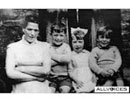
The researchers argued that federal courts need to consider the impact on academic freedom and scholarly research if oral history transcripts for which the research subjects expected confidentiality are turned over. In this case, the records are being sought by the British government, which continues to investigate killings during the “Troubles,” a period of intense violence in Northern Ireland. The U.S., acting at Britain’s request under terms of a treaty between the two nations, is seeking to obtain the records.
Many research subjects give oral history interviews with the expectation of lifetime confidentiality (as was the case here), and historians say such agreements are essential to encourage frank answers to their questions, especially if their questions involve potential activities that are illegal or that may lead to recriminations for those giving the interviews.
| |
|
|
Community oral history project underway in Devils Lake
“The Stories of Our Lives” is a unique community oral history project initiated by the Devils Lake Sons of Norway in conjunction with the Lake Region Public Library and Central Middle School.
According to Sam Johnson, Sons of Norway project coordinator and longtime Devils Lake educator, “the purpose of this community arts and heritage project is to collect and preserve important stories, as well as historical and cultural information about the individuals, families, and groups of people who came to the Devils Lake region to work and live, and in the process create the wonderful community we enjoy today!”
In May, CMS 8th grade students in Sheri Olson’s English classes collaborated with Johnson to begin collecting these community oral history stories.
Students learned how to set up and conduct oral history interviews, and to operate the audio and video equipment needed to collect and preserve these stories.
Olson’s students began by collecting stories from their grandparents and other family elders using digital audio recorders.
| |
|
|
Oral history exhibition back briefly at museum
One of the most popular exhibitions held by the Lakes District Museum is back this month, and the museum director has been invited to give heritage preservation tips to Coromandel residents.
The museum in Arrowtown had presented Speaking of Change: Memories of the Wakatipu 1900 to 1960 in the early 1990s as a major exhibition based on oral history recordings of 40 senior residents who were interviewed about their lives in the 20th century.
The show opened again last week and will run until July 29, then makes way for original artworks by Arrowtown artist Pat Jones in an exhibition titled Corridors and Passengers, from August 4 to September 16.
Gold is Where You Find It, the museum's contribution to celebrating 150 years since the discovery of gold in Central Otago, opens October on 19.
All aspects of the precious metal will be covered, with an emphasis on how it shaped Central Otago.
Meanwhile, museum director David Clarke will be the guest of the Coromandel Town community this month to advise it in a presentation and workshop how to leverage its pioneer-era gold-mining heritage into tourism dollars, as Arrowtown and Central Otago continued to do.
| |
|
|
A contribution towards safeguarding an intangible cultural heritage
German anthropologists present oral history materials to National Archives of Burkina Faso
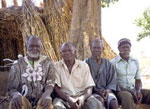
In late June 2012, anthropologists working at Johannes Gutenberg University Mainz (JGU) and Goethe University Frankfurt am Main in Germany handed over a voluminous collection of oral history materials to the National Archives of Burkina Faso based in the capital city of Ouagadougou. The National Archives, which were established in 1970, are now home to these more than 6,000 pages of notes, transcriptions, and translations relating to almost 800 interviews conducted with village elders, earth priests, and village chiefs in the border regions of Burkina Faso and Ghana.
Under the supervision of Professor Dr. Carola Lentz of the Department of Anthropology and African Studies at JGU, a team of young researchers involved in a sub-project conducted under the aegis of the Collaborative Research Center 268 "Cultural Development and Language History in the West African Savannah" – sponsored by the German Research Foundation (DFG) – had collected local oral histories relating to migration and settlement, land rights, and local politics in the pre-colonial, colonial, and post-colonial eras.
| |
|
|
Narrative and Reality(2)
In order to elucidate the complexity of the narrative construction of reality, a specific transcription about the virtue of work makes a good example. The passage is a byplay (or redirection) in Elvira’s story about her first work experience: it opens and closes with a reference to her first work experience on the collective farm but the middle is taken up by a comparative appraisal of the human virtue of industriousness; it appears to be an explanation of the changes that took place during Soviet times and simultaneously a juxtaposition which sheds light on the narrator’s perception of work. In the course of the transcribed passage one can observe the complicated temporal construction characteristic of autobiographical narratives: events that are temporally distant from one another (the 1950s, the 1970s and the present 1990s) are brought together side by side and compared in one episode.
This short narrative is seventy-seven seconds long, told in rapid-fire speech, with a sober intonation. Here it is not abbreviated; pauses are marked with dots and stronger emphases are marked in italics, but smaller intonation changes are not notated.
| |
|
|
Oral History Weekly Magazine Aims and Regulations
Oral History Weekly Magazine wishes to create a suitable place for thoughts and idea development; Its main field would be “Oral History” and subjects as telling & writing memoirs, writing diaries, travelogues, chronologies, and all other subfields of history which are presented in the form of news, articles, reports, notes, interviews and memoirs can be included. There is no limitation on the length of would-be-sent materials.
Mentioning the name, academic background and email is necessary. Articles with complete references and bibliography are more credited and an abstract would quite helpful.
Weekly is not about to publish any material consisting insults and libels about other people or anything that brings anxiety to public opinion. Weekly can edit and translate the received materials.
The published articles and materials are only the writer’s ideas and Oral History Weekly Magazine has no responsibility about their content.
|
|
|

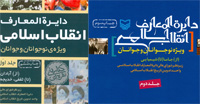
Sūreh-ye Mehr Publications has recently published the sixth and fourth editions of volumes 1 and 2 of the Islamic Revolution Encyclopedia for Teenagers and Youngsters, respectively.

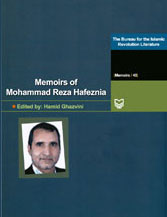
Memoirs of Hafeznia (15)
He was a in a position that if someone had a job from outside with inside the prison, he or she acted through him. Political and ordinary prisoners believed in him. Mr. Zarif Jalali had been practically put in the position of leading rebellious prisoners and managed the affairs very well. He directed the relations very well so that no special incident or problem happened. I in my part tried to have a close cooperation with him.
On the other hand, when the people of Mashhad heard that the prisoners had revolted, they started moving toward the prison. But before the people wanted to be deployed around the prison, the military forces had cordoned off the area with full military equipment and several tanks. The group was apart from the guard forces of the prison.
One time when I decided to walk around the prison compound, I saw one or two enlisted officers as well as captain Manafi in the same metal cage where people frequented, and asked him, "What are you doing here?" He said, "We have been appointed as the guard of the prison." I said, "Wonderful, you have become our guard?" I asked, "Have they brought the same tanks of my own squad?" He said, "Yes, Mr. Taheri, the commander of the company is also here."
Mr. Manfai told me quietly, "Mr. Hafeznia, this regime would fall soon. Don't worry! You'll be released in a little while." I said, "What the hell are you talking about. I am waiting for the execution."
He was the tank officer and had been brought there to be the guard of the prison and advised me not to be worried.
Living in ruins
The days passed one after another and we had a messy situation. There was neither food nor enough water, nor a device for heating and nor anything else. The cold winter of Mashhad was really unbearable. The prison was covered with snow and ice. The situation took almost one month.
The officers, who had sidestepped responsibility, neither gave us any food, nor provided any facility. It seemed that they preferred that we died of hunger. But the charitable people of Mashhad brought food for us.
They gave us sandwich breads and we distributed them among the prisoners. There was also a water hose which had stretched from outside to the metal cage. We washed the dustbins with it, brought water and put in the wards to be used.
The prison had really turned into ruins. We had a dirty and black face. We had neither a bath nor anything else. Sometimes, we had to heat water inside the dustbins with the woods of the destroyed workshop and took a bath in that cold and snowy weather.
We couldn't use the existing rice inside the storeroom, but brought the flours and made dough. We shaped the doors of the dustbins like a fryer and baked breads.
Planning for escape
In short, we weathered the one month period with hardship until the prisoners decided to find a way for escaping. We thought of different plans and concluded that an underground hallway was dug. We worked very hard. Various ideas were presented and some tools were also made. The location was designated and digging started.
The prisoners worked round the clock. The area was alluvial, so it was not very hard to dig the ground.
Everybody worked until we were informed that the end of the hallway had been opened. Everybody was worried lest the soldiers who were patrolling around the prison with tanks, vehicles and on foot fall inside it. The prisoners were happy that the plan had been carried out successfully and could escape. The moment of escaping was imminent, but suddenly it was said, "The hallway has been discovered from the other side." The reason was that the soldiers had thrown tear gases into the hallway. Everybody was looking for the spy who had exposed the plan.
We caught one or two persons, beating them because they had relation with the police. They were ordinary people but anyhow, the plan had failed. Everybody was disappointed. But it was announced that another plan should be devised for escape. They said let's make a ladder and burrow the interior wall of the prison which led to the wards and take the ladder toward the exterior wall and tighten a rope to its lower part. The plan was that the people went up from this side and slide themselves downward and then escape.
There were several problems in this plan. One was that the guards would find out that the wall was being burrowed. They were in turrets and discovered. Another problem was that the spies might disclose the plan. But we had no other way and had to do something. Thus, a point was designated and the work started. I was not very hopeful because we had a problem with both burrowing the wall and passing the area between the interior and exterior walls which was considered as banned area. The soldiers regularly showered there with bullets and we heard the sound of their fire. On the other hand, there was also the exterior belt of the prison where the military forces and tanks were patrolling. All of these problems made escaping difficult. After a short while, we heard that the Shah had escaped from the country. The news created a flurry in the prison, causing the prisoners to become happy and to boost energy. The end of the regime's life could be well realized.
In such a situation, the prisoners were thinking of finding a way for escaping more than before.
Escape from prison
One night, I was in the cell of Mr. Jalali at around 9:30 to 10 PM and was talking to him privately about future issues. I said I wish I could train ways of countering with a tank to those who either were released or escaped from the prison because the regime used tanks to suppress the people. I was fully familiar with the vulnerable parts of a tank. I knew how a tank could be disabled or how to hide around it or where its blind spots were?
Therefore, I told Mr. Jalali I wish I could train such things so that when they went out, at least, they could train them to the people and knew that the tank was just a monster but had no efficiency inside the city.
The people fear the appearance of the tank more while it is the most vulnerable military device and can be disabled very easily.
While I was talking about such things, the idea of escaping came to my mind and raised it with Mr. Jalali, asking his opinion in this regard. He was drowned in thought for a few moments and then said, "It's good." I said, "You come with us!" He said, "No, I am still in charge of the prisoners and I have the responsibility of running the prison's affairs and it's not correct to escape." I said, "OK, let me go." I think it was around 10 PM that we listened to the news of Radio Moscow. Then I said goodbye and left there by relying on God. I went to see what the situation was. If it was possible, I would go, if not I would come back. I went in front of the hole built in the interior wall of the prison. It was cold and foggy and the guards did not have enough eyesight and the situation looked suitable for escaping. The soldiers opened fire blindly every four or five minutes. They also fired at the space between the interior and exterior layer of the prison's walls so that nobody could escape.
Translated by: Mohammad Baqer Khoshnevisan |


|
|