| |
|
An Introduction to the History of the Islamic Revolution in Ardebil

A Work in Historical Sociology, This Book Deserves to Be Considered
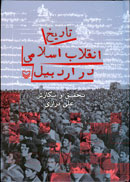
Written and Researched by Ali Derāzi, The History of the Islamic Revolution in Ardebil is a work by the Provincial Bureaus for Resistance Studies and Literature of Hoze Honari (Art Center). Printed in quarto format, the said book was published in 988 pages by Mehr Publications.
This book is written in seven chapters. A foreword and a preface precede the first chapter which, entitled “Ardebil from Antiquity to the Birth of the Pahlavi Dynasty”, describes, in four sections, the geographical, political, and economic status of Ardebil; the lakes of this province; its social structure and its naming; and early accounts of Ardebil in historical documents, books produced by historians, writings of great poets of Ardebil, and in Zoroastrian writings.

| |

|
|
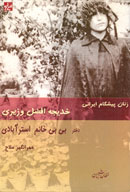
The History of Iranian Women`s First Oral Memoirs
To date, no reliable and well-documented research on the inception of oral history and memoirs in Iran or the Iranian men and women who have had their memories recorded on tape or film has been conducted in Iran. However, one can make rough guesses and estimates about its date thanks to the publication of a valuable book.
Both oral memoirs and history of Iranian women date certainly back to pre-revolution era and possibly to mid-1970s. I used the adverb possibly as I believe that there are lots of vague points about the inception of oral history and memoires of pre-revolution Iran which make the historiography not only difficult but also impossible.
| |
|
|
Whaling National Park wins grant to preserve New Bedfords oral history
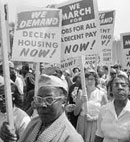
The African-American experience over the passage of time in the local community will be chronicled thanks to a grant from the National Park Foundation.
The Whaling National Historical Park has received an $8,750 impact grant for the oral history project. Jasmine A. Utsey, a Brown University alumna who graduated with a concentration in African-American studies, will conduct 10 interviews for the series known as Having Our Say: From Civil War to Civil Rights.
The National Park Foundation is the official charity of Americas national parks and the Whaling National Historical Park will contribute another $3,250 to meet the projects $12,000 total cost.
The expected completion date for the series is Sept. 30, according to Janine V. da Silva, a cultural resource specialist at the New Bedford park; the interviews will become part of the national parks oral history collection.
| |
|
|
Court: Interview with IRA car bomber for Boston College oral history project can be released
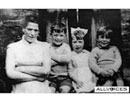
BOSTON (AP) Boston College must give police recorded interviews its researchers conducted with a convicted Irish Republican Army car bomber after an appeals court Friday rejected an effort to stop their release.
The ruling by the 1st U.S. Circuit Court of Appeal backed U.S. District Court Judge William Young's decision last year in the case of bomber Dolours Price, who spoke to BC researchers as part of an oral history project.
The material will now be handed over to police by next month.
Project participants say the interviews with several former IRA members made between 2001 and 2006 were supposed to be secret until their deaths. But Northern Ireland police probing the IRA's 1972 killing of a Belfast woman want the recordings.
| |
|
|
‘Four Bears’ document added to notable list
The North Dakota Department of Transportation has announced that “Crossing the Water: An Oral History of Four Bears Bridge” has been named to the list of Notable Government Documents for 2011.
“Crossing the Water” is a DVD set produced by the NDDOT that uses historic photographs and video footage to illustrate the past of the three bridges that have been called “Four Bears.”
The North Dakota Library Association nominated “Crossing the Water” for the Notable Documents ballot at its annual conference in 2011. The program recognizes North Dakota state agency documents of exceptional quality and usefulness.
| |
|
|
Bancroft Library’s Regional Oral History Office looks for Bay Bridge accounts that span the years
Interviewers at the Bancroft Library’s Regional Oral History Office (ROHO) are betting there are just as many cool stories to tell about the San Francisco-Oakland Bay Bridge as its colorful cousin across the bay.
In fact, the ROHO team at UC Berkeley is issuing a widespread appeal for accounts from the people who designed, built and painted the Bay Bridge as well as its toll takers, managers and maintenance teams, engineers, painters, architects and others involved from the early days of the span’s construction and through the 1950s.
“This is part of an oral history series that will explore the role of the iconic bridges in shaping the identity of the region, as well as their place in architectural, environmental, labor and political history,” said Sam Redman, a historian and director of ROHO’s Bridges and the San Francisco Bay Oral History Project.
| |
|
|
Narrative and Reality(1)
The article explores the narrative construction of reality in life stories. First, the context of the research is introduced and second, the concept of reality is discussed. Third, narrative construction of one life story is analysed, turning to the relationship between performance and content. As researchers, we have no access to the reality of past events, but only to memories, stories and documents. In oral history, both factual information and the meanings attributed to the past by the people who have lived through it are of equal importance, and both are constructed through emotional, involved, figurative production by the authors of life stories.
One of the greatest challenges faced by researchers analysing narratives is how to approach the construction of social reality through the life stories told by individuals. How are these performances related to facts?
| |
|
|
Oral History Weekly Magazine Aims and Regulations
Oral History Weekly Magazine wishes to create a suitable place for thoughts and idea development; Its main field would be “Oral History” and subjects as telling & writing memoirs, writing diaries, travelogues, chronologies, and all other subfields of history which are presented in the form of news, articles, reports, notes, interviews and memoirs can be included. There is no limitation on the length of would-be-sent materials.
Mentioning the name, academic background and email is necessary. Articles with complete references and bibliography are more credited and an abstract would quite helpful.
Weekly is not about to publish any material consisting insults and libels about other people or anything that brings anxiety to public opinion. Weekly can edit and translate the received materials.
The published articles and materials are only the writer’s ideas and Oral History Weekly Magazine has no responsibility about their content.
|
|
|

In a meeting with the head of Ideological-Political Organization of the Police Force Hujjat al-Islam Abū Torāb Bahrāmi, the head of National Library and Archives of Iran expressed the organization's readiness to "train skilled workforce and hold oral history workshops to record the unexpressed memories of the commanders and members of the police force."

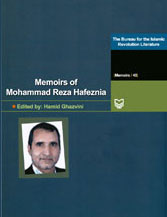
Memoirs of Hafeznia (14)
Apparently, I had not been banned to visit someone anymore. I didn't know who had come to visit me. It was for the first time that I went behind the visiting room which had big and closed glasses and talked though a headphone. I saw that Mr. Alireza Chaychi, my former friend who later became my brother-in-law had come to meet me. I was surprised. How had he dared to come and visit me? I never thought that someone had the guts to do so. Apparently, he had relation with some of the guards outside the prison and had found a way to come and visit me. He had brought me a little money and some fruits. It was very interesting for me that someone had been found to come and ask about my health after that incident. He left there and after him, others also came to meet me. His wife along with her infant as well as the mother of Mr. Chaychi's wife came there. Then, my mother came to visit me. I saw that she was crying behind the visiting window, saying why you did this. I tried to comfort her and told her not to be worried. Then, a few days later, my wife who had been brought to Tehran for interrogation at that time, along with her sister came to visit me. I used this opportunity and just told her, "You can make your decision, and if you want to separate from me, I can give you a power of attorney to divorce from me and decide for your future. Don't wait for me. My situation is not clear. You shouldn't wait for me. From now on, you are free to do whatever you want regarding divorce and separation." It appeared that she was not willing to hear such words and did not pay attention to whatever I said. She made a simple visit and said goodbye and left there.
One day I saw that Mr. Seyyed Ali Owliayee, my cousin with whom I was friend since student period, had come to visit me. He was an open-minded and wise man. He was also very active after the revolution. He had come from Tehran to meet me. He explained about what he had done for me through the headphone. He said, "I followed your case from Tehran and talked to a major general in this regard. They guided me here and I went to the military court in Mashhad and asked for your situation. There was a colonel in the court named Colonel Esameeli who is in charge of your case. Esmaeeli said that we had prepared his case and indictment but suspended it for one year in order to clarify his condition." He told me these things privately. But I was not so happy because I liked my situation to become clear as soon as possible and save from this world. At any rate, he informed me and I did not make any statement and passed by it and thanked him. He said goodbye and left there.
Riot in the prison
We received the news about what was happening outside through the prison's TV and those who had been arrested in the demonstrations and brought there. It showed that the demonstration was expanding day by day and the regime's power was diminishing. This situation caused the prisoners to think of a riot and to disrupt the prison. It first started form the second ward and other wards. I remember that the move was first started by a young prisoner who was from north of Iran and had left leanings. It went so far as that the prison was set on fire and spread to other parts. Concurrently, the prisoners seized the storehouse, workshop and kitchen and could have access to some of the tools. In fact, it can be said that we were armed with cold weapons.
We intended to prevent the guards from entering the prison with the tools like iron, wood and other things and if they came, we planned to arrest them and took hostages. Of course, the guards had terrified and did not expose themselves to the prisoners' attack. The guards were not able to enter. They had just been deployed on the turrets and walls.
The political and ordinary prisoners as well as those of fifth ward had blended together. Different parts of the prison had caught fire. I do not know who were going to set on fire the prison and spread it. The fire spread everywhere including the fifth ward. First, we imagined that just a few beds and mattresses were burning, but later, it became clear that two of the prisoners had been entrapped in the fire. Unfortunately, after a while, a bad smell spread and it became known later that the two had burnt in the fire and lost their lives.
On the whole, the prison was in a bad state. Everything was messed up. There was no water. Although the prison was in the hands of the prisoners, it was in full siege. There were no food and the security forces either fired tear gas bullets or sometimes shot at the prisoners. A few people had been injured and we were spending bad hours. Finally, the prison's authorities decided to release some of the prisoners especially the political ones and those who had committed minor crimes.
The guards pulled up such prisoners from the only entrance and the hole of a metal cage and released them because they did not dare to open the prison, fearing an attack.
Who managed the riot?
I was fully aware of the events. There were one or two prisoners who had left leanings. They were trying to lead the prison's movement and thought of forming and leading a revolutionary committee inside the prison. By chance, one of the forces who had a very good status among the political prisoners as well as the ordinary ones was Mr. Zarif Jalali who was a religious political prisoner.
Translated by: Mohammad Baqer Khoshnevisan |


|
|