| |
|
Oral history experts to review first deputy FM memoirs

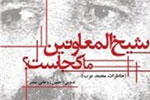
OHWM – Hussein Ruhani Sadr’s book “Where Is Our Grand Deputy” (Sheikh-ul-Moaavenin-e Ma Kojast) is going to be reviewed by oral history experts, writers and researchers at the Writers House (Saray-e Ahl-e Qalam) in Tehran on June 25, 2012 (Tir 5, 1391S.H).
Ruhani Sadr’s book features oral memories of Mohammad Arab who served as the first deputy of Ali Akbar Velayati, the Islamic Republic Foreign Affairs Minister after the victory of the Islamic Revolution in 1979.

| |

|
|
My Share of those Beautiful Eyes to Be Unveiled
The website of the Iranian Oral History reports that the book My Share of those Beautiful Eyes, Sardār (Brigadier-General) Hamid Hesām`s oral memoirs written by Mostafā Rahimi, was published by the Provincial Bureaus for Resistance Studies and Literature of Hoze Honari (Art Center) in cooperation with Mehr Publications.
| |
|
|
Memoirs of Devoted Female Veterans of Khuzestan
OHWM- Zahra Sharifpoor, a public media & journalism activist whose childhood memoirs have been shaped during the Sacred Defense is trying to gather “The Memoirs of Devoted Female Veterans of Khuzestan”.
In the years of the Sacred Defense everyone could defend the soil and water of the country in some way, men made shields of their chests before the aggressive bullets of the enemy in the frontlines of the war between good and evil, and also women with whatever in their power, with guns, sacrificing and boosting the morals of warriors, were able to pay their debt to their homeland.
| |
|
|
The Book Critical Philosophy of History Recently Published
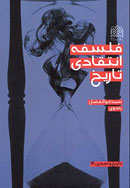
The book Critical Philosophy of History by Dr. Seyyed Abolfazl Razavi was published for the first time by the Islamic Research Institute for Culture and Thought.
Critical philosophy of history is a branch of philosophy of science and brings together the two disciplines philosophy and history. It is therefore regarded as a genitive philosophy (a philosophy which is a philosophy of something); and from the perspective of epistemology, it is studied in the field of applied epistemology.
| |
|
|
Oral History Details Whale Sightings
A new exhibit dedicated to Cook Inlet Beluga whales opens Friday June 8 at the Alaska Sea Life Center in Seward. To highlight the exhibit, an oral history of the white whales, commissioned by the Kenai Peninsuala Borough, is now available.
As KSKA’s Ellen Lockyer reports, authors of the history gathered anecdotal reports of sightings dating from the mid twentieth century to the present, and one thing is clear from the compilation….. there’s not many belugas swimming in Cook Inlet these days.
| |
|
|
Corporate Voices: Institutional and Organisational Oral Histories
The Annual Conference of the Oral History Society in conjunction with the Centre for Life History and Life Writing Research, University of Sussex
The deadline for submission of proposals is 1st December 2012. Venue: University of Sussex
Date: Friday 5th - Saturday 6th July 2013
| |
|
|
Southwest Seattle youth and elders connect for oral history project
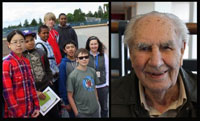
West Seattle teens from Madison Middle School and the Delridge and South Park Community Centers helped document the history of the Duwamish Peninsula this spring by taking part in the Southwest Seattle Historical Society’s “Telling Our Westside Stories” oral history project.
| |
|
|
What Is Oral History?(4)
Electronic technologies are democratizing access to extant oral history collections by on-line publication of both actual interview recordings and written transcripts of them. While oral historians generally have embraced opportunities for worldwide dissemination of their work via the Web, many are also appropriately skeptical of the very ease of access the web affords, vastly increasing the possibility for misuse of existing interviews.
| |
|
|
Oral History Weekly Magazine Aims and Regulations
Oral History Weekly Magazine wishes to create a suitable place for thoughts and idea development; Its main field would be “Oral History” and subjects as telling & writing memoirs, writing diaries, travelogues, chronologies, and all other subfields of history which are presented in the form of news, articles, reports, notes, interviews and memoirs can be included. There is no limitation on the length of would-be-sent materials.
Mentioning the name, academic background and email is necessary. Articles with complete references and bibliography are more credited and an abstract would quite helpful.
Weekly is not about to publish any material consisting insults and libels about other people or anything that brings anxiety to public opinion. Weekly can edit and translate the received materials.
The published articles and materials are only the writer’s ideas and Oral History Weekly Magazine has no responsibility about their content.
|
|
|

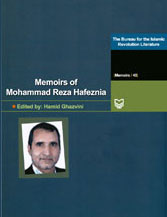
Memoirs of Hafeznia (10)
They again started asking me several questions. “How have you heard of it? Where have they told you? So, it is clear that some people have had relation with you.” Thus, everything started from the very beginning. Of course, a few tough ungracious persons came later and joined the group. They treated very violently. They annoyed and beat and forced me to stay awake for a few days. They didn’t let me sleep even for a few moments. I really needed to sleep but as soon as I closed my eyes, they began to beat and did not allow me to sleep. Even I did not known what I was writing. They called me and said something but I did not know what to answer. And in general I didn’t know what I was doing. They were trying to bother me physically and mentally. However, during all these times, my reply to them was that I carried out the operation by myself. About the phone book, I became sure after two days that if they wanted to look for those names, either they were not at home, or they had emptied their houses from probable documents and nothing would happen.
At the same time, I was trying to acquit all of them by all means so that the interrogators did not try to link them to the incident and considered as accomplices. Particularly, I didn’t know how they had found out that I had relations with some people in Shiraz. Sometimes, they pointed to Shiraz incidents. I saw that it was no use. If I insisted that I did not know them, they would not trust my remarks, and interpret them as lies. Then, they would arrest and annoy them unduly. I knew that SAVAK (Shah’s secret police) had a bad record in this regard, and made documents for the people unduly let alone having a pretext. So, it was likely they made troubles for them. Thus, I was forced to explain some issues honestly so that they knew nobody had been involved in the operation did not look for them. Finally, I explained that they had relation with me, and we were together in Shiraz garrison, prayed and took part in the meetings. They on the basis my words went and brought some of them. For example, they brought Mr. Kamran and Mr. Fakhari and made me face to face with them in order to find out how much we knew each other.
They also arrested several others including my brother who was in Birjand. They were trying to link the incident to them by all means and to discover our possible relation. So, I said that I made friend with Mr. Fakhari when we were university students and that he had not been involved in the operation at all. They even brought him in the room and got out of there. They had installed a microphone to eavesdrop what we were saying. They guessed that there might be something between us to talk about it.
They even brought my wife with whom I had just married. I don’t know how they had found her.
As a matter of fact, the issue had preoccupied me the night I was planning for the operation since I had just married. But that moment I remembered “Hanzalleh”, one of the combatants during the advent of Islam who left for the battlefield immediately after marriage and was martyred in Ohud battle.
I said to myself that it could be a role model for me, and my life like his which became a model and an example in the history of Islam would be registered in history. So, it was not important that I had just married. I wanted to continue this way and practice my responsibility and duty. The Posterity would eventually understand that this was an epic modeled from that of the advent of Islam. It was interesting that I had left for Mashahd only one day after my marriage ceremony.
Anyhow, this lady who knew nothing of the incident was brought for interrogation, and I don't know how she was treated that as soon as she came in started crying. After a few minutes, when they wanted to take her, they came to me and said, "If you don't tell us the truth, we would do such and such with your wife." It was the same threats that they used in such times.
So, I answered, "As I told you before, nobody except me was involved in this operation." Regarding the motivation of the operation, I stressed two issues: one my love in martyrdom, and the other combat against the anti-Islamic regime. They said, "This regime is Islamic. His Majesty is a Muslim. He is the only Shia king and …" And I said, "If what you say is correct, then why such bad situation is dominated in the society? Why is there such chaos? Why are there wine selling stores? Why are there unethical issues in the society? Has Islam allowed these? Why has the Shah created such conditions? Why is there violence and torture?"
When they heard my words, they made me silent by beating. Then they followed another issue. They reiterated how I had heard that there was torture. I said that I had heard. They asked who had told you this. I said I didn't know it was rumor. Such words can be seen in universities very much. Then they pointed that since His Majesty had ordered that there should be no torture, we did not treat you violently, or else we beat you to death.
I again answered, "Anyhow, I told you the truth, you can do whatever you want. I told you clearly that nobody had been involved in it."
Translated by: Mohammad Baqer Khoshnevisan |


|
|