| |
|
Memories of Sacred Defense Commander to be published

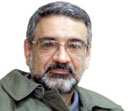
Recollections of Brigadier General Hussein Hassani Sadi, Deputy Armed Forces General Staff, of Iraq-imposed war on Iran will be published.
IBNA: Mohsen Sadeghnia is preparing the book through the oral history interviews he has carried out with the general about his memories of the war time. Organization of cadets on the beginning days of the war is a part of his memories.
In an interview with IBNA, Sadeghnia called Hassani Sadi the living history of Sacred Defense and said, “He has never attended any interviews for publication of books about his war memories. However, with the help of Colonel Mojtaba Jafari, head of the Organization of Nezaja Veterans, and Colonel Ali Sadjadi, we have arranged 13 interview sessions with the general.”

| |

|
|
An Interview with Hedayatollah Behboudi on Islamic Revolution Historiography(2)
It is a possibility raised by some. The reason is that most of these works have been released by the government-run organizations which are said to advance their own understanding of the revolution. To be fair, they are not limited in number while our access to foreign works is limited. You know, almost all the books released by overseas centers working on oral history – both European and American ones- are available in Iran. I mean they are either printed or easily accessed. Moreover, they have been and are cited widely, and there is no problem in this regard. Even if the false claim that we are looking from a specific angle is accepted, that does not mean that we are deprived of these books. Therefore, it is the references on hand that facilitate the study of the Islamic revolution.
| |
|
|
The “Industry” of Writing Memoirs in Iran
You may be surprised by the title of this short article, and like that correspondent who interviewed me two weeks ago, imagine that by using the term “the industry of writing memoirs”, I mean we have to industrialize and mechanize the memories! If you suppose so, you are utterly wrong! In this article I want to mention a pathological subject in the area of memoirs and writing the memoirs of the Islamic Revolution and the imposed war, which without paying attention, it will bear irretrievable harms for the literature of writing memoirs In Iran and the oral memoirs and even oral history in this country, and this is what could be called the “the industry of writing memoirs in Iran”.
| |
|
|
To Consider a Claim
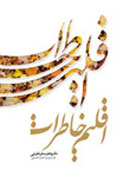
The Realm of Memories is the title of written memories of Dr Fatimah Tabatabaee, the wife of the late Hadj Seyed Ahmad Khomeini and the Imam Khomeini’s daughter-in-law. The first edition was published in 1389 (2011) in 600 pages.
The aim of these lines, considering that it is a valuable book in learning about Imam Khomeini, is not to clarify the look and purpose for which the memories have been told or written or even to find out the points of its weaknesses or strengths. But in here we intend to discuss this claim of Mrs. Tabatabaee, in her short introduction to her book, that her written memories are oral history document. Mrs. Tabatabaee is very respectable in terms of her individual personality, family attributions, her relationship with the family of revolutionary and combatant religious authorities and the learned men of contemporary Iran.
| |
|
|
On Horseback of Memories
Ghassem Yahusseini divides war memoirs into three general periods and presents an account of the evolution and main characteristics of each category. According to this writer, the first period coincides with the eight-year period of Iraq’s imposed war on Iran. During this period, Yahusseini says, the main axis of war memoirs is highlighting epic bravery of combatants and humiliation of the enemy – mainly due to propagandist and security reasons as well as internal and foreign pressures. With the end of war in the second half of 1980’s, although the main form and content of these writings still imitated the mottos aiming the humiliation of the enemy and magnifying the gallantry of the combatants and martyrs of war, new steps were taken towards explaining the reality of war far from the current magnifications. According to Yahusseini the third wave of memoirs or memory writings began in late 1990’s that is still running on and is fortunately getting closer to its maturation and perfection.
| |
|
|
Oral History in Latin America
This presentation discusses the relationship between history, oral history, and oral history in Latin America. It discusses whether Oral History is a specific field of historical studies, or a tool for the researcher. At the same time it considers if Oral History in Latin America has a specificity or not, and whether it constitutes a field in and of itself.
Many years ago I shared a round table with the Nigerian historian Okun Udet Uya. When I mentioned that I dealt in oral history he smiled and I asked him why. He mentioned that he did not do either Oral History or Written History, since as an African and as an Historian, he knew it was almost impossible to “do History” only with documents. African history was, necessarily, filled with oral sources since colonialism had eliminated many of the written records of societies such as Timbuktu or the Empire of Mali. It seemed a really interesting point that highlighted the fact that the difference between oral and written history is a construction of the Modern Era.
| |
|
|
What Is Oral History?(2)
For all their considerable value, oral history interviews are not an unproblematic source. Although narrators speak for themselves, what they have to say does not. Paradoxically, oral history's very concreteness, its very immediacy, seduces us into taking it literally, an approach historian Michael Frisch has criticized as “Anti-History,” by which he means viewing “oral historical evidence because of its immediacy and emotional resonance, as something almost beyond interpretation or accountability, as a direct window on the feelings and . . . on the meaning of past experience.” [Michael Frisch, A Shared Authority: Essays on the Craft and Meaning of Oral and Public History (Albany: State University of New York Press, 1990), 159-160.] As with any source, historians must exercise critical judgment when using interviews—just because someone says something is true, however colorfully or convincingly they say it, doesn't mean it is true. Just because someone “was there” doesn’t mean they fully understand “what happened.”
| |
|
|
Oral History Weekly Magazine Aims and Regulations
Oral History Weekly Magazine wishes to create a suitable place for thoughts and idea development; Its main field would be “Oral History” and subjects as telling & writing memoirs, writing diaries, travelogues, chronologies, and all other subfields of history which are presented in the form of news, articles, reports, notes, interviews and memoirs can be included. There is no limitation on the length of would-be-sent materials.
Mentioning the name, academic background and email is necessary. Articles with complete references and bibliography are more credited and an abstract would quite helpful.
Weekly is not about to publish any material consisting insults and libels about other people or anything that brings anxiety to public opinion. Weekly can edit and translate the received materials.
The published articles and materials are only the writer’s ideas and Oral History Weekly Magazine has no responsibility about their content.
|
|
|

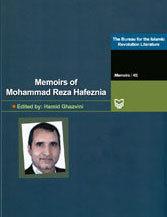
Memoirs of Hafeznia (8)
We reached the detention center as I was in such dreams. The door was opened and I was pushed inside. I entered the cell. The first thing I said there loudly which I think everybody heard was "By the Lord of the Ka’ba I have succeeded" (the immortal phrase that Imam Ali (AS) expressed as blood spouting from his pierced scalp dyed red his face and beard). I said this phrase from the bottom of my heart which boosted my morale.
After a few minutes, several people came into my cell and started searching me. By chance, there was a phone book in my military uniform which was found by them. I gave a deep sigh but did not ignore. I had already decided to put the phone book out of my pocket since the phone numbers of some of my friends from the university, Shiraz garrison, Mashhad's and other places were in it. But unfortunately, I forgot to do so, and when they found it, I got very worried that they might be arrested.
My operation was not an easy one. Nobody dared to bring his or her hand down in front of a superior officer let alone attacking the division commander. Although nobody knew of my plan except God, I said to myself that my friends would be arrested and tortured. I did not inform anybody intentionally since I knew nobody could tolerate it. I brought it up neither with anti-regime revolutionaries nor with religious people. I said, "I will perform the plan by myself and tells nobody". I was sure nobody was informed of my plan, but in view of my face and small body, until they wanted to believe that I was the planner and performer of such move, my friends would suffer much harassment.
So, I decided to show my move as completely apolitical. I either succeeded or did not. If I did which was very likely, at least the friends whose phone numbers were in the phone book would compose themselves and if they had political documents in their homes, they would hide them thus would not get into trouble. In fact, it was a kind of delay measure.
At any rate, after searching me, they asked me where my house was located. Who was or were with you? What kind of car they had? And odd questions. I answered them nobody was with me. When I said this they started beating me again.
Whatever I said that I did it alone, they did not believe at all. Later I found out that rumors had been spread that they had been a team and a Mercedes Benz had been waiting for me outside the garrison in order to help me escape. Anyway, they imagined an extensive operation.
They were scared lest other operations were carried out here or in another garrison. This was considered as the first move and they were very worried about it. It was very important for them to analyze it. Anyhow, they started interrogating. In the first phase which did not take more than two or three hours, they performed the so-called standing interrogation accompanied by beating. For instance, they asked, "Whose names are these? What are their addresses? Where do they live?" I said, "I don't know. I cannot remember anything." Then they asked, "Why did you do this? How did you find bullets?" I answered, "I did it because it was my right to be exempted from military service but you did not and you called both brothers for military service."
Now, I used the exemption as an excuse. In fact, I had already applied for exemption from military service and later I myself had changed my mind. I said the issue might show the operation as apolitical. If it is showed political, many people would be completely debilitated. I started the work with this theory. They said what the matter was and I started telling story and they listened. They almost believed that the incident was a normal and ordinary one.
At least they were not wise enough to ask if you wanted to assassinate the commander of the division, why you wouldn't go to his room to shoot him. Why did you come to the parade field?
It was around noon when they came and transferred me to somewhere else. I didn't know where I was being brought. I had not seen Anti-Intelligence Unit yet since I had come to Mashhad garrison very recently. I had not even seen the parade field of the artillery unit since then.
Around noon, I was taken to a section which was discovered later that it was the Anti-Intelligence Unit. I was initially taken to a big room and they gave me a little food. I said, "I don't eat". They asked me the reason. I answered, "I am fasting. It's the holy month of Ramadhan." They did nothing. Suddenly I saw First Lieutenant Taheri was passing by the room.
When he saw me, he started insulting. I said nothing, because it was not surprising for me. I knew they would insult, and beat me and do other things like these. It was ordinary for me.
After a few minutes, I was transferred to a small room. There was a black and tall officer who looked tough. There were also some devices for torturing like those of cutting nails, boiled water as well as devices for beatings and so forth. Except that officer, two other agents were also present.
A soon as we entered the room, they took my clothes off and I became completely naked. Then they said, “Either you’ll tell us the fact, or we will torn you apart right here.”
I answered, “I did tell you everything my brother!” They said, “We don’t believe you”. Then they immediately put my will on the table in front of my eyes. I learnt that they had found the will I had written in my house and put inside my pocket. They had been inspected my house and found the will. Of course, they had found other things and books like The General Situation of Islamic World and The Islamic Land. They put the will in front of me while I was naked, and they were ready to annoy me. They asked what it was. I found out that I couldn’t succeed in showing my operation as apolitical. I said to myself, “Come what may. I eventually would be tortured and martyred in this way”. The beatings started. I said, “What should I say? I did it by myself.” They said, “Who has been behind you? Which Mujtahid (Source of emulation) has issued the fatwa? Who have supported you? Who are the ones whose phone numbers are in the phone book?” And I answered that I knew nothing. I was trying to say nothing for 24 hours until the news of the operation was spread all across Iran and at least those who had been somehow in contact with me had enough time to empty their houses or if they had any book or other materials, they could hide them; the ones with whom I had relation in Mashhad garrison or other places. By chance, it happened so. Almost 24 hours passed with normal beatings. And I insisted on my word that I had planned and carried out the operation by myself and nobody knew anything about it. Of course I was telling the fact but nobody believed it.
The interrogators were looking for finding the track of the Mujtahids or religious Ulema in this operation, and that they had allowed doing this.
They said, “Why did you act to assassinate? It is clear that you are a religious person and because of this, you don’t work without a fatwa. Tell us who have been behind this?” And I answered, “I swear by God that nobody was behind this. Its mujtahid was myself and I issued the fatwa. I did everything by myself. I love martyrdom and this made me do this.” I repeated this many times but they did not believe. And instead they did nothing but normal annoying and torture. Of course since I was in a windowless room I didn’t know whether it was day or night. The interesting point was that they asked me about the details of the incident regularly that how you found bullets. How did you plan it? The details were very important for them. Thus most part of the interrogation went over explaining about such issues.
Translated by: Mohammad Baqer Khoshnevisan |


|
|