| |

|
15th of Khordad 1342

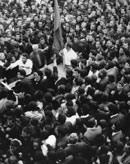
The arrest of Imam Khomeini on June 5, 1963 (15th of Khordad 1342 S.H.) by the government of Mohammad-Reza Pahlavi, the Shah of Iran, started a powerful whirlwind that 15 years later swallowed Iran’s imperial system.
At four o’clock in the morning of this day and two days after the Ashura that marks the martyrdom of the Shiite third Imam Hussein (AS), the Shah’s security forces and armed agents surrounded Imam Khomeini’s house in the city of Qom to arrest and send him to the capital city of Tehran.

| |

|
|
Discussing the Historiography of the Revolution with Hedāyatollah Behbūdi(1)
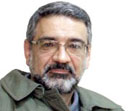
Not long ago, in one of the special episodes on history in the TV show Hezār-o Yek Shab aired during the days commemorating the victory of the Islamic Revolution, Hedāyatollah Behbūdi and Ja`far Golshan, as experts, discussed the historiography of the Islamic Revolution. Their discussion might more or less be regarded as a report on the status quo of the historiography of the Revolution. From the perspective of oral history, reading the said discussion had its merits; therefore, the website of the Iranian Oral History took it upon itself to transcribe the discussion. It should here be noted that once transcribed, the result was modified by Mr. Behbūdi before it was published on the website.
| |
|
|
EBook of Iran-Iraq POWs to be released
Caretaker of Payam Azadegan Cultural Institute said they have collected many intriguing memories of Iran-Iraq war prisoners. The memories will be published as ebooks and other references.
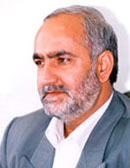
IBNA: In a press conference held on May 26, 2012 to introduce the institute’s programs on the occasion of the anniversary of Hujatoleslam Abutorabifard’s demise, Ali Mohammad Ahadi said that the institute has committed itself to dissemination and preservation of the experiences and values of Sacred Defense captives.
| |
|
|
MoU inked for backing Sacred Defense oral history, docs
A MoU was signed between the National Library and Archives of Iran (NLAI) and Defensive Science Research Center in order to reinforce and support Sacred Defense's oral history and documents in national and international fields.
IBNA: The Memorandum of Understanding (MoU) was singed on May 23, by the head of Defensive Science Research Center (DSRC) Commander Hadi Moradpiri and Ishagh Salahi, the head of NLAI.
| |
|
|
What Is Oral History?(1)
Making Sense of Oral History offers a place for students and teachers to begin working with oral history as historical evidence. Written by Linda Shopes, this guide presents an overview of oral history and ways historians use it, tips on questions to ask when reading or listening to oral history interviews, a sample interpretation of an interview, an annotated bibliography, and a guide to finding and using oral history online. Linda Shopes is a historian at the Pennsylvania Historical and Museum Commission. She has worked on, consulted for, and written about oral history projects for more than twenty-five years.
| |
|
|
Golden Gate Bridge E-Book Highlights 75-Year History Of Landmark Span
SAN FRANCISCO (KCBS) – The upcoming 75th anniversary of the Golden Gate Bridge has spawned an e-book that show’s off a rich, and surprisingly unknown, history of a very familiar landmark.
Oral histories from bridge workers, historic photographs and maps, and even music, come together in A Wild Flight of the Imagination: The Story of the Golden Gate Bridge.
“We’ve got music, both original music that was composed for the bridge by a composer, Robert Kapilow, as well as historic songs. Who knew that bridge workers have their own songs?” said Anthea Hartig, executive director of the California Historical Society.
| |
|
|
Oral History Weekly Magazine Aims and Regulations
Oral History Weekly Magazine wishes to create a suitable place for thoughts and idea development; Its main field would be “Oral History” and subjects as telling & writing memoirs, writing diaries, travelogues, chronologies, and all other subfields of history which are presented in the form of news, articles, reports, notes, interviews and memoirs can be included. There is no limitation on the length of would-be-sent materials.
Mentioning the name, academic background and email is necessary. Articles with complete references and bibliography are more credited and an abstract would quite helpful.
Weekly is not about to publish any material consisting insults and libels about other people or anything that brings anxiety to public opinion. Weekly can edit and translate the received materials.
The published articles and materials are only the writer’s ideas and Oral History Weekly Magazine has no responsibility about their content.
|
|
|

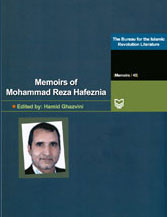
Memoirs of Hafeznia (7)
Finally, we arrived in the parade field of the artillery unit which was bigger and cleaner than the other ones. Armored, infantry and artillery units with thousands of soldiers and commissioned and noncommissioned officers had all stood up around the field. The military units with their guns and bayonets had remained upright and displayed a great battlefield. As far as the eye could see, the companies and battalions had been deployed around the field respectively. They were ready to march with their guns and bayonets. I had also stood up in the place where I had to be and the grandeur of the division and the field had no impact on me and my will. All of a sudden, I found out that Major General Shahir Motlaq, the division commander had returned and was present in the field! I said to myself that it should be a secrecy, he had been in Tehran, how has he come back, he was not supposed to be here. And God wants something is done by this weak creature today.
I had been drowned in my thought when I saw Major General Shahir Motlaq was delivering a speech. He in his speech dispraised the people who took part in demonstrations. On the other hand, he praised the Shah's regime and spoke about loyalty to the regime, and that we should do such and such with these traitors. He ruled out popular movements in the city. Apparently, he had been prepared in Tehran to return and suppress the popular protests. I got very angry at the remarks and rodomontade. I said, "Oh, God, you witness that I must make his voice silent within a few minutes later so that it would be a lesson for the rest."
I was continuously drumming into myself such issues and was getting ready for the operation. Finally, the military forces started marching. The units were passing in front of the VIP. We were almost in the middle of the population who should pass the VIP. When we reached the place where we wanted to turn and passed it, I told Lieutenant Mokhtari who was tall and walking in my right hand: "Mr. Mokhtari, my feet ache. If possible let's change our places." He said no problem and we did the same. I got very happy. We were approaching the VIP but suddenly he said, "Come back to your position!" I said, "Mr. Mokhtari, my feet ache. If so, I had to go out of the company." Of course, I couldn't do this since we were still far from the VIP and I had to march along with others. If I parted, I would have to go to the other side. So I had to both walk with the company and move toward the VIP. So, I trusted in God. If something has to be done and God has prepared its means so far, then he would prepare the rest. I decided to get out of the company before they started marching. At the same time, I reviewed my plan as we were approaching the VIP. As soon as they began to march, I jumped out and took my colt out and made it ready for firing. The commander of the division was reviewing the troops and I started to fire at the VIP. All were still doing their work that the fire shots terrified everybody. He was still reviewing when I started firing. But after a few seconds, I saw he fell down, and the troops ran away. I said what a hollow division! A few bullets had still been remained. So, I attacked the other generals who had stood beside the VIP, and they also started running away. Someone threw himself behind a barrel and the other one behind the VIP and the whole division with that much of ammunitions had been scattered. Now, I had become the lone challenger of the field and everybody was escaping. It was a strange scene. Suddenly, I found out that there was no bullet in my gun. I immediately went after other magazines which were in my pocket. As I wanted to change the empty magazine with a full one, my arms were locked and someone clutched me from behind. I could do nothing anymore. Apparently, he was one of the guard officers or a sergeant who held me. But surely, he was a strong and tall man. Suddenly, I saw a head appearing over me. I couldn't do anything. My colt and magazine fell down and I was beaten severely.
Detention
As I was being beaten cruelly, I turned my head, seeing the whole division which as far as you eye could reach was full of military forces had escaped.
There I said to myself, Wow! What army the Shah has relied on! It was so hollow that was completely broke down just with a few shots that I had fired. All of a sudden, I saw that someone was shouting, don't beat, don't beat. He was the first one who separated me from them and started looking over my mouth with his finger quickly. At that time, I didn't understand why he did this. But later, I found out that they probably wanted to see whether I had put cyanide pill in my mouth.
Then, they held my hands and threw me in a car and transferred to the division's jail. On my way, I was thinking of the whole incident which had occurred and what policy I should follow and how I should behave, because definitely, I would be interrogated.
Translated by: Mohammad Baqer Khoshnevisan |


|
|