| |

|
The Sweet Lesson

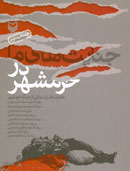
Freeing Khorramshahr was not the first punch received by strong Iraqi army. Previously this army had been trembled for some times; but the punch on 24th of May 1982 was something that should have never happened for Iraqis. They would not believe that one day they would by stuck that much hard in a big trouble in a small but so important port. That day, the Iraqi army pride was smashed under the feet of Iranian soldiers and it was something that should have never happened to them.

| |

|
|
Our Crimes in Khorramshahr
Khorramshahr is a symbol of resistance, whom all Iranians are proud of. This symbol is first registered and recorded in hearts and minds informally and then in books and documents formally. You can consider Khorramshahr as the central point and main base for registration of memories of the beginning of 8 years of war and also for promotion and publicity of its memories in whole. It is not so obscure to claim that the first step in this regard was taken in Khorramshahr and initial days of the war.
Conquest and recapture of Khorramshahr by Iranian militants is one of the greatest events and a golden page in the epic book of Iranian nation during the 8 years of Holly Defense. There have been many memories and books told and written about this great and epic event.
| |
|
|
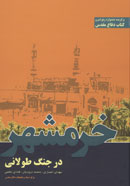
Khorramshahr in a long war: A reliable book about recapturing Khorramshahr
With a brief look at the cultural report card of the war, we find out that basically three publicizing, artistic and historical realms and flows, have been in charge of defining and explaining the Sacred Defense; the realm of public media -in written and oral forms (periodical newspapers and journals, radio and television,…) the realm of art and literature and the realm of cultural research and political-historical inquiry.
| |
|
|
Oral History and Archives(2)
Once recorded, the tape, cassette, disk, CD or file is brought to the Office, a record is created noting the date of the recording, the place, the person interviewed, the timing of the recording and other details of the object itself such as notes as to its condition and composition. A duplicate copy is made and sent out for transcription. We have always transcribed and continue to do so for a number of reasons. Firstly a paper transcript, as far as we know, is still the most efficient and cost effective way to organize and administer the interview; to build finding aids such as summaries, catalog entries and indexes, and to ease access for researchers.
| |
|
|
Buffalo doctors share stories of Kashmir
A Kashmir native and UB clinical associate professor of urology has launched the Ladi Shah Project, Kashmir’s first digital oral history archive.
Khurshid A. Guru, a Buffalo surgeon noted internationally for his advances and teaching in the field of robotic-assisted surgery, has created the project as an initiative of the Guru Charitable Foundation, founded by Guru and his wife, Lubna Guru, a pediatrician. The project has been in development since 2009.
“The Ladi Shah Project aims to share the meaningful stories of ordinary Kashmiris as a way of preserving the region’s unique linguistic and cultural heritage,” says Guru.
| |
|
|
Open up the MusicBox Project
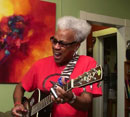
Dyann and Rick Arthur of Mill Creek have been traveling the country, seeking out women who perform traditional music: folk, blues, bluegrass, jazz, gospel and more. The couple are collecting oral histories from the women and recording them as they perform.
Their work, called the the MusicBox Project, has become a treasure trove; a portion is catalogued in the American Folklife Center of the Library of Congress in Washington, D.C., and much of it is gathered for viewing online. “Women adopt and adapt. We found pockets of traditional culture everywhere,” Dyann Arthur said. “And the response we got for the project was very enthusiastic. They got it.”
| |
|
|
Our Daughters the Soldiers at Toms River library branch
TOMS RIVER- We all know of many contributions of the greatest generation during World War II, whether it is "Private Ryan" or even "Rosie the Riveter". But few know the important roles women played and how it continues to the present day.
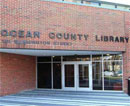
The Ocean County Library Toms River branch (101 Washington St) will host "Our Daughters the Soldiers" on Monday May 21 at 7pm. This program will highlight many of the contributions women have made to the war effort from WWII to today.
Dr. Helen G. Brudner, Associate Director of the School of Political and International Studies at Fairleigh Dickenson University will discuss their experiences, how they were viewed by others and compare how women soldiers are treated now.
| |
|
|
St. Francis de Sales students interview local ‘Living Legends’
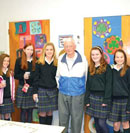
St. Francis de Sales students have had the unique opportunity to experience local history first hand. As part of an oral history project, eighth grade students interviewed Ester (Geigle) Conrad, a 1931 graduate, and Paul Dougherty, a 1943 graduate, both of St Francis de Sales School, to learn about their experiences growing up in the community.
Chris Dewees, president of student government, was amazed by the rich legacy of St. Francis de Sales School, and the loving and historic culture of the town of Lenni, noting, “If I could, I would bring the entire school to hear their memories and feelings for this school and the people who built it.”
Dougherty, a local historian who grew up in Aston Mills, is the founder of the Aston Historical Society and author of Growing Up in Aston Mills.
| |
|
|
Oral History Weekly Magazine Aims and Regulations
Oral History Weekly Magazine wishes to create a suitable place for thoughts and idea development; Its main field would be “Oral History” and subjects as telling & writing memoirs, writing diaries, travelogues, chronologies, and all other subfields of history which are presented in the form of news, articles, reports, notes, interviews and memoirs can be included. There is no limitation on the length of would-be-sent materials.
Mentioning the name, academic background and email is necessary. Articles with complete references and bibliography are more credited and an abstract would quite helpful.
Weekly is not about to publish any material consisting insults and libels about other people or anything that brings anxiety to public opinion. Weekly can edit and translate the received materials.
The published articles and materials are only the writer’s ideas and Oral History Weekly Magazine has no responsibility about their content.
|
|
|

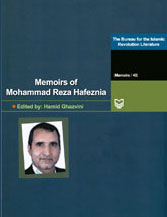
Memoirs of Hafeznia (6)
The soldier said nothing and started to help me open the ropes. I took the box of the colt bullets out of the truck and put it in my room under the table behind which I sit. Then, I started reading a book as if nothing had happened. The same soldier came back again and took his gun. I found out that he was still continue to guard and looking at me from the window and in fact watching me. I had to bend gently so that he could not see me. I opened the lock of the bullet box quietly and without any suspicious move, while pretending to study, I opened the door of the box, and took three magazines of bullets out, brought them up very slowly and hid them between my feet on the same chair on which I had sat in a way that the soldier did not see. Then, I took out the empty magazine of the colt, put it in the box and loaded the colt with a magazine full of bullet, and put the other two into my pocket. Fortunately, until then, everything had gone ahead as planned. I thanked God and was very happy having a colt with bullets. My next problem was that I had to send the box back to the truck somehow. The previous guard had been changed. I should find a way. At those moments I was busy thinking to carry out an operation and to be martyred. I thought tonight was the last day of my life and the next day I would be martyred. Such thoughts did not let me sleep. It was a relief that I had bullets and could do something finally. Near dawn, I moved forward toward the soldier and told him:" This bullet box had been with me last night because of more security. Now I want to send it back. Open the ropes till I could return it."
He obeyed my order and started to untie the ropes. Then, I went up the truck and replaced the box and came down comfortably. I tied the ropes as before and came back to my room and told the soldier to call those who want to fast in order to eat their sahari. I also go to eat sahahri. But I didn't care for sahari anymore. As a matter of fact, I was in another world and atmosphere. I said that I could endure the next three or four hours without eating; I wanted to leave this world very soon. I guessed that there would a clash definitely. The reason for taking three magazines was that I wanted to use one for the VIP and the other two for the continuation of clashes in the parade field of the 77 Division because my aim was to create a great hue and cry. My aim was not to just shoot at for instance the division's commander. I wanted to create a great ballyhoo so that both the people were encouraged and the Shah's regime sacred and did not trust the army anymore as well as the regime could not hide it in a way that it would have wide reflection across Iran. Thus, the assassination of the division's commander was a pretext not an aim. Even, the world and the regime couldn't suppress it. On the other hand, I wanted the people of Iran to be encouraged. In fact, when eight to ten thousand persons as soldiers, officers and commanders some of which as enlistees attend the great parade field, they could no longer hide the event supposed to be happened. I intended to turn there into a battlefield and in fact took the two magazines for this. At any rate, I ate a brief sahari with high morale since I was approaching the moment of the operation. I had prepared to carry out the operation. Then I prayed and asked God to help me.
Carrying out the operation
Everything looked normal in the morning. We were preparing for the morning ceremonies in the battalion and later in the division. I intended to execute the plan for the newly-established field of the division. I had already evaluated the environment and surroundings and had assessed the situation and never thought the parade field might be changed. After the morning ceremony in the battalion when I wanted to go to the division's parade field, I was said that today's ceremony was going to be held in the artillery field! All of a sudden, I asked myself where the field was located. Until then, I knew nothing about it and no imagination was in my mind. I again went to another world. What should I do if I cannot carry out the operation there? Did it mean that all the planning, all the achievements had ruined? I was worried again and drowned in my thought. But I did not lose myself. Immediately, I thought to wait and to have patience. At the same time, I was considering that if I couldn't carry out the plan and attack the VIP, and I felt that the atmosphere was not appropriate, I should carry out another plan by all means. I was determined to accomplish another operation on the same day.
I was thinking of other substitute plans for example attacking on an important center in the garrison or setting on fire the fuel tank of the division. And if I couldn't put into operation any of them, I wanted to shoot at Major Kouhestani, the deputy of the battalion who made vain claims and was a foulmouthed man. On the whole, I had no way-out; I couldn't send the bullets back. After the end of the ceremony, the forces would come back at around 8 to 9 AM. They would definitely open the bullets' box in the truck and found out that the number of bullets and magazines had been reduced, and without doubt, they would follow up the issue and the soldiers would probably reveal everything and finally I would be arrested as the officer on duty. I had no escape. So, I should take the initiative before they did something. Since then, I had to wait for a proper time to use my colt and start the operation. The morning ceremony was held and Major Kouhestani like every day started his rodomontade. This made me angrier and became more determined to at least silence his voice.
After the ceremony was held in the battalion, we left for the artillery field where I had never seen before. On my way toward the field, I was the commander of the First Squad, and the enlisted second lieutenant Mokhtari who had served more than me was the commander of the Second Squad. He looked a little suspicious. First lieutenant Taheri who was the commander of the First Company was moving in front of the company and the rest behind him. On the way, as usual, Mr. Mokhtari started talking about one of the books of Ali Asghar Haj Seyyed Javadi (An intellectual and writer who was against the Pahlavi regime). He intended to show himself as a revolutionary person in this way, but I didn't pay attention to him. I was in my world and from the very beginning, I started walking limpingly and wanted to malinger. I said my feet ached and could not walk. Of course, I had reason for this. We were three officers. One was Captain Manaffi who was a regular army officer, the other Mr. Mokhtari and finally me. Lieutenant Taheri, the company commander was in front of us, and we three were walking behind him. Since I was shorter than them, I would be placed at left hand, and when the company turned toward the division's VIP, Mr. Mokhtari who was tall, at the right hand and beside the VIP and Captain Manaffi who was a regular officer and looked humble and was from Rasht (a city in northern Iran) would be placed in the middle. Thus, I would be placed far from the VIP. I was thinking what I should do at the time when I wanted to attack on the VIP while everybody was marching and the company forces were walking behind me, captain Taheri was in front of me and other commanders at right. This had become a puzzle for me and I didn't know how I could solve it. I thought of malingering and pretending that my foot ached. So, I could replace Mokhtari that is, he would come at the left exactly vice versa. While we were walking on our way, I mentioned Mokhtari a few times that my feet ached and either I should move aside while marching or replace each other. He said we would do something, let's reach there.
Translated by: Mohammad Baqer Khoshnevisan |


|
|