| |

|
The Association of War Memoir Writers

There is no specific criterion for evaluating the memoirs yet. Based on the one’s tendency, in typology, towards the areas like history, literature and social sciences, he/she drives “the memoir book” in the same direction. Meanwhile, history has already superseded all the other areas and the memoirs are usually assessed by history touchstone. Even, without considering the fallible, prudent and date-limited reports of the people, especially among those not trained to keep and narrate the memoirs academically, the historical documentation of the memoirs texts are sought.

| |

|
|
Leader’s Biography Well-Received at Book Fair
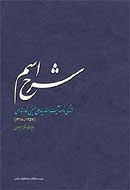
Iran Daily: Biography of the Leader of Islamic Revolution Ayatollah Seyyed Ali Khamenei is a bestseller at the 25th Tehran International Book Fair.
Compiled by Hedayatollah Behboudi, the book has been released by the Political Studies and Research Institute.
Entitled ‘Sharhe Esm’ (definition of the name), the book features the activities and life of the leader before the Islamic Revolution, ISNA reported.
| |
|
|
Omidvar Brothers’ Travelogue
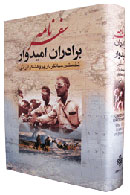
Omidvar Brothers’ Travelogue is book familiar to historians and tourists of Iran and this very familiarity makes the review of this book a hard thing to do. If we are about to tend to this book the regular way, we have repeated what has been repeated many times and finally we make him push the button and pass the oral history webpage. This matter and also the existence of Omidvar Brothers’ website, their museum in the Sa'dabad Palaces complex and many reports about their travelogue on internet makes us set foot on the Omidvar Brothers’ world with wittiness and a new point of view which at first looks for the incentives of such journey rather than the journey itself.
| |
|
|
An Analysis of the Book I May Forget You from the Perspective of Resistance Literature
An Analysis of the Book I May Forget You from the Perspective of Resistance Literature
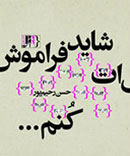
The website of the Iranian Oral History reports that the book I May Forget You, a documentary, historical novel by Hassan Rahimpūr on the Islamic Revolution and the Imposed War, was published by Ārma Publications. The story opens with events from before the Revolution and narrates onto the final years of the War. The book retells the life-story of the 21 adopted children (7 daughters and 14 sons) of Māshā`Allah Āzarfar.
| |
|
|
Safe Haven of Bullets praised in Tabriz
Iran's Oral History Website: Abdolreza Alboghobeish's memories are gathered in a book entitled as “the Safe Haven of Bullets” which is in fact an oral history of Iraqi invasions of Khoramshahr in their early days. Javad Kamvar Bakhshayesh has compiled the book and has had it published by Soreie Mehr Publications. The book has undergone 4 print-runs so far.
A while ago, Kamvar was lauded in the Islamic Revolution and Sacred Defense section of the 2nd Tabriz Book Festival for writing of the book.
| |
|
|
“Well-Equipped Division” in book market
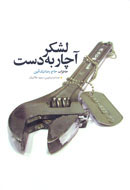
The book “Well-Equipped Division” which consists of the memoirs of Reza Nik Ayeen, a technical force in the Logistics Staff of the Iraqi imposed war against Iran has been compiled by Saeed Alamian and published with the contribution of The Organization of Preserving and Publishing the Values of the Sacred Defense of The Islamic Revolution Guards Corps (IRGC), Basij [voluntary forces] (Fatehan Publication) and the Guilds Basij, Iranian Oral History website reported.
| |
|
|
Oral History Weekly Magazine Aims and Regulations
Oral History Weekly Magazine wishes to create a suitable place for thoughts and idea development; Its main field would be “Oral History” and subjects as telling & writing memoirs, writing diaries, travelogues, chronologies, and all other subfields of history which are presented in the form of news, articles, reports, notes, interviews and memoirs can be included. There is no limitation on the length of would-be-sent materials.
Mentioning the name, academic background and email is necessary. Articles with complete references and bibliography are more credited and an abstract would quite helpful.
Weekly is not about to publish any material consisting insults and libels about other people or anything that brings anxiety to public opinion. Weekly can edit and translate the received materials.
The published articles and materials are only the writer’s ideas and Oral History Weekly Magazine has no responsibility about their content.
|
|
|

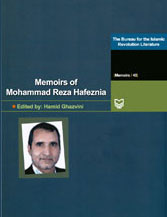
The Memoires of Hafeznia (4)
I went to the garrison in the morning. As usual, the Battalion's personnel were busy repairing the tanks and there was nothing special. After a few hours, it was announced that since a number of incidents had happened, the Division's commander had gone to Tehran to take part in a seminar the issue of which was to review how to suppress and contain popular demonstrations in the Iranian cities and towns.
At the same time, I was waiting for an opportunity to strike a blow to the regime or to create an incident in the garrison.
The same day we were informed that the all the military units were on alert, so you should return until 4 PM. It showed that either incidents had taken place in Mashhad or were on the verge of happening.
I got very happy and thanked God that the crackdown happened a few days ago by the Tank's First Squad had not worked much and the people were continuing their way. I was very happy seeing the people had not lost their hope yet.
At the same time, a rumor spread that the regime did not trust the enlisted officers and they would not be dispatched for suppressing the people and were just kept on alert or involved in guarding or cooking. I returned home at noon and was aware that I should come back at 4 PM. But I was thinking that as before I might not be able to enter the city. As I was drowned in my thoughts, it came to my mind to write my will and leave it at home, and not to tell anybody in this regard, only to contact with and inform Mr. Chaychi (a relative of mine).
I wrote my last will and added a few lines against the regime and put it in the pocket of my coat in the clothes hanger. I said to myself that if I did not come back anymore, my will would be found and read finally. A few hours had still been remained until 4 PM. I had a bike when I was a student. So I took it and as the last time or a kind of farewell, I went to take a tour in the city to see what was going on.
After a few minutes, I arrived in the downtown where the governorship and Imam Reza (AS) Hospital had been located. There is a mosque here named Masjed-ol Reza (AS) (Reza Mosque) near the garrison. I saw a large crowd in front of the mosque and it was not natural at that time of the day. So, I got off the bike and asked the people who were standing in front of the mosque what was going on? They said Mr. Mousavi Khorasani (a well-known anti-regime cleric) had delivered a speech and after that the people had gathered there. It was obvious that the city enwombed important events that the military forces were ordered to be on alert. A few moments later, I headed toward my house, preparing to go to the garrison.
I reached the garrison at 4 PM. I was told immediately that I was officer on duty tonight. I was surprised. They said that all forces and the battalion were on alert.
I was thinking that the risk had become so high that the whole battalion had been ordered to be on alert.
This was while two weeks earlier, just one tank squad whose commander was me (but did not arrive in the city) was on alert. The regime's authorities in the city had felt that the danger had become more serious and the situation more sensitive than the past.
My own prediction was that I was approaching little by little to the time of operation and it was unlikely I could survive. It might be the last days of my life.
It was around 5 or 5:30 PM. I said to myself that I'd better to contact with Mr. Chaychi and inform him what I intended to do.
I called him from a public phone booth, and said: "we are on alert. I was going to meet you but I couldn't …"
While talking to him, I tried to make him understand implicitly that I might not be able to see him anymore. Since he was familiar with my way of thinking and revolutionary spirit, I think he understood what the matter was.
After talking to Mr. Chaychi, I came back to the company where I should stay on alert. Since I had put my will in my pocket, regarding everything as finished from my own view, and I really thought that I should carry out an operation against the regime within days, I came back to the company resolutely, thinking about planning for an operation. As always, I had the problem of supplying ammunitions. We were sometimes given a gun (a colt) but without any bullet. Sometimes I drove a tank but with no shells, so I was not able to do anything. This was my main problem or else I did not have any other problem. On the other hand the political situation was in a way that I thought if it was late, the people might become disappointed and a message should be given to the people and the regime as soon as possible so that the revolution's move was expedited.
Translated by: Mohammad Baqer Khoshnevisan |


|
|