| |
|
Leader’s life before Revolution displayed at TIBF

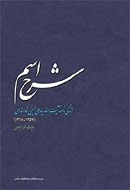
Written by Hedayatollah Behboudi, a book on the life of the Supreme Leader of the Islamic Revolution Ayatollah Khamenei before the Islamic Revolution has been displayed at the 25th Tehran International Book Fair.
IBNA: Published by the Institute of Political Studies, the book contains 80 pictures of the leader’s pictures. Some of the pictures of the collection are being published for the first time.

| |

|
|
Supreme Leaders memories at TIBF
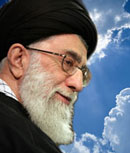
Khorshid(The Sun), a book compiled by Ali Bani-lohi will be presented at the 25th Tehran International Book Fair(TIBF). The book holds memories of the Supreme Leader, Ayatollah Ali Khamenei of the victory of the revolution, the Sacred Defense and his presidency.
IBNA: Bani-lohi said: Khorshid(The Sun) will hold 50 memories of the Supreme Leader which have been compiled from books which have been written about him as well as his speeches.
| |
|
|
8 new books on history of Iran
Head of Document Center of Iran Parliament announced further publication of eight research works on the history of parliament and constitution in Iran. Four of the books are estimated to be presented at Tehran Book Fair.
IBNA: Ali Tatari, director and evaluation council''s secretary of Document Center of Iran Parliament told IBNA of the compilation of eight new books for the present year. "We have planned for new compilations on the history of parliament and constitution in Iran so that existing documents at Majlis library will be available for all researchers."
| |
|
|
Cultural memories of athletes to be released as books
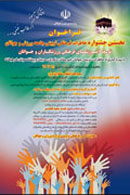
The first festival of the cultural memories of the youths and sport's society will be held as the plan of "Documenting the cultural memories of athletes and veterans". To be held by the Ministry of Youth Affairs and Sports, the top memories will be gathered as books.
IBNA: The first festival of the cultural memories of the youths and sport's society will be held with an object of expanding the youths and athlete's cultural instructions.
| |
|
|
Stories of “Dogs”
Stories of "Dogs", Interviews with members of the PRT-ERP, provide eight specially selected interviews collected from an even broader body of evidence. Two of them have been previously published which are difficult to obtain. All were selected because it conveyed the interviewees had great relevance beyond the issue of armed struggle and PRT-ERP. Each has its specificity and gives an idea of the complexity of this organization and, above all, the society that produced it. At the same time, the interviews reveal the limitations of guerrilla proposal.
| |
|
|
A ‘Still Spot’ In A Bustling Borough
Finding an oasis of quiet in what is perhaps the nation’s most ethnically diverse neighborhood was the focus of “stillspotting: Queens,” a combination oral history exhibit and walking tour that debuted on Saturday, Apr. 14 in Jackson Heights and will run on weekends through May 6.
The program features storytellers reading works specially written by people with connections to the neighborhood.
According to David van der Leer, the curator of “stillspotting,” the exhibit took over half a year to prepare.
| |
|
|
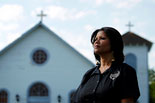
Our Lady of Grace sanctuary in Reserve to become depository for oral history
Our Lady of Grace Sanctuary in Reserve has been named the latest tourist destination on the Louisiana African American Heritage Trail. The sanctuary, at 123 Redemption Way, was officially opened for tours during a ribbon-cutting ceremony April 20.
Cami Geisman, deputy communications director for Lt. Gov. Jay Dardenne’s office, said that eight more sites, including Our Lady of Grace Sanctuary in Reserve and San Francisco Plantation in Garyville, will be added this year.
| |
|
|
Oral History Weekly Magazine Aims and Regulations
Oral History Weekly Magazine wishes to create a suitable place for thoughts and idea development; Its main field would be “Oral History” and subjects as telling & writing memoirs, writing diaries, travelogues, chronologies, and all other subfields of history which are presented in the form of news, articles, reports, notes, interviews and memoirs can be included. There is no limitation on the length of would-be-sent materials.
Mentioning the name, academic background and email is necessary. Articles with complete references and bibliography are more credited and an abstract would quite helpful.
Weekly is not about to publish any material consisting insults and libels about other people or anything that brings anxiety to public opinion. Weekly can edit and translate the received materials.
The published articles and materials are only the writer’s ideas and Oral History Weekly Magazine has no responsibility about their content.
|
|
|

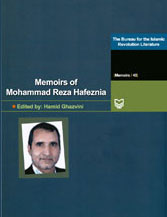
The Memoirs of Hafeznia (3)
On the other hand, I was thinking what I should do and I was in intense mental pressure. I wanted to find a solution for the future. Finally, two solutions came to my mind. One was outside the garrison and the other inside.
My plan for outside the garrison was that the Khorasan 77 Division would hold a war game in the city of Torbat-e Jam once a year in which all the senior commanders of the Division would attend and since both dummy and live rounds were used during the war game, I did not have the problem of supplying ammunitions, and I could create an incident with great reflection in the society.
The solution for inside the garrison was that if I couldn't have access to ammunitions or failed to carry out an operation, I would set part of the garrison on fire. So, I thought of using the fuel tanker of the Division for doing this. Thus, I started to review the consequences of both plans.
I followed several aims in the two plans. First, I wanted to show the regime that the army was no longer reliable. This could cause the regime to be cautious in using the army against the people.
The reality was that the Shah had much hope of the army and basically relied on it.
Second, any incident happened inside the garrison and among the military forces was a promising message for the people that they continued their path powerfully and the military forces supported them. I had such responsibility as a Muslim soldier because the regime was worried that the army left the scene after terrorizing and suppressing the people as what happened on June 5, 1963.
Third, the army's Muslim and revolutionary forces would receive the message that it was possible to carry out operations against the regime inside the army because since then, neither any operations had been carried out nor anyone had dared to do such. It was a difficult situation. It is very easy to talk about it now but those who were in the Imperial army at that time can understand the situation.
They know the oppression that engulfed the country and how difficult was to carry out such things.
Even, I saw some Muslims who did not dare to do anything. Some of them avoided commonplace actions, even those who had religious tendencies. But I thought I was able to awake the army's religious forces by carrying out an operation in order to show them that they were able to do something too.
My fourth aim was to attain martyrdom. I thought either I would be martyred at the end of the operation or I would be sentenced to execution after trial.
It was with such aims that I decided to design and carry out an operation. First, I was thinking of enlisted and noncommissioned officers, because I felt from the very beginning that some of the forces enjoyed good religious morale. Even I tried to make friend with one of the tank crews in name of Mousavi who was a sergeant and had religious morale. Or, there was a captain named Taheri, the commander of a tank company who seemed to be a religious. I tried to get closer to them and given the process of the movement and its religious nature formed in the society, I was after organizing these forces.
I thought I could organize the religious forces inside the garrison, because if I wanted to set on fire the garrison or carry out a military coup, I would need them.
The story continued until we were announced that the tank's battalion should dispatch for a drill. First, I thought it was the same war game in Torbat-e Jam that I referred to above. I got very happy and was hopeful to carry out a hefty operation. But later I found out it was a drill within the battalion supposed to be held near Mashhad's Vakil Abad area and was not linked to other units of the Division.
As usual, we prepared to go to the drill zone. It took some ten days. I remember that those days were coincident with the holy month of Ramadhan and we should fast. I fasted with a number of religious servicemen.
We in the camp shared our fasting practices with some of the regular forces of the army who were religious including captain Taheri, the commander of the Tank's Third Company, and captain Manafi- the tanks commander. Thank God, we could do our religious practices in the holy month of Ramadhan very well.
One of the enlisted officers of the battalion came to me regularly at that time and brought up some issues. Since I was at the beginning of my job and did not know him, I did not trust him. And later (after the victory of the Islamic Revolution), I found out he had been a SAVAK (Shah's secret service) agent. And due to his suspicion to me, he tried to make me talk but it had a narrow escape and I shared nothing with him.
At any rate, this stage finished and we came back to the garrison but the incidents reading the revolution continued to irk me.
Since I was unaware of the situation in Mashhad while we were in the military camp, the first thing I did was to get new information in this regard.
According to what I heard, I found out that a few days ago, a number of women had gathered at Tehran Street – Mashhad's main street. And after holding a protest rally, they had scattered very quickly. The incident was showing that the motivation and courage of different strata of people had increasingly grown and the legitimacy of the regime had greatly diminished.
I came home at night. I was drowned in my thoughts until dawn, pondering when and how I could fulfill the responsibility which rests on my shoulder.
Translated by: Mohammad Baqer Khoshnevisan |


|
|