| |
|
The voice of women’s mind could be heard in their narratives of Sacred Defense

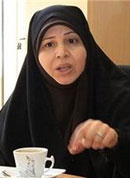
Masumah Ramhormozi, researcher of Sacred Defense literature, said about the role of women in Iran-Iraq War and dealing with it in literature: “Women’s memories of war are abundant in their inner feelings and emotions that accompany the reader.
Ramhormozi, who herself had been bound to the Iran-Iraq war fronts as a rescuer, said to the reporter of Hoze Honari News Website: “Generally speaking, any subject which can explain one of the lesser known aspects of the war is required and will be welcomed; the role of women in war is one of them.”
This writer and researcher continued about feminine’s narratives of war: “What distinguishes the women’s narrative of war is that their views not only don’t focus on combat and aren’t war-based, but the life is more attended to than the war. Life has high priority for women and even in total darkness, they are trying to see the bright spots which are existed; and this kind of look has special importance in the fight against the enemy.”

| |

|
|
Origin of Narrating in Iraq-Iran War-1
The essay about Gol-ali Babaei’s lecture on the subject of war narrating and the related comments delivered referring to it, is more than anything else about redefining the concept of narrator. What can be meant by narrator, narration and narrating? It is supposed that concepts have their own functions and are formed, polished and changed for that end. In present text, the origin and conceptual functions of narrating are defined in last three decades. This essay is not to confiscate the concept of “narrator-narration” or to bind it to a special organ or organization, but it is to help to reach a better understanding of it.
| |
|
|
Role of the Iranian Army in Sacred Defense portrayed
According to IBNA correspondent, the book titled ‘The Role of the Army of the Islamic Republic of Iran in the Eight-Year Sacred Defense' for the use of the narrators of this war’s events is released. This book has been co-authored by Staff General. Reza Khorram Tousi, Lieutenant Staff General Ebrahim Golfam, edited by Staff Colonel Rahim Rafiee, and Lieutenant Colonel Ali Akbar Beheshti.
The purpose and technique of narration, the Army’s ability on the eve of the war, the Air Force and Marine Corps of the Army, disabling the Iraqi Air Defense, and the role of the IR Navy in the eight years of war are the titles of some parts of this book.
On page 16 of the book we read; “It is very important to know where exactly the narration is taking place. The impact of narration on its audience is important as it changes with the environment and the special circumstances of the events, and the skilled narrator should use his intelligence and take the special location of his narration into account.”
| |
|
|
‘The First Commander’ on martyr commander Ja`fari released
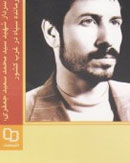
The book, ‘The First Commander’, a collection of forty diaries remained from the martyr commander ‘Seyyed Mohammad Sa’eed Ja`fari’, written by Reza Karimi, is printed by ‘Daftar-e-Nashr-e-Ma`aref’ Publications.
According to IBNA correspondent, Martyr Seyyed Mohammad Sa’eed Ja`fari was born on February 1, 1953 in Qasr-e-Shirin, west of Iran. His lineage traces back to the old, noble Sadats of Kermanshah whose genealogy goes back to Imam Hassan Ibn Ali Ibn Abi Talib (AS), the second Shi’ite Imam.
The book ‘The First Commander’ embraces the titles ‘Childhood and Adolescent Years, Seminary Education of the Martyr, His Activities, Establishment of a Committee to Assist the Poor, His Arrest by SAVAK, A Founding member of the Revolutionary Guards in 1979, Activities after the Revolution, Visiting Imam Khomeini and carrying out the first military actions after the revolution.
| |
|
|
Martyr Avini’s unpublished writings to be printed
In an interview with IBNA, Hossein Alaayi, director of Ravayat-e Fat’h Publications explained the institutes’ activities with regard to Martyr Avini’s works: “About 15 texts by Martyr Avini were published until 2009 which is the date before the start of activities of ‘Vaheh’ publications in the publishing institute of ‘Ravayat-e Fat’h’. Upon the establishment of this publications by Maryam Amini (Avini’s wife), Martyr Avini’s books were almost entirely published by this institute.”
Pointing out that the existence of Ravayat-e Fat’h Institute is based on the ideas of Martyr Avini, Alaayi said: “By the same token, separating the activities of the Ravayat-e Fat’h Publications from Martyr Avini’s thoughts is not possible. It is most unfortunate that by stopping the publication of Martyr Avini’s works in this institute, this thing happened to some extent, and our colleagues did not much tend to his way of thinking.”
| |
|
|
Oral History Weekly Magazine Aims and Regulations
Oral History Weekly Magazine wishes to create a suitable place for thoughts and idea development; Its main field would be “Oral History” and subjects as telling & writing memoirs, writing diaries, travelogues, chronologies, and all other subfields of history which are presented in the form of news, articles, reports, notes, interviews and memoirs can be included. There is no limitation on the length of would-be-sent materials.
Mentioning the name, academic background and email is necessary. Articles with complete references and bibliography are more credited and an abstract would quite helpful.
Weekly is not about to publish any material consisting insults and libels about other people or anything that brings anxiety to public opinion. Weekly can edit and translate the received materials.
The published articles and materials are only the writer’s ideas and Oral History Weekly Magazine has no responsibility about their content.
|
|
|

●Iranian organization ready for conducting oral history interviews all over the world
●Khuzestan's oral history plan unveiled
●Oral history training course to be held in Azerbaijan province
●"Oral history needs credit and scientific status"
●9th oral history workshop held in Isfahan
●Lorestan hosts oral history conference
●E-book about Sadr's memoirs released
●Few people prepared to retell memoirs
●256th Night of Memory

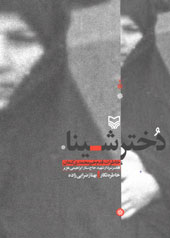
Daughter of Sheena-30
Memories of Qadamkheyr Mohammadi Kanaan
Wife of Sardar Shaheed Haj Sattar Ebrahimi Hajir
Memory writer: Behnaz Zarrabizadeh
Tehran, Sooreh Mehr Publications Company, 2011 (Persian Version)
Translated by Zahra Hosseinian
Chapter Fourteen
The day after, in the morning, Samad went out for a little shopping. When he came back, I saw that he had purchased two or three kilograms of meat, two raw chickens, vegetables and a lot of fruit.
I said: “So much meat! We have guest? What's going on?”
He said: “This time, when I go to the front, I won’t come back two or three months if I stay alive. Maybe I don’t come back until Nowruz, Maybe by the end of the war.”
I said: “Oh... don’t say like this! Maybe the war lasts a couple of years.” |


|
|