| |

|
Oral history for people or people for oral history

Use of oral history in the recent decade has been institutionalized as a powerful tool in collecting, organizing and archiving the information data in different areas in Iran and today, the oral historians are not following to prove the significance of the efficiency of oral history and it seems that in view of the oral history capacities in the community, it is now time to deal with new working subjects and grounds. One of the most pivotal questions in this regard is the status of the people in Iranian oral history.

| |

|
|
Revolution Key in Understanding Iran Demography
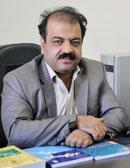
“The Islamic Revolution and the demography of the people who formed it must be studied for understanding the demography of Iran”, said a senior Iranian cultural official.
Moahmmad Beheshti, who is head of the Cultural Heritage and Tourism Research Center (CHTRC), said: “the significance of the revolution’s demography becomes manifest when one begins to ask themselves why people need to be studied.”
Addressing the Revolution Demography seminar held here in Tehran at the CHTRC, Beheshti said the Islamic revolution is a perfect reflection of the Iranian society’s cultural level, and therefore it is an unparalleled resource for conducting cultural studies about Iranians.
| |
|
|
French Photojournalist Recounts Iran Revolution in Pictures
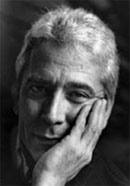
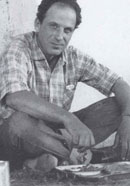
Gilles Peress, French photojournalist known for his documentation of war and strife, has taken outstanding pictures of the Iranian people and society in the midst of the 1979 Islamic Revolution.
In a five-week visit, Peress came to Iran in December 1979 through 1980. During his visit, he built up a magnificent album of photo reports about Iran's revolution.
His pictures of Iran and certain other places he travelled like Northern Ireland, Yugoslavia, and Rwanda are collected in a 101-page book he publishes in those in the 80s. The black-and-white pictures from the Iranian society depict events from Tehran Friday prayer through funeral of Martyr Mofatteh in the central city of Qom.
| |
|
|
A promenade paved in Goli Taraghi’s lane of memoirs
IBNA- Shemiran old alleys accommodate the memoirs of a little girl who wore her hair in braids freely swinging in the air as she ran through the winding lanes; the little girl who is today’s well-recognized writer Goli Taraghi. Our correspondent reported her entering the bookstore, passing by clicking cameras, wearing sun glasses with a smile on her face. She sits herself at a small table prepared for the sixth guest of ‘Ayandeh’ Bookstore, glances at her own books ranging from ‘Shemiran Bus’ ('Le bus de Shemiran') to ‘Winter Sleep’ and turns around greeting other guests like Iraj Parsinejad (PhD), philosopher Dariush Shayegan (PhD) and her young fans.
| |
|
|
Collection of articles by the outstanding Italian Iranologist released
IBNA- In commemoration of the tenth anniversary of death of Umberto Sheraton, the prominent Italian Iranologist, department of Archaeology of Sapienza University of Rome (The largest university in Europe) released the collection of his articles. According to IBNA correspondent quoting from the public relations office of the Islamic Culture and Relations Organization, Professor Umberto Scerato, born in November 1928 in Rome, got his doctorate degree in archaeology from the University of Rome at the age of 24. He volunteered to teach at the same university for 5 years as an assistant professor.
| |
|
|
Oral History Weekly Magazine Aims and Regulations
Oral History Weekly Magazine wishes to create a suitable place for thoughts and idea development; Its main field would be “Oral History” and subjects as telling & writing memoirs, writing diaries, travelogues, chronologies, and all other subfields of history which are presented in the form of news, articles, reports, notes, interviews and memoirs can be included. There is no limitation on the length of would-be-sent materials.
Mentioning the name, academic background and email is necessary. Articles with complete references and bibliography are more credited and an abstract would quite helpful.
Weekly is not about to publish any material consisting insults and libels about other people or anything that brings anxiety to public opinion. Weekly can edit and translate the received materials.
The published articles and materials are only the writer’s ideas and Oral History Weekly Magazine has no responsibility about their content.
|
|
|

● Astan Qods Razavi has 12 oral history experts
● Two traditional, academic approaches interact in association
● “Oral History of Islamic Revolution in Arak” released
● Selection of oral history of tribe released
● Audio book unveiled

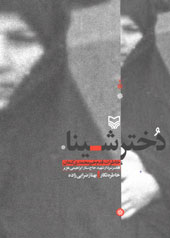
Daughter of Sheena-24
Memories of Qadamkheyr Mohammadi Kanaan
Wife of Sardar Shaheed Haj Sattar Ebrahimi Hajir
Memory writer: Behnaz Zarrabizadeh
Tehran, Sooreh Mehr Publications Company, 2011 (Persian Version)
Translated by Zahra Hosseinian
I do not know how I felt asleep, but I remember that I dreamed nightmare until morning. Early morning, after Fajr prayer , my father-in-law got ready to go out, without eating breakfast. My mother-in-law also took her Chador and ran after him. I could not stand any more. I threw my Chador over my head and said: “I come too.”
My father-in-law said angrily: “No, no. Where do you want to come? We have some work to do. You stay home with your children.”
I felt like crying. I would groan and say: “In God’s name, tell me the truth. What has happened for Samad? I know something has happened for him, so tell me the truth.”
Again my father-in-law said: “Go to entertain your guests. They wake up now, breakfast should be prepared.”
I would cry my eyes out and whimper: “Shirin Jan will do it. I myself will go to Islamic Court right now, if you don’t take me.” |


|
|