| |
|
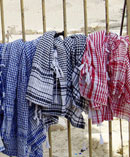
Red and White Keffiyehs

I was raised in a religious, pro-Mosaddegh family in Shiraz and there were always hung pictures of Imam Khomeini and Dr. Mohammad Mosaddegh on the walls of my father's room. I was just 12 during June 5 1963 uprisings and joined the protestors who fired bars at that time. I was not a frequent mosque-goer but was introduced to certain politico-religious gatherings run by Ja’far Abbas Zadegan and the late Rajab’ali Taheri. The gatherings were held every Friday morning where representatives of various groups would show up gatherings. We might be tasked to distribute copies of Imam Khomeini's treatises or house someone who, as we later learned, turned out to be the son of Ayatollah Taleghani who was known among us by a pseudonym. Among the participants of the gatherings were also high-ranking members of the Mojahedin-e Khalgh like Sa’eid Shahsavandi or Rasoul Meshkin Fam.

| |

|
|
He had changed his policy
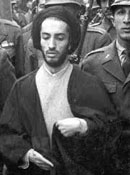
Etemad daily, Jan 17, 2015- Majid Tafreshi believes that Nawab Safavi like any other social and political activist had been changing his policy of interacting with politics and politicians and if he was still alive, the destiny of Fadaeian Islam group would be something else. In this interview, we will have a brief review on the political life and viewpoints of martyr Seyed Mujtaba Mir Lowhi better known as Nawab Safavi.
Q: First of all, what was the impact of the family and social origin of martyr Safavi on the shaping of his personality and character? We know that Nawab started his education in modern schools and spent the secondary course in the German Technical School.
A: Numerous books have been written about the life and activities of Martyr Seyed Mujtaba Mir Lowhi known as Nawab Safavi from different religious, national, left, monarchial and secular viewpoints. An important point about his life is that the late Nawab Safavi was born and grown in an ordinary religious family.
| |
|
|
Memoirs of Katirayi of his trip with Hashemi and Bazargan to Ahwaz and Abadan
Mardom-e Emruz Daily, Jan 17, 2015- Mahsa Ali Beygi: Life has dried Mostafa Katirayi’s hair white; the color of the winter of 1978. Katirayi is now in his 80s; but then he was a young man who was appointed by Imam along with Bazargan and Akbar Hashemi Rafsanjani to visit oil reserve areas and supervise its production. On December 29, Imam Khomeini in a letter to Bazargan asked him to travel by a commission of five to these regions to resolve the issue of fuel provision at domestic level. The next day the commission traveled to Ahwaz and visited Ahwaz and Abadan and later Shiraz in two weeks. Katirayi has many memories of that trip.
| |
|
|
Robert V. Keeley, outspoken ambassador, dies at 85
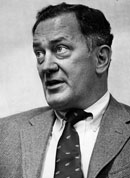
Robert V. Keeley, an American diplomat who held three ambassadorships during a career spent mainly at hardship posts or amid crises, and who during the Southeast Asian conflict helped close the U.S. embassy in Cambodia and carry out the U. S. flag, died Jan. 9 at an assisted-living center in Washington. He was 85.
The cause was an apparent stroke, said his brother, Edmund Keeley.
During his 34 years in the Foreign Service, Mr. Keeley was a deputy assistant secretary of state in Washington, and had been ambassador to the Indian Ocean island-nation of Mauritius (1976-1978), to Zimbabwe (1980-1984) and to Greece (1985-1989).
Having followed his father into a diplomatic career, Mr. Keeley was known to be outspoken within the bounds and limits of his job. He was said to have disagreed strongly with the United States’s policy of supporting a military takeover of the Greek government in the late 1960s, the so-called colonels’s coup.
| |
|
|
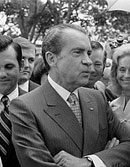
UGA announces improved access to rare Richard Nixon interview footage
The University of Georgia Libraries is using new technology to improve access to more than 30 hours of rare videotaped interviews with former President Richard M. Nixon.
#The libraries announced the completion of the project in conjunction with the former president’s Jan. 9 birthday.
#The videotapes had been largely unseen outside of the group that produced them in 1983. They were donated to the UGA Libraries by Jesse Raiford, president of Raiford Communications, nearly 15 years ago.
#Raiford said he selected the UGA Libraries as the recipient of the tapes because he wanted them to be housed at an educational institution that would make them accessible to the public.
| |
|
|
Oral History Weekly Magazine Aims and Regulations
Oral History Weekly Magazine wishes to create a suitable place for thoughts and idea development; Its main field would be “Oral History” and subjects as telling & writing memoirs, writing diaries, travelogues, chronologies, and all other subfields of history which are presented in the form of news, articles, reports, notes, interviews and memoirs can be included. There is no limitation on the length of would-be-sent materials.
Mentioning the name, academic background and email is necessary. Articles with complete references and bibliography are more credited and an abstract would quite helpful.
Weekly is not about to publish any material consisting insults and libels about other people or anything that brings anxiety to public opinion. Weekly can edit and translate the received materials.
The published articles and materials are only the writer’s ideas and Oral History Weekly Magazine has no responsibility about their content.
|
|
|

●Museum to Register Oral History
●Renowned Woman Introduced in a Collection
●Life and Campaigns of Nawab Safavi Released
●Memory-Writing Contest for Librarians and Library Members

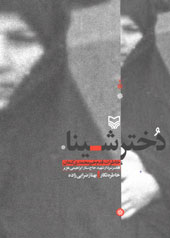
Daughter of Sheena-21
Memories of Qadamkheyr Mohammadi Kanaan
Wife of Sardar Shaheed Haj Sattar Ebrahimi Hajir
Memory writer: Behnaz Zarrabizadeh
Tehran, Sooreh Mehr Publications Company, 2011 (Persian Version)
Translated by Zahra Hosseinian
The next morning, Samad woke up early and said: “Today, I want to throw a party for my daughter.”
He invited my parents and his, our siblings and several of our close relatives. Then he rolled up his sleeves, and made a fireplace in the centre of courtyard. Mother, sisters and sisters-in-law of mine helped him.
However, sometimes he came into the room to see me, said: “Qadamkheyr! I wish you felt fine and helped me in cooking. It isn’t pleasant without you.” It was cold. Around our small courtyard had been filled with snow. He picked up the shovel and shoveled the snow into a corner. In the corner of the courtyard, snow was piled next to the toilet.
When it began getting cold, he came into the room and sat down under the blanket of Korsi. He put his hands under it to get warm. Shortly after, he was busy telling his stories. He told about his work, his friends, and all things that had happened for him during the week. I had got Khadija off to sleep on my right side, and the other baby was on my left side. Sometimes I gave milk to baby, and sometimes put wet handkerchief on the Khadija’s forehead. Suddenly, Samad became quiet, thought about something, and said: “I tormented you so much. Please forgive me. You hadn’t good times, since being married with me. If you don’t forgive me, how do I answer to God in the other world?” |


|
|