| |

|
Memory- telling or history-writing

While reading a memory book, we have faced with the problem that the book’s text and content is not something more than the mentioning of memories or the subjective memories of the work’s owner. In other words, in addition to expressing observations and what is heard during his or her life, the memory-teller on many occasions or according to the requirements talks about the conditions and events which he or she has not witnessed them or even has not heard from other person, but has read and heard them several years or even a few decades later in the books, journals and words, and now have placed them inside his or her memoirs again with another view. In other words, after the passing of several years from the events and situation of his or her time, he or she has resorted to mention them again through using others’ writings and words, and in fact has rewritten or even written the history of that historical issue or period.

| |

|
|
Modernism vs. Traditionalism
In the past it was hardly the case for oral rituals and traditions to change. In effect, traditions are partly embedded in the history of a region or ethnic group and tell a lot about their cultural identity and world view.
Cultural beliefs and commonalities that the citizens of a regions share is primarily in line with their approach, nature and spirit. However, modernization of societies has created cultural schisms in the cultural practices of people in different regions in a way that most of the traditions are fading away and are being replaced by easy-to-use, ready-made tools and mechanisms for mounting rituals that once took days or even weeks to be successfully organized.
| |
|
|
Takhti Viewed by Commonalities
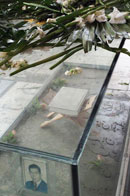
The following are views of some Tehranians about world champion Gholamreza Takhti, after 47 years of his death.
It was a cold day of January 7, 1968, when the news spread in the city. It spread by word of mouth like rumors but it was not a rumor this time. Takhti was found dead in Atlantic Hotel of Tehran.
Some 47 years later, Takhti is yet alive to the people. Not only his name is on the streets but also his memory is present in the daily life of people like Ali.
“My father was a friend of Takhti. I myself saw Takhti in our shop many times”, Ali said. Ali owns a small jewelry shop in Tehran bazar. He was 23 when Takhti died.
“Takhti was humble and honest. He was not arrogant because of his medals. He was popular”, he said.
| |
|
|
Untold history of the blind narrator of Azerbaijan
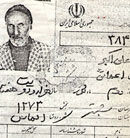
Ali Akbar, 120 years old, lives in Almas village of Tasouj, who is to be recognized as the narrator of oral history of Azerbaijan.
Reported by Fars News Agency from Tabriz, these days it is difficult to image a life over one hundred years and strange to believe that there are people around us who have witnessed not the first Pahlavi era but Ghajar. It is interesting to know that an old man lives in a foothill village in milieu of Tasouj in East Azerbaijan who is 120 years old! Twice the age of an average human being!
In a cold winter day we visited him in his house. A humble and newly built house in a new town in a village, which was destroyed by a deadly flood in 1997. The flood destroyed most of the houses in the village and killed 14.
| |
|
|
Oral History Weekly Magazine Aims and Regulations
Oral History Weekly Magazine wishes to create a suitable place for thoughts and idea development; Its main field would be “Oral History” and subjects as telling & writing memoirs, writing diaries, travelogues, chronologies, and all other subfields of history which are presented in the form of news, articles, reports, notes, interviews and memoirs can be included. There is no limitation on the length of would-be-sent materials.
Mentioning the name, academic background and email is necessary. Articles with complete references and bibliography are more credited and an abstract would quite helpful.
Weekly is not about to publish any material consisting insults and libels about other people or anything that brings anxiety to public opinion. Weekly can edit and translate the received materials.
The published articles and materials are only the writer’s ideas and Oral History Weekly Magazine has no responsibility about their content.
|
|
|

●Oral history of health combatants to be registered
●Collection of oral history of province on agenda
●Second festival in Mashhad and oral history
●Book narrates memoirs of renowned composer

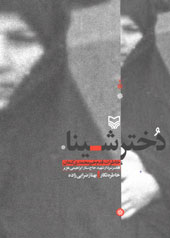
Daughter of Sheena-20
Memories of Qadamkheyr Mohammadi Kanaan
Wife of Sardar Shaheed Haj Sattar Ebrahimi Hajir
Memory writer: Behnaz Zarrabizadeh
Tehran, Sooreh Mehr Publications Company, 2011 (Persian Version)
Translated by Zahra Hosseinian
Early morning, when I woke up to perform prayer, my back gave me a lot of pain. Shortly after, stomachache was suffered me too. I didn’t pay attention to it. I busied myself in doing daily house works, but not only I didn’t feel better, but my pains got worse. Khadija was still asleep. I went to my sister’s house in pain, on that snow and cold weather. I trembled because of cold. My sister, Houri sent one of her children to bring midwife and sent the other one to bring my sister-in-law, Khadija. Then she held my arms to help me walk and came back to my home. That year was so cold that we set Korsi. Houri helped me to lie under the blanket of Korsi, and she herself busied preparing pan and warm water. I would like somebody informed Samad. I had missed him so soon. I liked he was beside me on those moments and helped me. “It’s certainly Samad. Samad has come.” I said as I heard the sound of the door. |


|
|