| |

|
History from below: Women and Nietzsche View

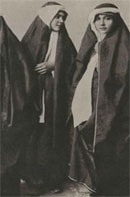
The "history from below" approach in historiography takes women into account as a group mostly overlooked or largely marginalized by conventional historical accounts. Women have always been disregarded by world historians and philosophers from Aristotle to contemporary wits who did not bother to address them in humiliating terms from time to time.
In "history of below", the story is completely different and efforts have been made to make up for the historical ignorance towards women by critically reviewing the conventional historical texts. In effect, the approach targets to rewrite history from the female viewpoint which opposes what has always been the trend when men tell historical stories.
Friedrich Nietzsche is viewed as one of the most recent influential thinkers who downplayed women's status in the society and life just like Aristotle and many other scholastic philosophers did in their writings. He presented an approach which is a classic opponent of the "history from below" approach.

| |

|
|
Oral history and its increasing value
The most important profit of oral history is historians’ access to firsthand information. The narrator of a memory is a non-mediated witness; books, newspapers and report-writers are not the transformers of information.
Historiography in the method of oral history is considered a new form in preserving the events and incidents. The method has spread in recent years and is used by some centers which are involved in compilation of history. In this method, the historian does not deal with tablets, inscriptions and the works taken from excavations, speculations or manuscripts, the tourists’ reports and so on. He or she deals with deals with the names which are alive and the result of the memories for which the historian is looking. Oral history covers memoirs of the individuals who have witnessed the events which have made them unique with the passage of time or because of their few witnesses. In oral history, before we face with the generalities ruling over a historical period, we are facing with the details of the existing events and relations in it.
| |
|
|
“Javanan” Introduced Sepideh Kashani/Literature Shall Separate from Politics
Ms. Sepideh Kashani started poetry with Javanan(1) magazine. She participated in our meetings and asked me to revise her poetry. There were many others.
Mehr News Agency- Culture Group: Alireza Tabayi, poet, song writer, journalist and veteran critic, born in December 5, 1944 lives in Shiraz. He was in charge of poetry and literary sections of “Javanan Emruz” magazine for 14 years (till 1984) with over 400 thousand circulation; this magazine has introduced many renowned poets for the first time. Tabayi has published 6 collections with the titles: “Autumn Buds”, 1965 Piruz Publication in Tehran, “From the depth of the night”, 1971 Bamdad Publication in Tehran, “Suns on the other side of the wall”, 1981 Tosan Publication in Tehran, “I might blame my glasses”2006, Ayene Jonub Tehran Publication (Book of the year in the second celebration of journalists’ poetry), “Mother Iran”, 2012 Shadan Publication in Tehran and “Thunder but More Sudden”, 2013 Avaye Kelar Publication in Tehran. We discuss journalistic activities in the past and its difference now with this veteran literary journalist
| |
|
|
Morteza Ahmadi’s Memories published
Iran Books News Agency (IBNA) - “A Ramble in Circumstances of Tehran and the People of Tehran” is published by Hilda publications. It is one of Morteza Ahmadi’s lasting works. He has presented this book to his daughter Azita.
Seyed Meoteza Ahmadi was a multi-dimensional character. Besides being familiar to writing in literature and folklore songs, he was a senior actor and a rhythmic musician.
Morteza Ahmadi’s childhood, youth, middle age and old age is narrated in this book. In a part of, longing for old Tehran, he regrets the past times and in parts he anticipates a better tomorrow. He tells us about his father’s family and about what have become antique these days. He recalls the old traditions and rituals.
Comeing out of home and going everywhere makes his old memories to be recollected. In his book, Ahmadi talks about markets, squares, streets, alleys and coffee houses in old days of Tehran. He tells us of Looties, Mashdies, and Morsheds. He remembers traditional foods, talks about cinemas and theaters of Tehran and recalls old artists.
| |
|
|
Oral History Weekly Magazine Aims and Regulations
Oral History Weekly Magazine wishes to create a suitable place for thoughts and idea development; Its main field would be “Oral History” and subjects as telling & writing memoirs, writing diaries, travelogues, chronologies, and all other subfields of history which are presented in the form of news, articles, reports, notes, interviews and memoirs can be included. There is no limitation on the length of would-be-sent materials.
Mentioning the name, academic background and email is necessary. Articles with complete references and bibliography are more credited and an abstract would quite helpful.
Weekly is not about to publish any material consisting insults and libels about other people or anything that brings anxiety to public opinion. Weekly can edit and translate the received materials.
The published articles and materials are only the writer’s ideas and Oral History Weekly Magazine has no responsibility about their content.
|
|
|

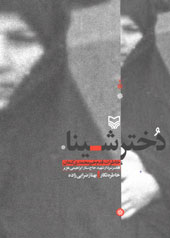
Daughter of Sheena-18
Memories of Qadamkheyr Mohammadi Kanaan
Wife of Sardar Shaheed Haj Sattar Ebrahimi Hajir
Memory writer: Behnaz Zarrabizadeh
Tehran, Sooreh Mehr Publications Company, 2011 (Persian Version)
Translated by Zahra Hosseinian
The sound of door opening in the midnight made me wake up. It was Samad. “Why do you sleep here?” He asked gently.
He made my bedclothes, took my hand, and helped me to lie down on it. “Did you eat dinner?!” I asked. He sat by the spread and said: “I’m eating now.”
Khadija had been woken up. I threw aside the quilt. As I wanted to get up, he said: “You’re tired. Get off to sleep.”
He rocked the cradle as he ate his dinner.
Khadija slowly fell asleep.
He got up and turned off the lights. I said: “So what about your dinner?!” He said: “I took.”
I saw he was busy packing his hold-all, when I got up early in the morning for prayer. I had a lump in my throat. “Where are you going to go?” I said. |


|
|