| |
|
Anyone who can write the history will leave us soon

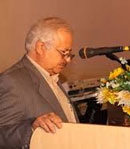
“Besides recording the events and the realities in oral history, it helps us to procreating the global peace” said Alireza Ghahhari.
The one hundred and forty second discourse in art and architecture meeting was concerning with oral history.
In the begging of the meeting, there was played a film about Tehran and explained about the situation of Sâhebgharâneh palace, then Seyed Alireza Ghahhari, Director Member of Board of Trustees in Iran's Architecture Prideworthies Fundation, began to make a speech.
“The reason of holding these meetings has been referring to 10 years ago when the first outlook in relation to collecting the art and architecture resources of oral history was set up. However, up to now, there has been no any activity more regarding with. Naturally, oral history in Europe and USA is a new subject too” he added.

| |

|
|
Critical Damages in Archiving
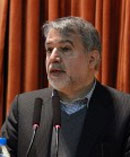
Iran Book News Agency (IBNA) – Recording the oral history of different organizations and institutions is an essential duty, Reza Salehi Amiri, head of National Library and Archives of IR Iran, said.
National Library and Archives of IR Iran has defined eight strategic plans to recognize its ends and the rout to them. The strategic plans are the plans and ways of our endeavors toward the light, to know our ideals and to do our best for reaching them, he said.
| |
|
|
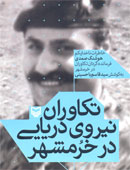
Naval Commandos in Khurramshahr: Unheard Stories
Soureh Mehr Publications has published "Naval Commandos in Khurramshahr", the first work published by a naval commando of the first Iranian division to withstand Iraq's assaults on the city of Khurramshahr before its capture in 1980. The stories were never published before.
Captain Houshang Samadi, commander of a 600-strong division during the Sacred Defense who resisted wholeheartedly the Iraqi forces in a 34-day siege to save the strategic city of Khurramshahr, has told the stories. Of the 600 commandos in the division only 270 ones survived after the siege.
| |
|
|
Dos and Don’ts in Writing Oral History
Oral history is one of a new science resource in writing history by which become manifest in the begging of Islamic Revolution in Iran. But, oral history by its own definition is a categorical research that pays to gathering and keeping historical data derived by personal private and social group experiences regarding with gaining the benefit from the technical and special tools.
These historical data have derived through a specific and an accepted cultural-bed and also through interaction and adaption between the interviewee and the queried interviewer.
| |
|
|
Oral History Weekly Magazine Aims and Regulations
Oral History Weekly Magazine wishes to create a suitable place for thoughts and idea development; Its main field would be “Oral History” and subjects as telling & writing memoirs, writing diaries, travelogues, chronologies, and all other subfields of history which are presented in the form of news, articles, reports, notes, interviews and memoirs can be included. There is no limitation on the length of would-be-sent materials.
Mentioning the name, academic background and email is necessary. Articles with complete references and bibliography are more credited and an abstract would quite helpful.
Weekly is not about to publish any material consisting insults and libels about other people or anything that brings anxiety to public opinion. Weekly can edit and translate the received materials.
The published articles and materials are only the writer’s ideas and Oral History Weekly Magazine has no responsibility about their content.
|
|
|

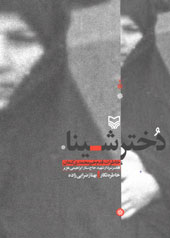
Daughter of Sheena-14
Memories of Qadamkheyr Mohammadi Kanaan
Wife of Sardar Shaheed Haj Sattar Ebrahimi Hajir
Memory writer: Behnaz Zarrabizadeh
Tehran, Sooreh Mehr Publications Company, 2011 (Persian Version)
Translated by Zahra Hosseinian
… In the morning I was more impatient than the day before. I had been touchy, as if all people were stranger to me. I wanted to go to my father’s house; but I went for the twins. I changed their diapers and clothed them with clean clothes. When my mother-in-law went out, I gave milk to twins, put them to sleep, and cooked lunch. Then, I washed dishes of last night dinner and swept the house. I hugged twins and brought them to my room. My house works were begun again after lunch; washing dishes, cooking dinner, sweeping the courtyard and taking care of the twins. I had been so tired that I fell asleep early in the evening.
As if it had been morning. I jumped out of my bed in shock. I drew aside the curtain by habit. Sky had been lightened. Now what should I do. Breads had been baked and the mouth of tandoor had been covered too. Why I had overslept. Why I couldn’t wake up on time. Now how I explained to my mother-in-law. |


|
|