| |
|
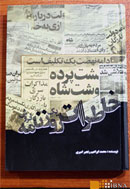
Memories of a Newsboy

"Memories of a Newsboy" encompasses the memories of Iran's oldest newsman alive. Born in 1928 in a village in the northern Mazandaran Province, Mohammad Ebrahim Ranjbar emigrated to Tehran at the age of 9 in 1937. He stepped into the news selling business soon after he entered the Iranian capital with support from two friends who resided near his place. Ranjbar has remained a newsboy for 83 years and has set a record for selling newspapers in Iran. The book sheds light on his memories since the 1920 Coup through the Islamic Revolution in 1979. The work entails first-hand information about those days in a fashion which is unprecedented in the hisotriogrphy of the revolution and the contemporary history of Iran. Books like this can for sure be regarded as valuable resources for historiography of the common people in the society. The development of Iran's press during various eras is clearly sketched in the book that casts a novel look at the history of press in Iran by accounting for its untold details.

| |

|
|
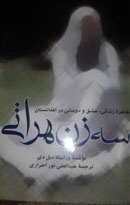
Three Women of Herat
Afghanistan had not experienced the tumult of communists’ presence, when Veronica and her husband, John Baily entered Herat after 8 months of residence in Iran and learning Persian. Baily went to Herat to study ethnomusicology for Queens University of Ireland. At first, Veronica had no decision but to accompany her husband. Manly doors of Herat were open to them but Veronica was determined to enter the hidden life of Afghan women and leave the manly part to her husband. Her relations with Afghan families who were familiar with music, caused her to learn Herat dialect completely. “Three Women of Herat” is Veronica’s struggle to convey her relations with three Afghan women who affected her musical life. It was written in 1988 in English.
A main part of the book is devoted to the account of entering Herat in which she delivers a clear picture of Afghanistan as a foreigner.
| |
|
|
“If the History Sun Dies” to be published
“If the History Sun Dies” is in its final stages, Iranian writer and researcher, Faranak Jamshidi said. It will include seven articles on the main observations in war.
In this book, I discuss war historiography in terms of the damages which may occur for formulating the questions, proposing hypothesis, expanding the questions and the results achieved, Jamshidi said.
The metaphoric title of “If the History Sun Dies” conveys how the history of an event dies or its history would lose its glows, she said. Discussing the history of war will attract those active in different related fields such as recording, preserving, narrating or writing the memories of combatants or commanders, jamshidi added.
If we accept war memory writing, the most common activity done in this field, and memories themselves, as the raw materials for historiography of war, this book will have abundant addressees, she said.
| |
|
|
Veteran historian hailed
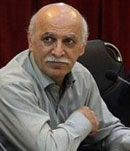
Profession AbdolRasoul Kheir Andish, veteran historian, was revered at a session arranged at the Research Center of the Islamic History in Tehran, Iran.
The session was held as the 7th historiography session which is mounted to honor and review the lives and works of senior Iranian historians and researchers of history.
Arranged last Wednesday, November 19, 201, the session was arranged in the presence of senior history scholars and academic personages from across the country.
During the session, Mohsen Jafari Mazhab, a member of the scientific board of the Organization of Iran's National Library and Archives, hailed Kheir Andish as an unparalleled historian in the history of Iran for his works and achievements.
Kheir Andish is one of the rare elite historians who interacts with his students and offers them books for their level of understanding," said Jafari Mazhab.
Kheir Andish is mostly known for his communication with the general audience and has penned his books for the laymen in history with the least to know about historical topics.
He has also written several history textbooks for schools and university programs.
He has been most helpful to his students who yearned to present their findings in the simplest language.
| |
|
|
Oral History Weekly Magazine Aims and Regulations
Oral History Weekly Magazine wishes to create a suitable place for thoughts and idea development; Its main field would be “Oral History” and subjects as telling & writing memoirs, writing diaries, travelogues, chronologies, and all other subfields of history which are presented in the form of news, articles, reports, notes, interviews and memoirs can be included. There is no limitation on the length of would-be-sent materials.
Mentioning the name, academic background and email is necessary. Articles with complete references and bibliography are more credited and an abstract would quite helpful.
Weekly is not about to publish any material consisting insults and libels about other people or anything that brings anxiety to public opinion. Weekly can edit and translate the received materials.
The published articles and materials are only the writer’s ideas and Oral History Weekly Magazine has no responsibility about their content.
|
|
|

● Oral history workshop for Omani experts
● “Link between Cultural History and Oral History” to be reviewed
● Renowned writer to take part in oral history workshop
● 21 books on oral history of holy defense released in Gilan
● Monthly special edition on oral history in 240 pages
● Education memories renewed, oral history of architecture education
● Motalaq writes memories about 3 areas
● Talebi Nejad memoirs released

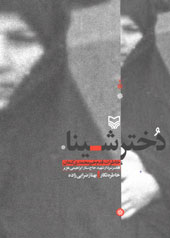
Daughter of Sheena-13
Memories of Qadamkheyr Mohammadi Kanaan
Wife of Sardar Shaheed Haj Sattar Ebrahimi Hajir
Memory writer: Behnaz Zarrabizadeh
Tehran, Sooreh Mehr Publications Company, 2011 (Persian Version)
Translated by Zahra Hosseinian
… The next morning, Samad again started looking for job. He did not find any in Qayesh. He had to go to Razan. He packed his hold-all and went to Tehran, when he also couldn’t find any job in Razan.
"I’ve found a good job.” A few days later he came back and said, “I should start it these very days. I’ve just come to inform you. Such a pity I cannot stay in at holidays of Nowruz. I can’t win." |


|
|