| |
|
Author Slams Da English Translation for Denial of Rights

Author of Da, Iran's bestselling title in history after the holy Quran and Mafatih al-Janan, believes that the book's English translator has undermined the work's scientific and literary value by not mentioning the author's title in the book. Da has undergone over 100 reprints in Iran and its English version is about to be unveiled in Iran. Mazda publications has released the English version of the work in the US.
What follows is an interview with Azam Husseini about the translation of her work into English by Paul Sprachman.

| |

|
|
Iranian Studies, Culture and Customs
Public Relations Department of the faculty reported that Dr. Mansour Tarafdari, Manager of Iranology Faculty has announced the first scientific conference to be held in spring of 2015 and said: After many Iranian Studies Festivals held during past years, it was recommended by the President of the university to organize a scientific conference. The University Council approved the conference to be held in collaboration with Meybodi Foundation, Ministry of Interior, Iranology Foundation, University of Yazd and some other universities and research centers.
| |
|
|
Oral History Memories should Be Published in Vernacular
The Memories of Two Ardebili Adolescent to Be Composed
Sasan Nategh, oral history researcher, is composing the memories of two Ardebili combatants who have spent their adolescence in war fronts. “It is essential to publish the memories in vernacular besides Persian”, he said.
“I am writing and composing the memories of two Arebili combatants who have been in war fronts in their adolescence in two separate works”.
“Kalamollah Akbarzadeh is one of these two, who has gone to war after his own insistence in 13. He was dispatched to Kurdistan province initially in 1980”, this researcher said. “I am preparing his memories of 1983”.
| |
|
|
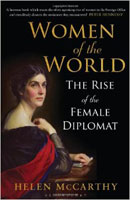
Women of the World: The Rise of the Female Diplomat – review
If Helen McCarthy hadn't found the inimitable Charles Howard Smith in the Foreign Office files, she would have had to invent him. Charged in 1933 with organising an inquiry into whether the diplomatic and consular services should open up to women, Smith entirely understood that his real instructions were to keep women out. This would take some doing, for the Soviets and Americans had female diplomats, other branches of the British civil service had allowed women in without catastrophe, and Sir Warren Fisher, the maverick head of the civil service, favoured women's entry. Smith thus needed (as he told his chief, bluntly) "ammunition of a kind which will convince not only the civil servants … but the cabinet and the general public" that the entry of women "would not be conducive to the public interest".
| |
|
|
Oral History Weekly Magazine Aims and Regulations
Oral History Weekly Magazine wishes to create a suitable place for thoughts and idea development; Its main field would be “Oral History” and subjects as telling & writing memoirs, writing diaries, travelogues, chronologies, and all other subfields of history which are presented in the form of news, articles, reports, notes, interviews and memoirs can be included. There is no limitation on the length of would-be-sent materials.
Mentioning the name, academic background and email is necessary. Articles with complete references and bibliography are more credited and an abstract would quite helpful.
Weekly is not about to publish any material consisting insults and libels about other people or anything that brings anxiety to public opinion. Weekly can edit and translate the received materials.
The published articles and materials are only the writer’s ideas and Oral History Weekly Magazine has no responsibility about their content.
|
|
|

● 2500 minutes of oral history registered within 6 months
● Plan for collection of oral history of Arak starts
● Iranians taken captives by Libyan al-Qaeda narrate memoirs
● "Shenasnameh" regarded oral history of revolution
● Fiction themes in oral history of revolution reviewed

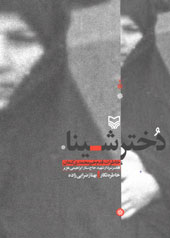
Daughter of Sheena-8
Memories of Qadamkheyr Mohammadi Kanaan
Wife of Sardar Shaheed Haj Sattar Ebrahimi Hajir
Memory writer: Behnaz Zarrabizadeh
Tehran, Sooreh Mehr Publications Company, 2011 (Persian Version)
Translated by Zahra Hosseinian
Throwing parties had been started between two families. A few months later, my father bought a sheep. He wanted to repay his oblation. My mother had invited Samad’s family too. Early morning we got into a minibus, which my father had hired. We laid the sheep into the trunk of minibus, and went to the holy shrine, which was a little farther, up the mountain. The minibus slowly went up the escarpment of mountain. |


|
|