| |
|
Iranian professor in America narrates story of war

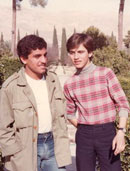
This is the story of Mohammad J. one of my best friends who was killed in Iran-Iraq war. Beside that thin man (me) in the photo, Mohammad is seen.
In Iran, last week was the anniversary of the beginning of war between Iran and Iraq (1980-1988). State media call it “Holy Defense” and cover the event.
In Iran, state narrations about the war are filled with myth-making about what happened those years. These narrations overseas are filled with geopolitics, military and academic discussions. Both do not reveal the realities of the war according to what happened to the soldiers and their families. Although we believe that a hero can be holy, myth-making distances us from real stories regarding epic and self-sacrifice.

| |

|
|
Naser Palangi’s Interview with Mehr
I made a promise to combatants of martyr JahanAra to paint their portrait/I decided to stay and picture the war
“You are crazy! The city is full of mines, it is nothing but ruins, it is dangerous”; these are what the Governor of Khoramshahr told the young painter but he returned to Khormashahr with importunity to fulfill his promise to the combatants and paint their image on the wall of Khormashahr’s mosque.
Mehr News Agency – Culture and Art Group: groves, sultry of south, bomb explosion and firing mortars ….design….picture….barrage… “23 year old young man had two choices, he could either return or to stay and he stayed” says the painter.
| |
|
|
Sohrab, the All Alone
Sohrab Sepehri, one of Iran's most prominent poets in the contemporary era, spent at least two or three months a year in his birthplace, Kashan, at Café Sharbati. Seifollah Abbasi Moqaddam was a waiter who worked in the café when Sohrab spent his days in his hangout in the west-central city in the 60s. During his stay, Seifollah catered for Sohrab and enjoyed his company. Sohrab even did him a painting which Seifollah has preserved over the years.
What follows is an interview with Seifollah, now a diner owner in Kashan, about those days. His recollections are valuable so far as they are pure and unfiltered, and reflect Sohrab's personality and life as a poet and a painter who lived alone and no one knew him in the city.
| |
|
|
Assessed: Untold Stories: First Days of Sacred Defense
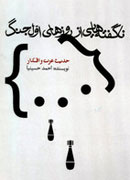
A session was held here in Tehran in assessment of " Untold Stories: First Days of Sacred Defense" by Ahmad Hosseinia on the sidelines of the 5th National Exhibition of Sacred Defense Books.
A number of Sacred Defense researchers, commanders and literary critics attended the session including the book's writer and Brigadier General Sadeghi Gouya, ex-chancellor of the army university and manager of the administrative forces division of the army.
"Most of the Sacred Defense books overlook the happenings of the first days of the war, and sometimes give it an inimical review," said the book's writer addressing the session.
| |
|
|
The Story of C130 Crash The Commanders of Samen Olaeme Operation by the Pilot
Colonel Pilot Solati in the anniversary of C130 crash, an aircraft carrying martyred commanders of Samen Olaeme Operation, recounted the incident.
Reported by Jamaaran quoted from ISNA, retired colonel Solati, pilot of C130 aircraft transporting martyred commanders, in memorial ceremony of commanders Javad Fakouri, Mohammad Jahan Ara, Vali Ollah Fallahi, Yousef Kolahdouz and Seyyed Mousa Namjou said: It is very difficult for me to give a speech in the anniversary of this plane crash in the spot of the incident, but I have to say that I’m one of the pilots with the most tours of flight during war and I joined the war from the beginning.
| |
|
|
Holly War Aid Worker:
Jamaran- Zohreh Rezayi: “Tahereh Naghi-yi” is a teacher and social activist. It was in women’s social gatherings that I learned about her active participation in war as a photographer and aid worker. Her friends said that she has a lot of memories and uses her mental capacity as a teacher and keen mind in mathematics to preserve them. She has never told her story for the media and is now involved in peaceful activities; however she agreed to an interview with Jamaran and talked about her efforts to save lives of warriors who, she believes, “teased death with their unprecedented mental capacity.”
| |
|
|
Oral History Weekly Magazine Aims and Regulations
Oral History Weekly Magazine wishes to create a suitable place for thoughts and idea development; Its main field would be “Oral History” and subjects as telling & writing memoirs, writing diaries, travelogues, chronologies, and all other subfields of history which are presented in the form of news, articles, reports, notes, interviews and memoirs can be included. There is no limitation on the length of would-be-sent materials.
Mentioning the name, academic background and email is necessary. Articles with complete references and bibliography are more credited and an abstract would quite helpful.
Weekly is not about to publish any material consisting insults and libels about other people or anything that brings anxiety to public opinion. Weekly can edit and translate the received materials.
The published articles and materials are only the writer’s ideas and Oral History Weekly Magazine has no responsibility about their content.
|
|
|

● Oral history of Imam Khomeini foundation to be registered
● “Da” unveiled in New York
● Audio version of 3 memory books ready for publication
● Economic daily to publish Jazayeri’s memoirs

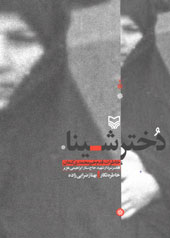
Daughter of Sheena-7
Memories of Qadamkheyr Mohammadi Kanaan
Wife of Sardar Shaheed Haj Sattar Ebrahimi Hajir
Memory writer: Behnaz Zarrabizadeh
Tehran, Sooreh Mehr Publications Company, 2011 (Persian Version)
Translated by Zahra Hosseinian
Chapter Four
Days elapsed One after another. Sometimes Samad would come to see me in tandem, but sometimes he didn’t appear even month to month. Country was in chaos and counter-imperial demonstrations had been reached to villages. Spring ended. Fall arrived and ended too. Cold and frost winter also was passed through.
In the absence of Samad I would completely forget him sometimes, but as soon as he arrived, I would remember that as if something is going to happen between me and him. And I was worried by this thought, but my father’s extreme attention to me would make me delighted and I would forget everything very soon.
Few days before New Year, my mother had cooked ample dinner and invited the family. The entire village knew my mother as a very good housekeeper. No one in Qayesh had her cooking skill. She was so kind that everybody would call her "Shirin Jan” (means: the dear sweet).
That day, my sisters and my sisters-in-law had come to our house for helping.
Samad’s family also had been invited by my mother. At sunset, we noticed a number of people were walking, dancing, and reciting on the roof of the room, where we had sat. There was a trapdoor on the center of ceiling that all the rural houses had one of them. "Agha Samad and his friends are on the roof," children came to the room and said. We saw a bundle, which was tied to the rope, was hung through the trapdoor into the room, right above Korsi (1) , as we had sat and listened to the sounds.
|


|
|